Prime Minister demands barrier removal for social housing before month-end
A strong regulatory framework is vital to Vietnam’s goal of building one million social housing units by 2030, ensuring affordability and accessibility for low-income earners and industrial workers.
The Hanoi Times — Vietnam’s Prime Minister Pham Minh Chinh has asked the Ministry of Construction and relevant ministries to complete removing regulatory barriers for social housing projects and submit to the government before March 25.
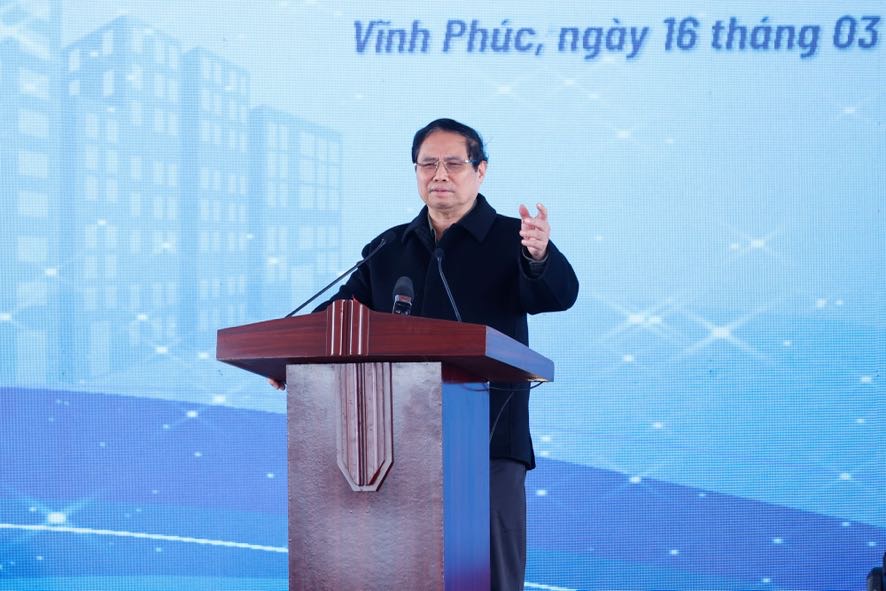
Vietnam’s Prime Minister Pham Minh Chinh at the groundbeaking ceremony of a social housing project in Vinh Phuc Province on March 16. Photo: Nhat Bac/VGP
The submission will serve in the National Assembly’s coming plenary for debate, Prime Minister Chinh requested on March 16 when he attended the groundbreaking ceremony of a social housing project in the Nam Vinh Yen New Urban Area in the northern province of Vinh Phuc.
The regulatory framework becomes critical for this kind of real estate segment in Vietnam as it ensures affordability, accessibility, and sustainability.
The regulations matter a lot to the development of social housing in the context that the government targets at least one million affordable apartments by 2030 to serve low-income earners and workers at industrial parks.
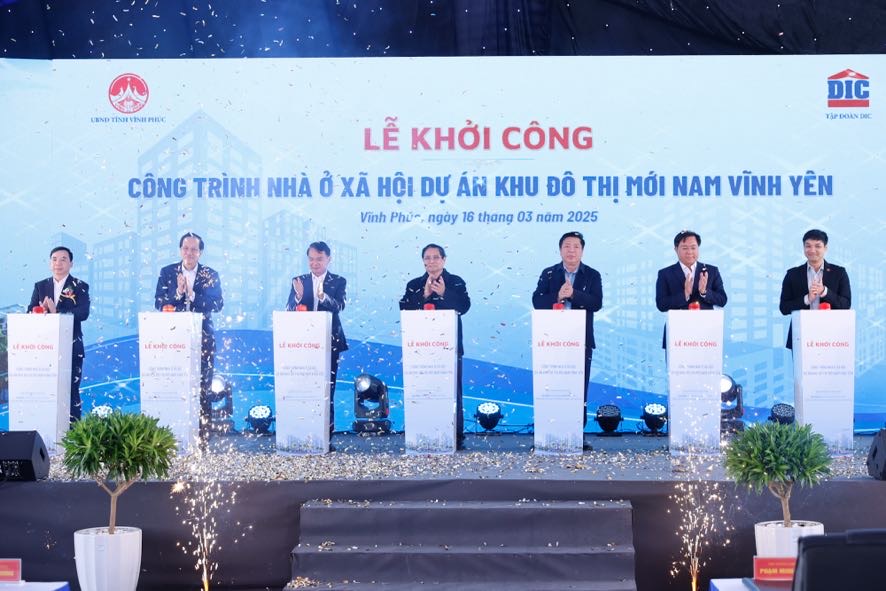
Overview of the groundbreaking ceremony. Photo: Nhat Bac/VGP
Local experts said the key aspects of the development of social housing include clear legal policies, developer incentives, land use regulations, financing support, quality standards, and transparency. They believed that these measures facilitate investment, prevent speculation, and protect low-income households, fostering stable and inclusive urban growth.
Vinh Phuc, the neighboring province of Hanoi, is home to 17 industrial parks, including nine operating, with more than 260,000 workers. The demand for social housing in the province is quite high and it is tasked by the government to build nearly 28,300 social houses by 2030 but it has just fulfilled 2% of the given mission.
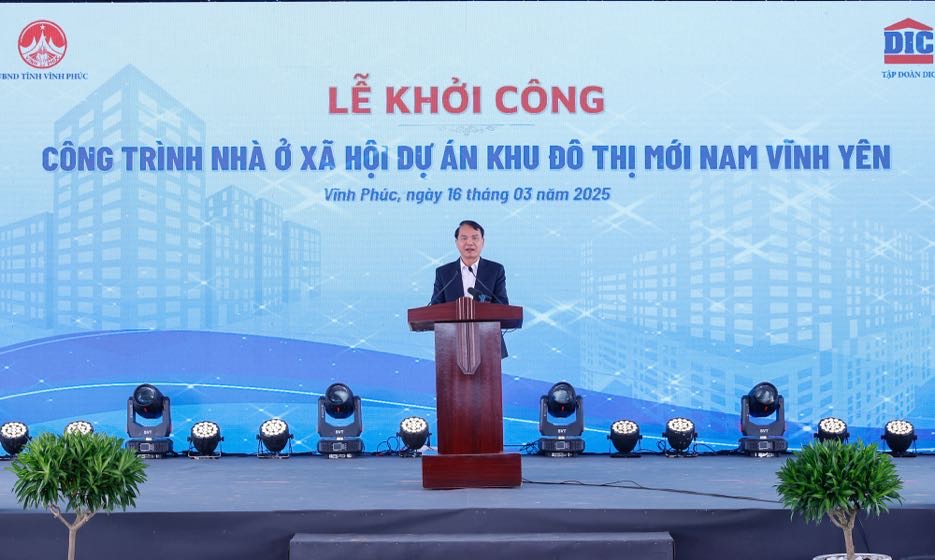
Secretary of the Vinh Phuc Party Committee Dang Xuan Phong speaks at the ceremony. Photo: Nhat Bac/VGP
Secretary of the Vinh Phuc Party Committee Dang Xuan Phong said at the ceremony that the province targets to kick off construction of each social housing project every month from now to August with nearly 2,200 houses in total for 2025 and complete the mission one year ahead of the plan.
Developed by Development Investment Construction JSC Corp (DIC), the social housing project in the Nam Vinh Yen New Urban Area – Phase 1, which covers an area of 17 hectares and costs VND7 trillion (US$274 million), will offer more than 5,300 apartments once it comes operational before 2030.
Dang Xuan Phong emphasized that Vinh Phuc, following the prime minister’s directive, has shifted to prioritizing social housing over commercial projects.
For the Nam Vinh Yen New Urban Area – Phase 1, he called for faster progress, higher quality, better incentives, and greater transparency.
Prime Minister Pham Minh Chinh praised Vinh Phuc’s efforts to kick off the project which concretizes the Party’s Directive No. 34-CT/TW issued on May 24, 2024 on strengthening Party leadership in social housing development. It accelerates the plan to build one million social housing units for low-income groups and industrial park workers by 2030.
He reaffirmed the Party and State’s commitment to rapid, sustainable development, balancing growth with macroeconomic stability and environmental preservation while ensuring social equity, welfare, and inclusive housing access as enshrined in the Constitution.

Prime Minister Pham Minh Chinh meets locals in Vinh Phuc on March 16. Photo: Nhat Bac/VGP
On this occasion, the PM urged localities, including Vinh Phuc, to prioritize investment in social housing and set policies that align with low-income groups’ financial capacities.
He called on investors to ensure compliance, transparency, and adherence to standards and timelines to protect citizens’ rights. Meanwhile, Vinh Phuc was tasked with leading social housing development, especially for workers while integrating cultural amenities to enhance residents’ quality of life.
The prime minister emphasized balancing social and commercial housing, prioritizing social housing, and incorporating housing targets into socio-economic development plans.
In its plan to build one million social housing units by 2030, the government has made efforts to encourage public-private partnerships (PPP), offer incentives, and streamline regulations to accelerate development.
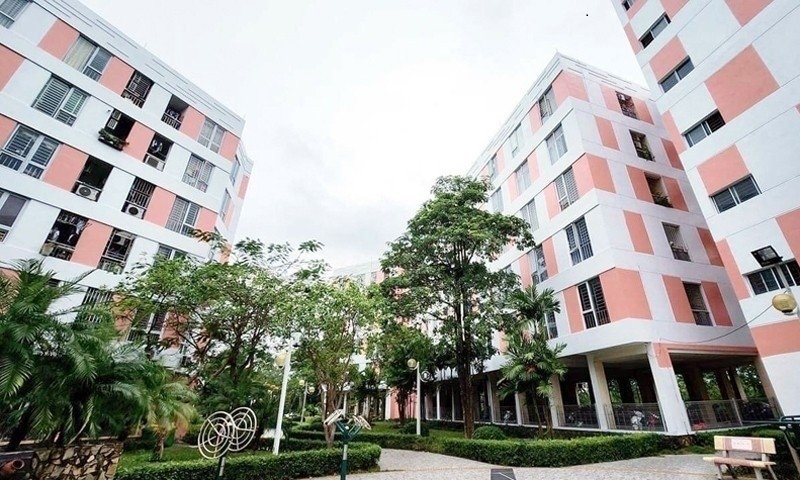
A social housing area in Dang Xa Commune, Gia Lam District, Hanoi. Photo: Pham Hung/The Hanoi Times
Prime Minister Pham Minh Chinh alone has been dedicated to the leadership of this plan. In April 2023, he approved Decision No. 338/QĐ-TTg to build over one million social housing units by 2030, prioritizing low-income earners and industrial park workers.
The plan aims for 1,062,200 units, with 428,000 completed by 2025 and 634,200 by 2030. To make the goal attainable, it requires the involvement of the whole political system. Accordingly, they have taken key measures including policy reforms, financial incentives, and integration of social infrastructure.
The government, which emphasizes social housing over commercial projects, has so far completed 94 projects, delivering 57,652 units, with 135 more under construction.