Log in
Vietnam

Progress towards market-based economy in Vietnam remains slow: Experts

The government should refrain from excessive intervention into the market and only hold core business fields with potential impacts on national security.

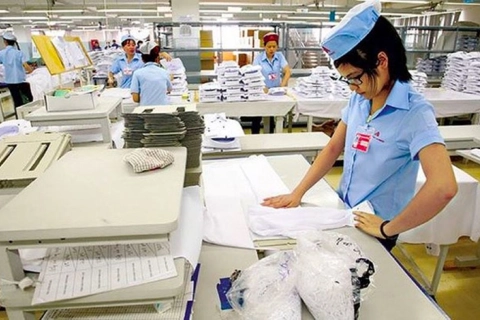
Contribution of private enterprises to Vietnam’s GDP is less than 10%, which indicates the slow progress towards a full market-based economy in the country, according to economist Pham Chi Lan.

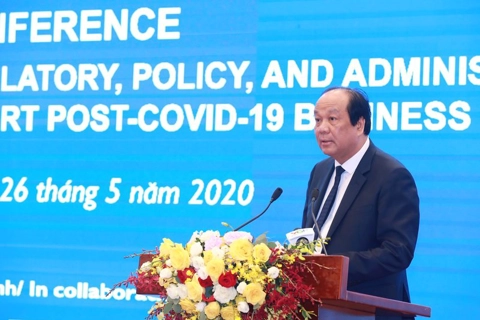
 Overview of the conference. Photo: Nguyen Tung. 

Lan’s assessment is similar to a previous statement by Chairman of Vietnam Chamber of Commerce and Industry (VCCI) Vu Tien Loc that of the 40% of GDP contribution by the private sector, five million business households make up 30% and the remaining by 700,000 private firms.

“There have been resolutions and legal documents from the government to form a market-based economy in Vietnam, but the focus has only been to address difficulties in the business environment for the business community,” Lan said at a conference on July 29.

Meanwhile, many countries in the world have now shifted to the process of creating favorable business conditions, Lan added.

According to Lan, there remain major issues hindering the country from moving towards a full market-based economy. Lan went on to say that, of the three major economic components, namely state-owned enterprise, foreign-invested enterprise and private enterprise, the third one is the least favored in government incentive policies.

“It is challenging for private firms to access state resources for development,” Lan asserted.

Economist Le Dang Doanh added while over 90 countries and territories have recognized Vietnam’s market-based economy, the US and EU, Vietnam’s two major economic partners, have not done so.

“Institutional barriers must be removed, while the state should refrain from excessive intervention into the market,” Doanh suggested, adding it should only hold core business fields with potential impacts on national security to ensure true market-based economy in Vietnam.

“Benefits would be huge if Vietnam is recognized as a market-based economy by major global economies,” Doanh stressed. For example, Vietnam’s export products would be less susceptible to trade protection measures, or the country is set to attract more investment capital, Doanh said.

Sharing the same view, former Director of the Central Institute for Economic Management (CIEM) Nguyen Dinh Cung said the law of supply and demand, not the state, should decide the production of goods and services.

As part of the reform process, Cung urged more attention is needed to work out laws and regulations specialized in protecting the ownership rights for assets of businesses and the people.

“Once the ownership rights are ensured, the influence of the state in the economy would gradually diminish and the market is set to operate fully on its own,” Cung added.
Reactions:
Share:
Trending
Most Viewed
Related news
Photos: Vietnam U22 earns epic comeback over Thailand to seize SEA Games gold

Photos: Vietnam U22 earns epic comeback over Thailand to seize SEA Games gold

In front of a roaring crowd in Bangkok, packed with traveling Vietnamese supporters, Vietnam U22 wrote a story of belief, resilience and courage, overturning a two-goal deficit to defeat Thailand U22 and lift the SEA Games men’s football gold medal.

Vietnam U22 stage dramatic comeback to defeat Thailand and claim SEA Games gold

Vietnam U22 stage dramatic comeback to defeat Thailand and claim SEA Games gold

Vietnam U22 overturned a two-goal deficit to defeat Thailand U22 3-2 after extra time, confirming their growing dominance in Southeast Asian football.

Vietnam, Germany seek more sustainable economic, trade cooperation to boost 50-year ties

Vietnam, Germany seek more sustainable economic, trade cooperation to boost 50-year ties

Through a seminar in Hanoi, half a century of friendship and cooperation between the two countries has been reviewed, while opening further avenues to promote bilateral ties in the next phase.

Independence and integration: Vietnam’s power of balance

Independence and integration: Vietnam’s power of balance

Vietnam’s shift from participant to proactive contributor in shaping global norms reflects its rising confidence, deeper engagement in rule-making and commitment to stability and shared development.

Sweden nurtures road safety for children in Vietnam

Sweden nurtures road safety for children in Vietnam

In Vietnam’s traffic context, proper helmet use for children is a critical measure to reduce fatalities and serious injuries, drawing on lessons from Sweden’s comprehensive approach that combines safe infrastructure, strict enforcement and community education.

First nonstop air route between Vietnam and Northern Europe launched  

First nonstop air route between Vietnam and Northern Europe launched  

The new route marks an important step in the national flag carrier’s European expansion strategy for 2025-2030, meeting increasing demand for travel, trade and family visits between Vietnam and the Nordic region.

Cultural contest connects Vietnamese youth in Japan with President Ho Chi Minh

Cultural contest connects Vietnamese youth in Japan with President Ho Chi Minh

A children’s cultural contest held in Tokyo has helped nurture pride, creativity and a deep connection to President Ho Chi Minh among Vietnamese families living across Japan.

Vietnam strengthens role in ASEAN after 30 years of membership

Vietnam strengthens role in ASEAN after 30 years of membership

Apart from economics, Vietnam has strengthened ASEAN unity and centrality by contributing across all three pillars, from political-security to economic and socio-cultural cooperation, including maritime security, climate action, digital transformation and people-centered development.