Provincial cooperation: Key part of Vietnam-China comprehensive strategic relations
Sustained efforts are essential to strengthen the comprehensive strategic cooperative partnership between Vietnam and China.
Vietnam has always regarded the friendly cooperation at the provincial level between the two countries as a crucial element in the Vietnam-China comprehensive strategic cooperative partnership.
| Deputy Prime Minister Tran Luu Quang at the event. Photos: Thanh Hai/The Hanoi Times. |
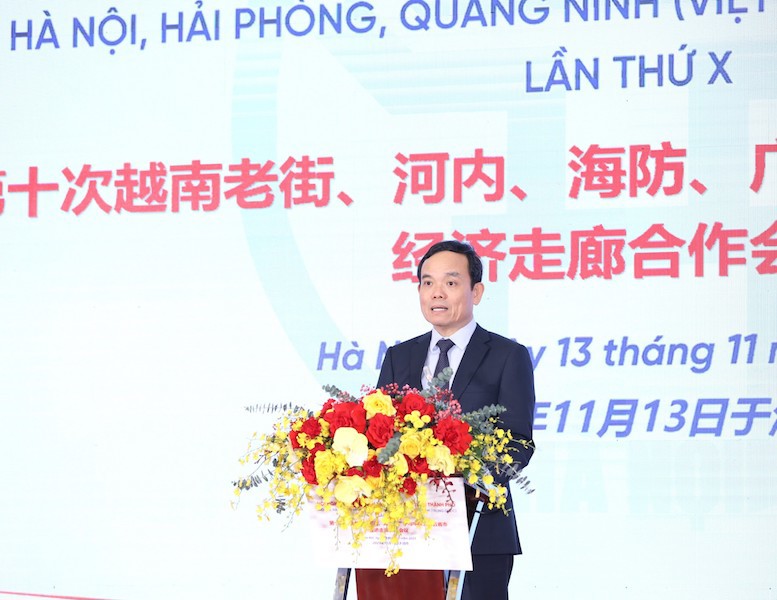
Deputy Prime Minister Tran Luu Quang stressed this view at the Vietnam-China Economic Corridor Cooperation Conference held in Hanoi today [November 13].
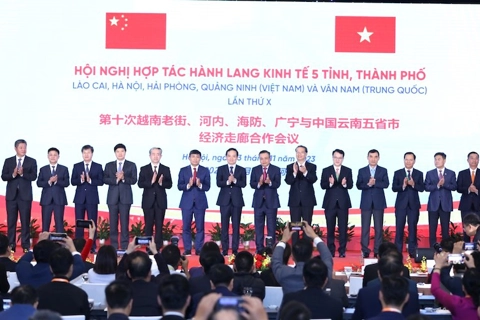
The 10th Vietnam-China Economic Corridor Cooperation Conference, involving five cities and provinces— Hanoi, Haiphong, Quang Ninh, Lao Cai and Yunnan (China), is underway between November 13 and 14, 2023. Chaired by the Hanoi People's Committee, the conference will focus on expanding forms of association and cooperation between provinces and cities along the Vietnam-China economic corridor to promote economic development in a new situation.
Highlighting the positive development and significant achievements in Vietnam-China relations, Quang attributed the progress to the joint efforts of both sides. The collaboration covers various fields and is marked by regular exchanges of delegations at all levels and practical outcomes.
Quang underscored the further cooperation between Vietnamese localities and Yunnan province, rooted in the historical ties between the two peoples. He highlighted cooperation mechanisms between these regions in promoting supply and production chains, enhancing infrastructure connectivity, fostering communication and logistics networks, and advancing cultural, educational, and tourism cooperation.
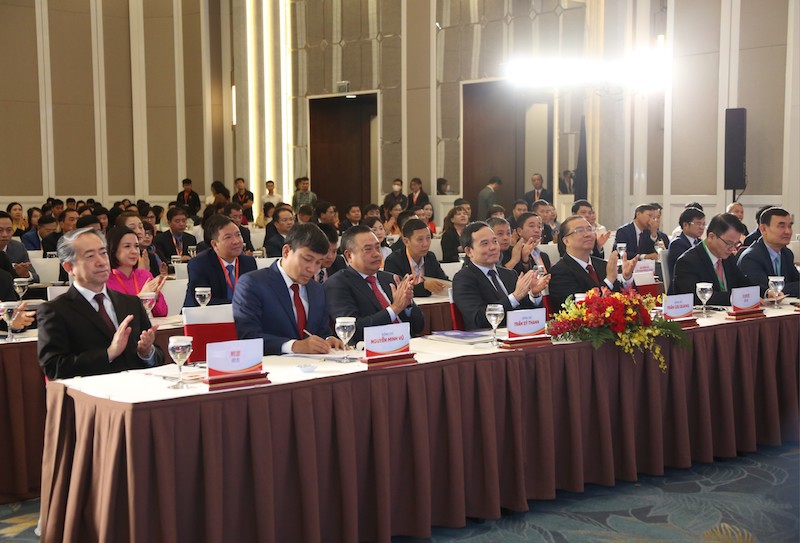
| Delegates at the event. |
A report from the Ministry of Planning and Investment showed that China remains Vietnam's leading economic partner, with a significant trade volume. In 2022, Vietnam's total export turnover with China reached US$175.6 billion.
Although there was a 5.88% decrease in Vietnam's import-export turnover with China in the first 10 months of 2023 compared to the same period in 2022, the economic ties between the two countries remain robust at $138.9 billion.
In terms of investment, Chinese investors have participated in 4,032 projects in Vietnam, with a total registered capital exceeding $26 billion, ranking sixth among 144 countries and territories investing in Vietnam.
“The Chinese Government's support, including preferential credit loans and non-refundable aid, has played a key role in implementing various projects in Vietnam, spanning infrastructure development, healthcare, culture, and education, and has made a significant contribution to Vietnam’s socio-economic development, poverty reduction, and human resources development,” said Quang.
Meanwhile, the economic corridor of the five provinces—Lao Cai, Hanoi, Haiphong, Quang Ninh, and Yunnan—was part of the broader “Two Corridors, One Belt" cooperation between the two governments, following the Memorandum of Understanding signed in November 2006.
To realize such an initiative, Quang noted that governments, ministries, and branches of both countries have recently executed numerous specific agreements, programs, and cooperation projects.
Localities within the corridor and border provinces of the two nations have established mechanisms for periodic exchanges, bolstering connectivity and advancing economic, trade, investment, tourism, and people-to-people cooperation. It is noteworthy that recent cooperation programs and activities within the economic corridor have played a positive role in fostering the development of relations between the two countries, he added.
Nevertheless, according to the Ministry of Planning and Investment, the realization of the "Two Corridors, One Belt" cooperation between the two sides has fallen short of expectations.
Large-scale, high-tech investment projects are still few and far between, and trade cooperation, especially border trade, is characterized by instability and unsustainability.
"Vietnam continues to experience a significant trade deficit with China, while coordination and connectivity between the localities of both countries remain weak, with no active participation of regions beyond the economic corridor," Quang said.
To invigorate the "Two Corridors, One Belt" cooperation in general and specifically in the Economic Corridor comprising Lao Cai, Hanoi, Haiphong, Quang Ninh, and Yunnan, the Ministry of Planning and Investment has put forth several proposals.
The first is a call to promote the enhancement and connection of transport infrastructure between the two countries, particularly in border areas and at border gates. This aims to facilitate trade, tourism, and people-to-people travel.
Second, efforts should be made to facilitate trade, especially in agricultural, forestry, and fishery goods. The application of digital technology and digitalization in the customs clearance process at the border gates of both countries needs to be strengthened.
Third, there is a recommendation to explore expanding the scope of cooperation by connecting with major economic centers in both countries.
Additionally, localities within the economic corridor should intensify the organization of investment, trade, and tourism promotion programs on each side to enhance mutual understanding of the business environment and economic policies of each country.
Deputy Prime Minister Quang stressed the need for localities to be more determined, proactive, and creative in contributing to the successful implementation of high-level agreements. Sustained efforts are essential to fortify the comprehensive strategic cooperative partnership between Vietnam and China.
Quang emphasized the importance of improving the effectiveness of existing cooperation mechanisms and conducting joint research and exchanges to establish new cooperation frameworks.
Additionally, he urged speeding up transportation infrastructure connectivity, especially in border areas, expanding cultural and tourism cooperation, and promoting people-to-people exchanges, especially among the younger generation.
On this occasion, the deputy prime minister called for strengthening cooperation in the prudent management and safe, effective, and sustainable use of water resources. This will contribute to ensuring energy and food security and improving livelihoods on both sides. The emphasis remains on close coordination to expedite the opening and upgrading of several border gates, contributing to increased trade.
With the determined efforts of localities and the active participation of the business communities on both sides, Quang expressed confidence that cooperation in the economic corridor of the five provinces and cities of Vietnam and China will achieve significant milestones in the future. "This, in turn, will contribute to further developing the comprehensive strategic cooperative partnership between Vietnam and China".
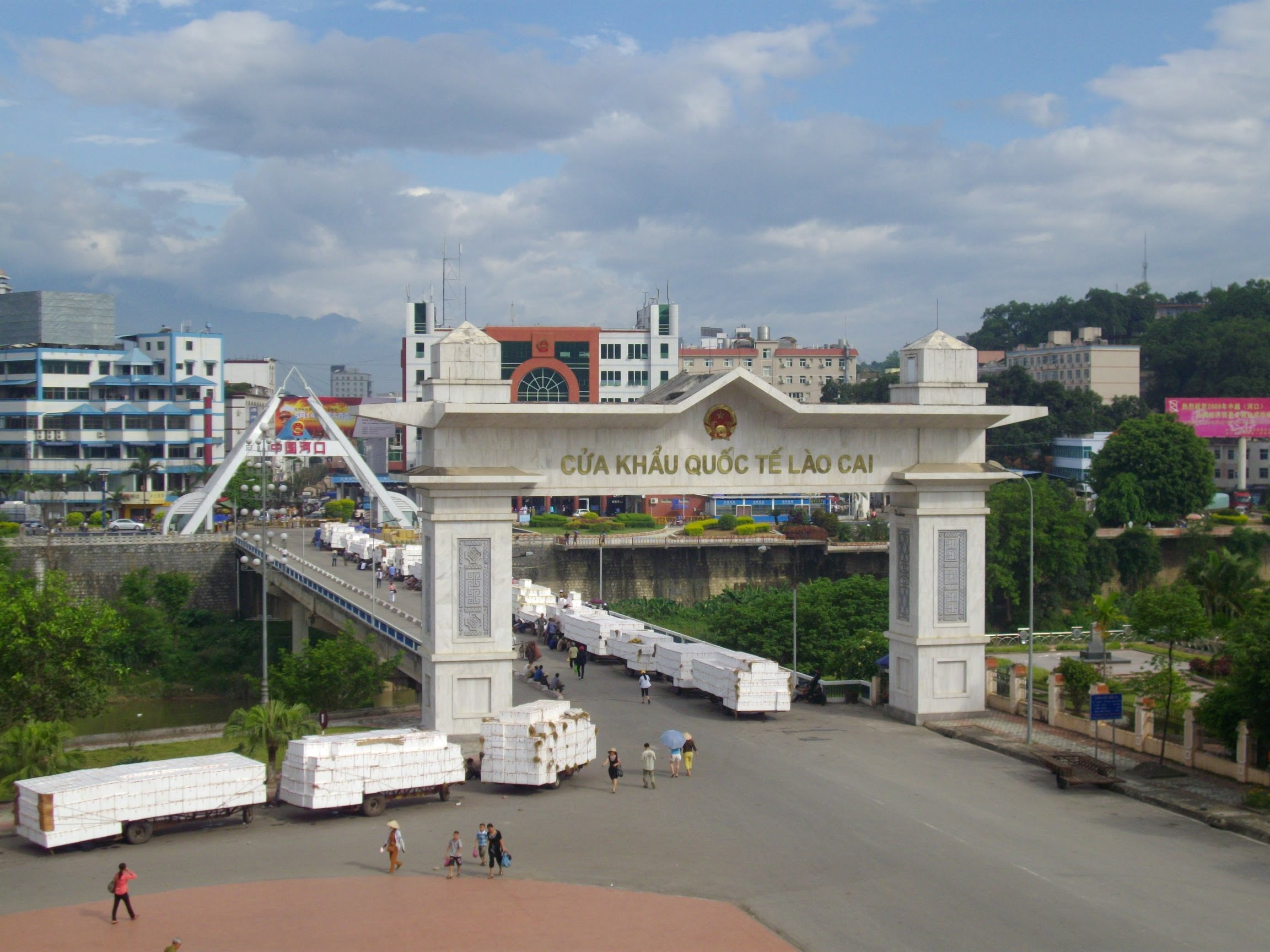
| Lao Cai International Border Gate in the northern province of Lao Cai, where borders Yunnan Province of China. Photo: tuyengiao.vn |