Public-Private-Partnership key to sustainable development
Experts and government officials highlight the public-private-partnership (PPP) as the key to promoting green growth, green transition, and sustainable development.
THE HANOI TIMES — Public-private-partnerships are essential to fostering innovation, sustainable growth, and green development worldwide, experts, organization leaders, and government officials said on April 17.
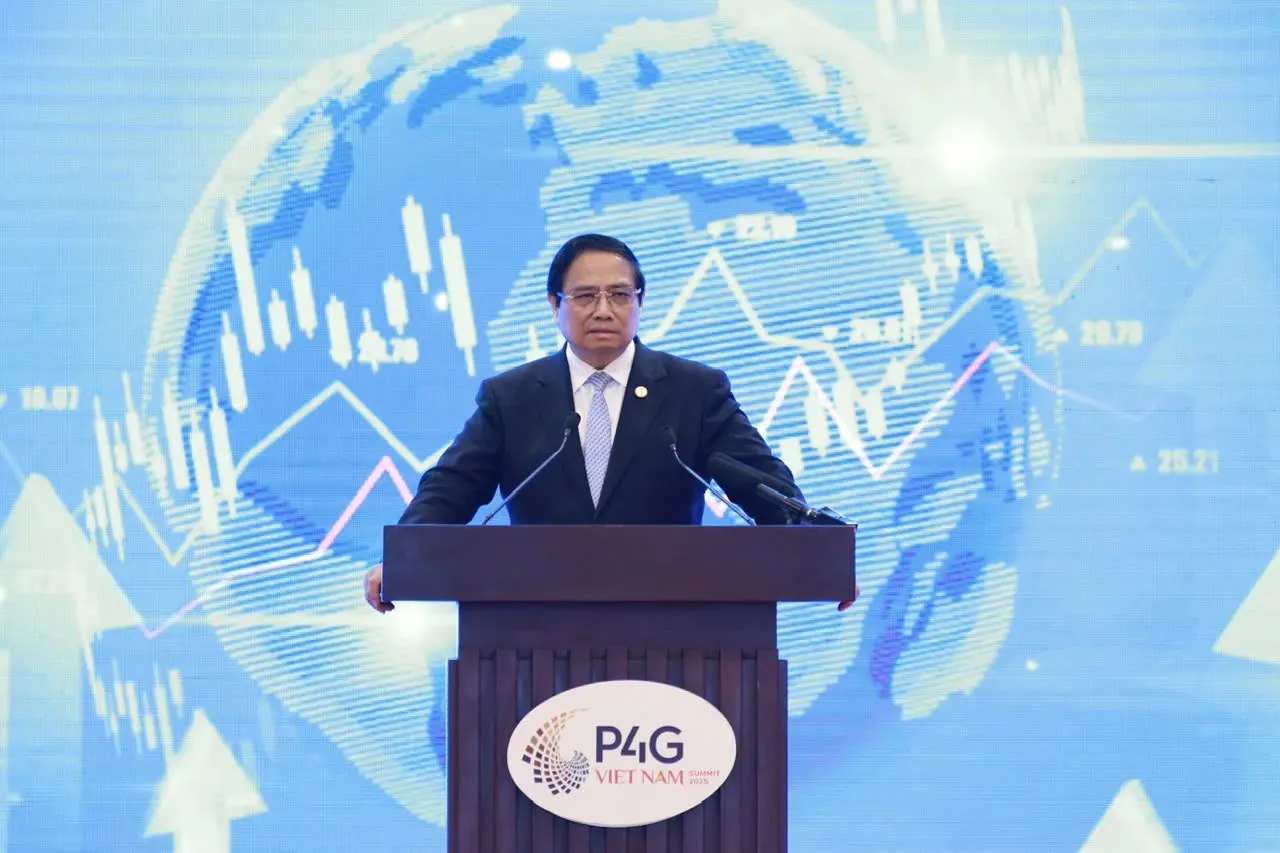
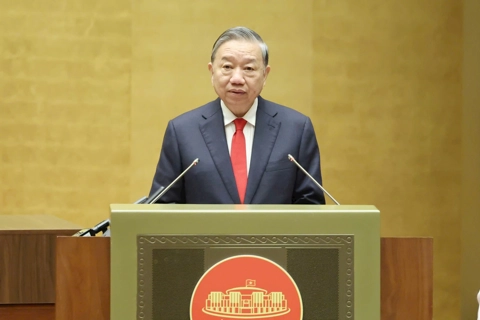
Prime Minister Pham Minh Chinh delivers his speech at the conference on public-private partnership within the P4G Summit held in Hanoi on April 17. Photo: Hoang Nam/The Hanoi Times
At the Leadership-Business Dialogue session on PPPs for Innovation and Sustainability, Francesco Corvaro, Italian Prime Minister's Special Envoy for Climate Change, said the green transition requires investment, innovation, and effective public-private coordination.
He cited the example of Italy, where transportation accounts for up to 60% of greenhouse gas emissions. The government has taken the lead in investment, attracting the private sector to critical areas such as renewable energy and green technology, while creating new jobs for the younger generation.
According to Corvaro, the Italian government has mobilized an initial investment of EU€300 billion (US$341.3 billion), which is expected to grow to EU€1.3 trillion ($1.5 trillion) for the energy transition. The focus is on electric vehicles, biofuels, renewable energy, and digital technologies.
He stressed that businesses need a stable environment to make long-term investments. Increasing public investment in climate adaptation projects also reduces risks for the private sector, especially in developing countries.
The Italian envoy also highlighted the role of local authorities in PPPs, such as how Milan has improved its public transport system.
He noted that public funds alone are not enough for the green transition, which requires hundreds of millions of dollars, but that public policies can create favorable conditions for private participation. Public-private partnerships not only drive innovation but also address pressing societal needs.
Corvaro also stressed the importance of workforce training and skills development, particularly in new technologies, to empower the younger generation and achieve climate goals for a sustainable future.
Alejandro Dorado, Spain's High Commissioner for the Circular Economy, said that the strongest driver for more robust PPPs is the convergence of environmental and climate crises and the wave of technological change.
He explained that no government or company can solve today's crises alone, and that the public and private sectors must work together.
The public sector provides legal frameworks, tax policies, investment tools, and large-scale deployment capabilities to ensure public benefits. Meanwhile, the private sector contributes flexibility, capital, advanced technology, and innovation.
Spain is currently a model for PPP implementation, having mobilized over EU€80 billion ($91 billion) from the European Recovery Fund (Next Generation EU). Of this, EU€30 billion ($34 billion) has been allocated to the private sector through strategic projects.
These investments target green and sustainable areas such as renewable energy, energy storage, green hydrogen, industrial emissions reduction, digital water management, electric vehicle production, and circular economy projects, Dorado said.
Vietnam as the world’s highlight
UN Deputy Secretary-General Amina J. Mohammed said Vietnam is emerging as a leader in renewable energy in Southeast Asia, with the potential to attract trillions of dollars in investment.
Investing in clean energy can be a key opportunity of the 21st century and a prerequisite for advancing other sustainable development goals such as poverty reduction, livelihoods, energy security and more, she said.
The UN official said emerging economies must do more to meet the 2030 goals by investing in new models to meet development investment needs, including green energy infrastructure.
With international partners already committed to supporting Vietnam, efforts should be scaled up. Business leaders can help broaden this ambition by working with the government and sharing financial responsibility, she said.
PPPs require strong incentives and bankable projects to attract investment, build local energy systems, and ensure shared benefits among all stakeholders, said the UN Deputy Secretary-General.
She also stressed the need for political will and the role of public authorities, especially in promoting vocational training, and expected the 30th UN Climate Change Conference (COP30) in Brazil in 2025 to be a platform for building partnerships to boost economic and social development.
Representing Danang, a young, dynamic city in Vietnam, Le Trung Chinh, Chairman of the municipal People's Committee, said that the fourth P4G Summit is a globally significant event focusing on green growth and sustainable development.
He said it was an opportunity for Vietnam to reaffirm its strong commitments and for localities to contribute concrete actions to the UN Sustainable Development Goals.
Chinh shared five solutions and policies from Danang's perspective to build an effective innovation and green transition ecosystem, attract investment, and support businesses.
These include special breakthrough policies to create a favorable environment for innovation, science, technology, and green transition; mobilizing social resources to build community innovation spaces; promoting international linkages; and increasing private sector participation in development resources.
Danang also encourages the participation of departments and agencies, strengthens connections with local resources, supports the startup and innovation ecosystem, builds international innovation networks, and taps into overseas Vietnamese expert communities. The city is also promoting green investment and startup financing.
"Danang is willing to share its experience and hopes to expand cooperation with international partners, financial institutions, and global enterprises in green transition and innovation. The city is committed to allocating 15% of its budget to research and development (R&D) from 2025 to 2030," the chairman said.
Speaking to international leaders and global businesses, Prime Minister Pham Minh Chinh said that rapid growth must go hand in hand with sustainability.
"Public investment is a driver, but it is not enough to meet development needs. We are actively promoting flexible models such as public investment - private operation and private management," he said.
He said sustainable development requires maximizing private sector resources in key areas such as energy, infrastructure, education, healthcare, digital transformation, and innovation. "The stability created by the government will allow private investors to make long-term investments, apply technology, and spread modern management models."