Realizing flexible processes within businesses: RMIT
Flexible business processes allow businesses to choose from a variety of operating methods to meet different business scenarios.
Adaptability and flexibility can provide a viable edge for organizations in the current volatile business environment. Yet, how can organizations make their business processes more flexible when they are essentially meant to provide structure and standardization?
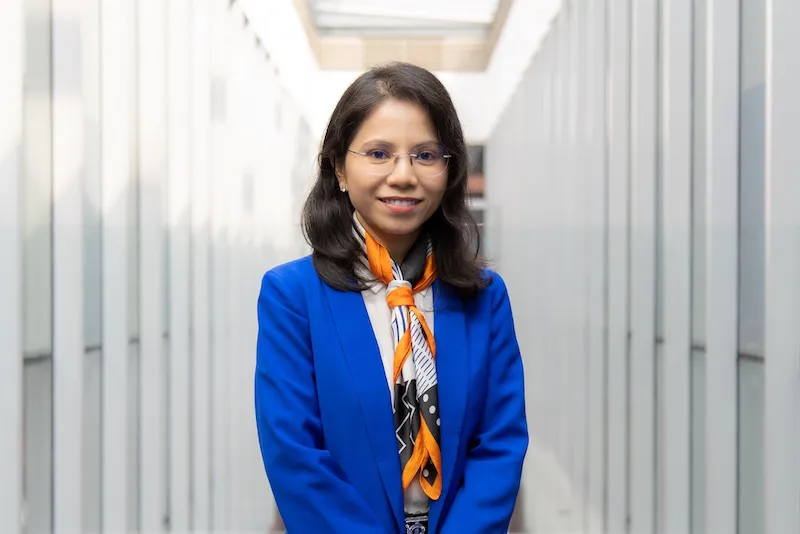
| Dr Hoang Ai Phuong. Photo: RMIT |
The “new normal” amid the Covid-19 pandemic has made the business environment rife with elements of risk and uncertainty. Discussions have pointed to the need for flexible business processes within organizations to continuously respond to change and quickly recover from the pandemic.
Unlike stable processes, flexible business processes allow businesses to choose from a variety of operating methods to meet different business scenarios.
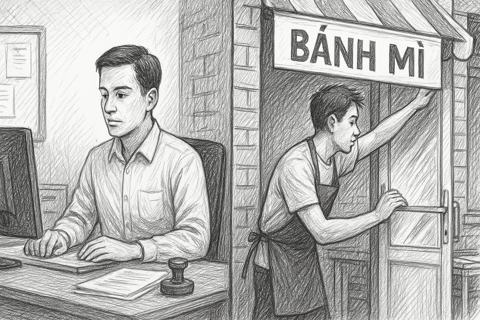
For example, during the Covid-19 pandemic, product exchange and return can be done in many ways: online or in person, using a wet signature or electronic signature, order checking by an employee on the spot or after a certain period, etc.
When building a flexible business model, businesses will operate in a more agile way so that they can better deal with incidents within the company as well as shortcomings in the current environment.
The question is, how can business processes become more flexible when they are meant to provide structure and standardization? And how can organizations handle the internal friction caused by both an increasing push towards and a significant pull against process flexibility?
These questions spurred academics from RMIT University in Vietnam and the University of Lisbon in Portugal to interview business process management (BPM) experts from a wide range of industries in Vietnam.
The research team consisting of Dr. Nguyen Hoang Thuan, Dr. Hoang Ai Phuong, Professor Mathews Nkhoma (RMIT University), and Associate Professor Pedro Antunes (University of Lisbon) have published their research “Using process stories to foster process flexibility: the experts’ viewpoint” in the A-ranked Australasian Journal of Information Systems.
The research team proposed using process stories to alleviate friction, and combining them with Business Process Modeling Notation (BPMN) to improve the flexibility of processes.
Process stories rely on storytelling theory to narrate what happens in a business process using a combination of textual and visual elements. Each story narrates the business process from a unique viewpoint, which could be the process owners, participants, BPM experts, etc.
Through stories about how employees handle each process, businesses can understand different scenarios. From there, they can review their current business processes, and find out which ones are too complicated and no longer effective. Next, they can implement reforms and increase flexibility so that processes can achieve the highest effectiveness in any circumstance.
Process stories are seen as a tool to increase the operational efficiency of businesses. In other words, businesses can apply storytelling to support existing business processes to bring more optimal results.
According to the researchers, combining Business Process Modeling Notation and process stories can result in several improvements: processes in the production or distribution of products and services will become more flexible when faced with different scenarios and risks from external actors. Responses can also be developed promptly. The ability to constantly turn around is the key to helping businesses adapt to new situations.
- This model can also be a tool for business leaders to better understand business processes. From there, they can build new business processes (which may not have existed before).
It is emphasized that the recent Covid-19 outbreaks in Vietnam as well as the ongoing uncertainties in the world are reminders for businesses to always focus on innovating their operations.
Businesses need flexible strategies to cope with the constant changes around them. This is also a motivation for businesses to develop more sustainably. Therefore, this is a good time for businesses to apply process stories to their business models.