Log in
Hanoi

Removal of permanent residency requirement to pressurize Hanoi's budget

In theory, it is correct to streamline administrative procedures to ensure people’s right of residency and avoid red tape, but urban migration also needs to be controlled.

Around one million people living in Hanoi with temporary resident status would officially become the city’s residents if conditions for registering permanent residency are removed, thus putting pressure on the city’s budget and socio-economic infrastructure, Secretary of the municipal Party Committee Vuong Dinh Hue said on June 9.

According to the 2019 census, Hanoi has more than eight million residents, Hue was quoted by VnExpress as saying at a meeting on June 9. If requirements for permanent residency registration in the capital city are removed as per the draft amended Law on Residence, the city’s population will increase by about one million.

 Secretary of the municipal Party Committee Vuong Dinh Hue. Photo: Hoang Long

Currently, a person needs to live during two to three years in Hanoi on the condition of temporary resident status continously to be eligible to register permanent residency.

"The amount of recurrent budget allocated to a city depends on the size of its population. If Hanoi’s population increases, recurrent budget spending will rise as well. So drafters need to take this into account," Hue suggested.

"In theory, it is correct to streamline administrative procedures to ensure people’s right of residency and avoid red tape, but urban migration also needs to be controlled," Hue said.

The Law on Capital City promulgated in 2012 provides the conditions for registering permanent residency in Hanoi. However, under the draft amended Law on Residence, those conditions would be removed to ensure equal rights of residence for all Vietnamese.


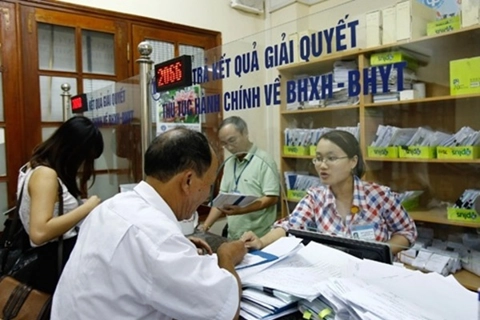
The draft amended Law on Residence is expected to remove the population management through permanent residence booklet, or “ho khau”, replacing it with personal identification number.

The booklet has been in effect since the 1960s as an instrument of public security, economic planning, and population management. In the post-war period, the booklet was used as a means to ration food and apply jobs under the then planned economy.

But in the new context of economic reforms since the late 1980s and a socialist oriented market economy, ho khau has been still in place to prevent massive rural to urban migration, to no avail.

The booklet has come to signify Vietnam's excessive red tape. It is required in most administrative procedures including filing a birth certificate application, enrolling school, getting married, buying a house or registering a vehicle.

The decades-old management method is considered backward and aggravate red tape by tying one person’s life and career to a particular city or province.
Reactions:
Share:
Trending
Most Viewed
Related news
Hong Van Commune rises as Hanoi’s emerging model for community-based tourism

Hong Van Commune rises as Hanoi’s emerging model for community-based tourism

Blessed with natural beauty, strengthened by deep cultural heritage and supported by its residents, Hong Van Village is emerging as one of Hanoi’s most distinctive tourism destinations. From ecology and agriculture to handicrafts and festivals, this Red River village is shaping a dynamic vision of sustainable community tourism for the capital.

Hanoi unveils digital heritage journeys to connect tradition with modern urban life

Hanoi unveils digital heritage journeys to connect tradition with modern urban life

Hanoi has launched a new digital heritage program that brings centuries-old cultural assets into a modern, interactive format. By mapping key monuments and creating themed journeys, the city aims to help residents and visitors explore its deep-rooted identity through fresh, engaging experiences.

Hanoi launches two-wheel electric vehicles to expand green urban mobility

Hanoi launches two-wheel electric vehicles to expand green urban mobility

Hanoi has introduced two-wheel electric vehicles for the first time in its transport network, offering residents a new green mobility option and marking a key step in the city’s smart-transport development.

Thai AirAsia launches new Hanoi–Luang Prabang route to boost regional travel

Thai AirAsia launches new Hanoi–Luang Prabang route to boost regional travel

Thai AirAsia has opened a new direct Hanoi–Luang Prabang route using Fifth Freedom traffic rights, creating a faster and more convenient link between two major heritage destinations in Vietnam and Laos.

Hanoi orders strong air-pollution measures and warns schools to adjust schedules

Hanoi orders strong air-pollution measures and warns schools to adjust schedules

Hanoi has issued new directives requiring schools to restrict outdoor activities and consider suspending classes when air quality drops to hazardous levels, while launching a sweeping crackdown on pollution sources across the city.

Hanoi – Vientiane ties set pace for bilateral cooperation

Hanoi – Vientiane ties set pace for bilateral cooperation

The two sides have inked two city-level agreements and eight agreements covering areas such as Party building, economic and investment cooperation, agriculture, health, education and people-to-people ties.

Hanoi completes tunneling for four underground stations of 2nd metro line

Hanoi completes tunneling for four underground stations of 2nd metro line

The completion marks a major step forward for the four-kilometer underground section of the metro line.

Rooftop solar push to boost Hanoi's green ambition

Rooftop solar push to boost Hanoi's green ambition

Rooftop solar in industrial zones has the foundations to become a new driver of Hanoi’s energy transition.