Resolution 15 outcomes: Hanoi’s healthcare sector transformed
The extensive healthcare infrastructure has contributed significantly to primary healthcare and disease prevention, reducing the burden on higher-level medical facilities.
More than 15 years after Hanoi's administrative boundaries were expanded (August 1, 2008), the capital's healthcare sector has changed for the better.
| Medical examination at Ha Mo commune health station, Dan Phuong District, Hanoi. Photos: The Hanoi Times |
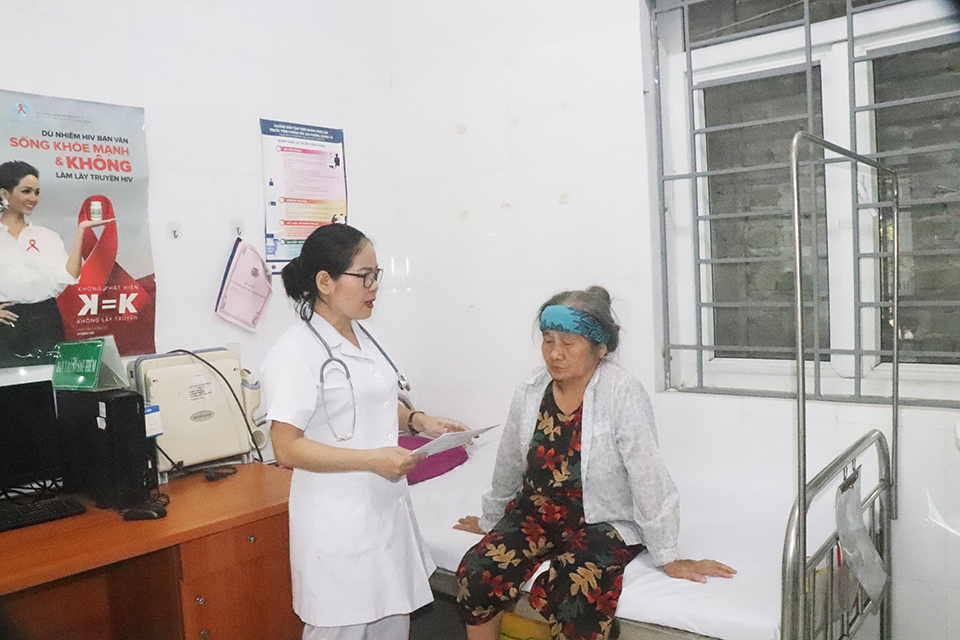
To date, Hanoi has 579 health clinics citywide. Remarkably, all of these facilities have doctors on site, and the majority (86.3%) have primary care doctors; those without doctors have additional support from health centers and district hospitals.
The health stations provide health services covered by health insurance.
The extensive health infrastructure has made a significant contribution to primary health care and disease prevention, thereby reducing the burden on higher-level medical facilities.
To improve the efficiency of grassroots health services, Hanoi's health sector is actively addressing challenges and barriers to implementation at the local level.
The implementation of online registration for medical check-ups has marked a significant milestone in the digital transformation of hospitals. The introduction of information technology (IT) in district hospitals has streamlined the patient experience, saving time and effort while improving the quality of patient services.
Ba Vi District General Hospital, for example has demonstrated a strong commitment to implementing computerization and hospital management software in its medical services.
In particular, the hospital has focused on using IT applications to improve patient reception and diagnosis based on the International Classification of Diseases (ICD) and subclinical indications. Prescribing processes are handled by software that enables seamless communication with the pharmacy and ensures accurate and convenient data management and retrieval.
| Surgical operation in Duc Giang General Hospital. |

In the first half of 2023, the hospital performed examinations on more than 120,000 people. Outpatient care saw more than 18,000 patient visits, while the number of inpatients reached almost 10,000.
A notable achievement of the hospital is its commitment to implementing several advanced and complex medical techniques, resulting in reduced patient referrals. These techniques include hip replacement surgery, knee surgery, laparoscopic stone removal surgery, and ureteral lithotripsy, among others.
In addition, the surgical unit has become adept at handling emergency cases involving serious and complicated illnesses, ultimately saving lives and excelling in infection control.
Gaining momentum for growth
The health sector in Hanoi has made remarkable progress over the past 15 years, with more than 11,500 exemplary cases highlighted in the "Good People, Good Deeds" emulation movement since 2009 to date.
Trinh To Tam, Chairman of the Hanoi Health Sector Union, highlighted the active cooperation between the sector union and the Ministry of Health in promoting patriotic emulation movements among healthcare workers.
"The 'Good People, Good Deeds' emulation movement has played a key role in strengthening leadership, raising awareness, and fostering a sense of responsibility among healthcare workers, all aimed at improving the quality of medical care for the capital's residents," Tam said.
| Providing medical care to local people at the Ba Vi District General Hospital. |
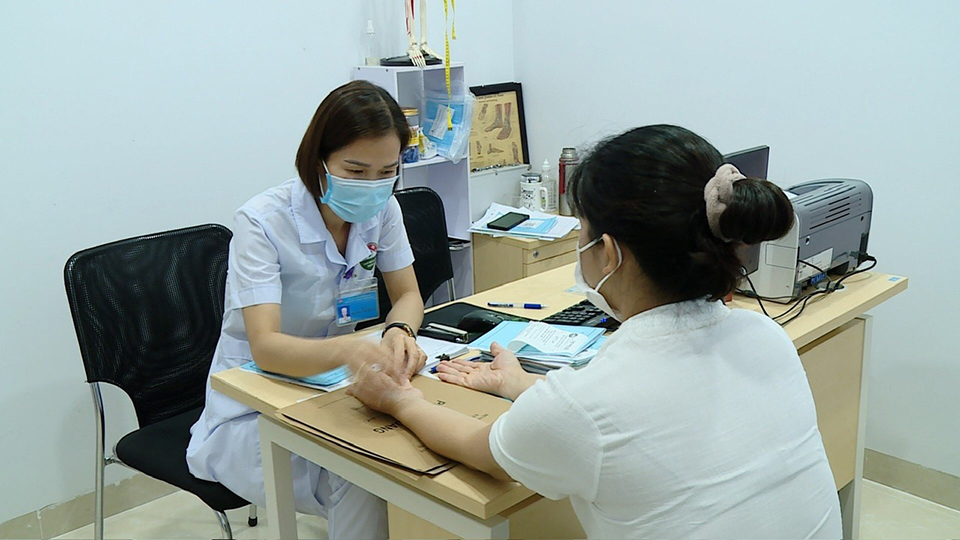
In particular, the "innovation in the working style and attitude of medical staff towards patient satisfaction, combined with the construction of green, clean and beautiful medical facilities" has become a significant emulation movement, inspiring the dedication and creativity of the team of doctors and medical staff, she continued.
Tran Thi Nhi Ha, Director of the Hanoi Department of Health, emphasized that the achievements of the past 15 years have laid the foundation for further advances in healthcare, promising improved quality of medical treatment for the future.
Ha added that the expansion has also created favorable conditions for the comprehensive development of Hanoi's healthcare system, befitting its status as a multifunctional center.
"The healthcare sector in Hanoi has undergone a significant transformation over the past 15 years, reflecting significant progress. However, as the capital city, this leading industry requires continuous efforts in line with the city's development," said Ha.
Having received significant support from the city over the past 15 years, Ha said Hanoi's healthcare sector sees this as an opportune moment to envision new and modern smart hospital projects to provide advanced healthcare services to the people of the capital. In the future, the sector will continue to improve the quality of healthcare human resources, especially through policies that encourage highly qualified healthcare professionals to work in disadvantaged areas.
| Currently, Hanoi's healthcare system operates through two main blocks of medical facilities, consisting of 41 public hospitals and 3,953 non-public medical facilities. Over the years, there has been a steady increase in medical treatment data in these units. Currently, Hanoi has a total of 22,796 hospital beds, or 27.5 beds per 10,000 people. The city aims to increase this ratio to 30-35 hospital beds per 10,000 people by 2025. |