Rising overseas Vietnamese population strengthens Vietnam's global integration
THE HANOI TIMES — The overseas Vietnamese population has grown sharply over the past two decades, reflecting both demographic expansion and deeper global integration, truly “an inseparable part and a vital resource of Vietnam and a key contributor to the country’s international cooperation and friendship.”

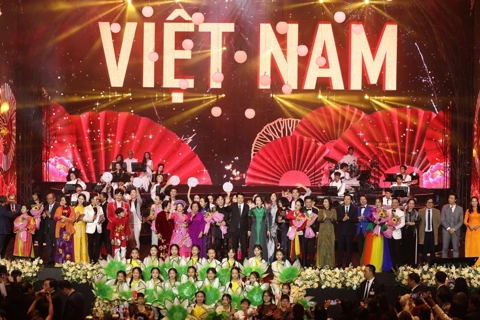
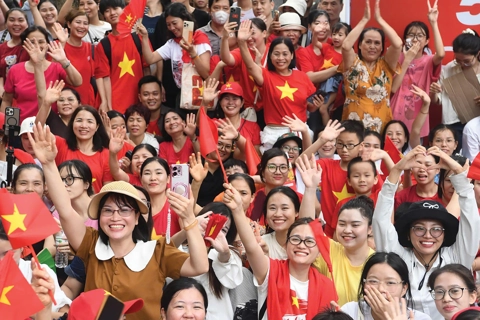
An art performance celebrates the gathering of overseas Vietnamese for Tet holiday. Photo: Kinh te & Do thi
From about 2.7 million people living in nearly 90 countries and territories in 2004, the community has expanded to nearly 6.5 million across more than 130 countries and territories today.
Around 80% of them now reside in developed countries, where their role and standing are increasingly recognized locally and internationally, according to the State Committee for Overseas Vietnamese (SCOV).
Apart from this growth, ties between overseas Vietnamese and the Party, the State and people at home have become closer and more substantive, Le Thi Thu Hang, Deputy Minister of Foreign Affairs, said at a press gathering on December 22.
Hang informed related agencies and media about a national conference to be held on December 25 in Hanoi to review more than 20 years of implementing Resolution 36-NQ/TW on overseas Vietnamese affairs to shape policies for a new development phase.
According to Deputy Minister Hang, Resolution 36, issued in 2004, was the Party’s first comprehensive strategic document on overseas Vietnamese affairs in the context of deepening international integration. Over two decades, it has served as a guiding framework for policies and actions by the Party, the State, ministries, sectors and local authorities.
The resolution affirms the consistent view that overseas Vietnamese are an inseparable part and an important resource of the Vietnamese nation while contributing to friendship and cooperation between Vietnam and other countries.
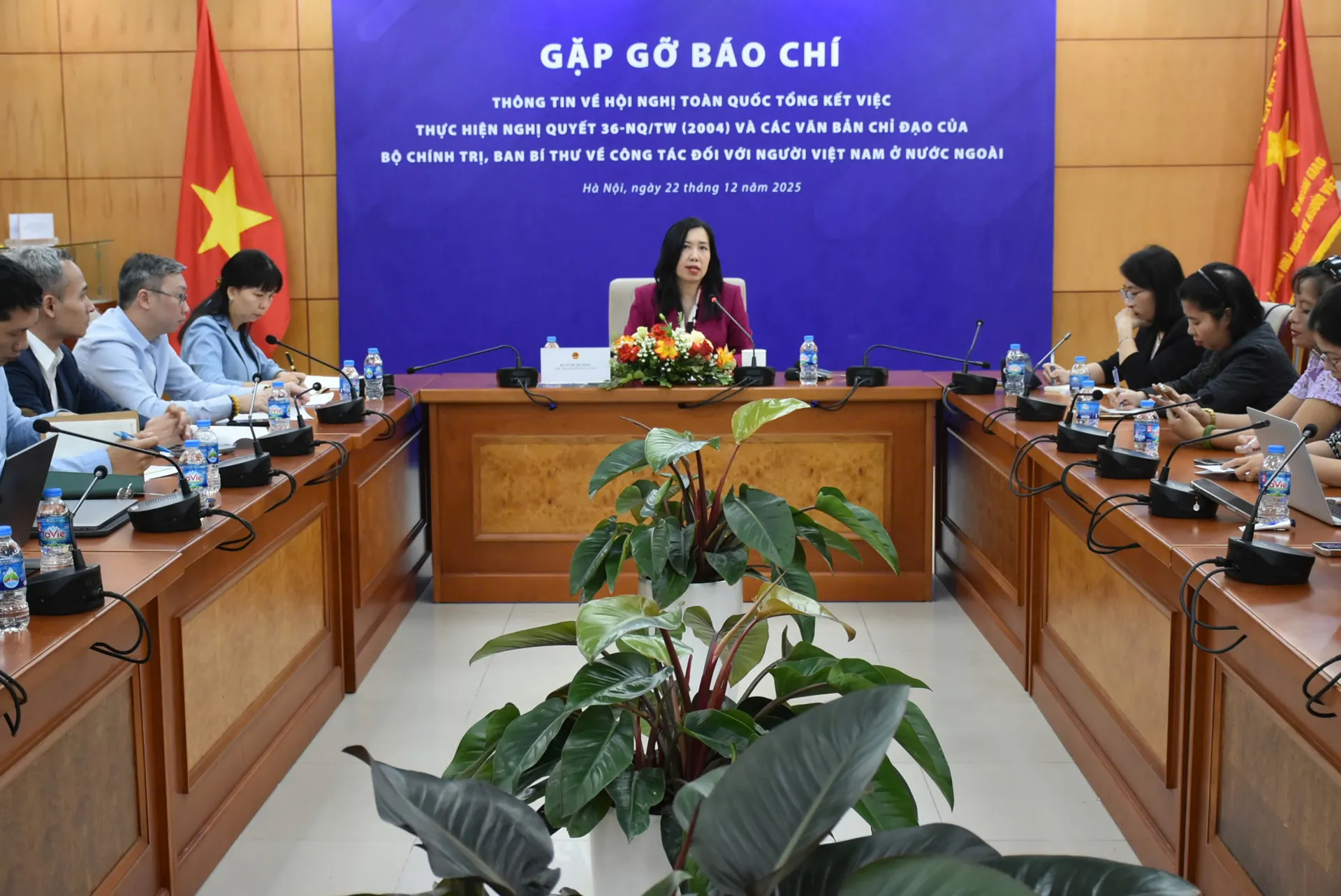
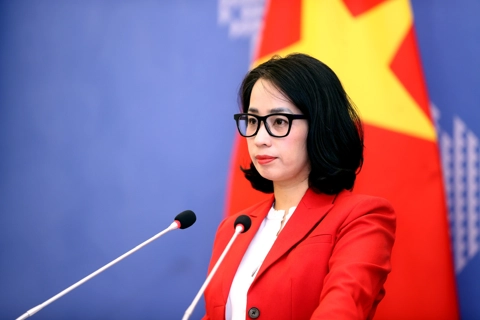
Le Thi Thu Hang, Deputy Minister of Foreign Affairs, chairs a press gathering on December 22. Photo: SCOV
To prepare for the conference, the SCOV under the Ministry of Foreign Affairs has received 60 summary reports and 20 thematic papers with 180 proposals from ministries, agencies, localities and key media organizations.
It has also compiled reports and recommendations from 98 Vietnamese representative missions abroad and organized five thematic seminars and workshops to support a comprehensive assessment and future policy orientation.
The conference aims to strengthen exchanges and connections among ministries, localities, overseas missions and the overseas Vietnamese community.
The conference will include a closed morning session focusing on national unity and resource mobilization without online connection or media presence.
An afternoon plenary session will feature remarks by the prime minister and be livestreamed to 98 Vietnamese representative missions abroad.
On this occasion, a cultural exhibition space will showcase products from 10 companies, including seven overseas Vietnamese firms and three domestic enterprises.
At the event, discussions will review the status of overseas Vietnamese communities, including distribution development trends, contributions, limitations and challenges.
The conference will also assess the implementation of Resolution 36, Directive 45 and Conclusion 12, identify shortcomings and lessons, and set orientations toward 2030 with a vision to 2045.
Expected outcomes include consolidating feedback from the overseas Vietnamese community to inform policy refinement.
The Ministry of Foreign Affairs will work with relevant agencies to study and propose a new resolution for 2025-2030 with a vision to 2045 to replace Resolution 36.
The conference will also gather overseas Vietnamese proposals for national development and defense and produce communication materials on the results of implementing Resolution 36.
The event is expected to gather around 320 delegates, including leaders of the Party, the State, the National Assembly and the Vietnam Fatherland Front, along with representatives from ministries, localities, associations and overseas Vietnamese, along with 20 overseas Vietnamese delegates.
Representatives of 12 ministries, agencies and localities have been invited to present papers covering key areas of overseas Vietnamese affairs, including outreach and security to law, economy, science-technology, culture and education.