Smart home development helps Vietnam achieve 2050 net zero goal
By 2050, approximately 60% of the population will reside in cities with smart urban areas, making smart homes an inevitable choice.
The development of smart homes in Vietnam would help the country realize its net-zero emission target by 2050.
| Nguyen Thanh Trung, Head of the Real Estate Strategic Marketing Department at TNG Realty Vietnam at the seminar. Photo: Thanh Hai/The Hanoi Times |
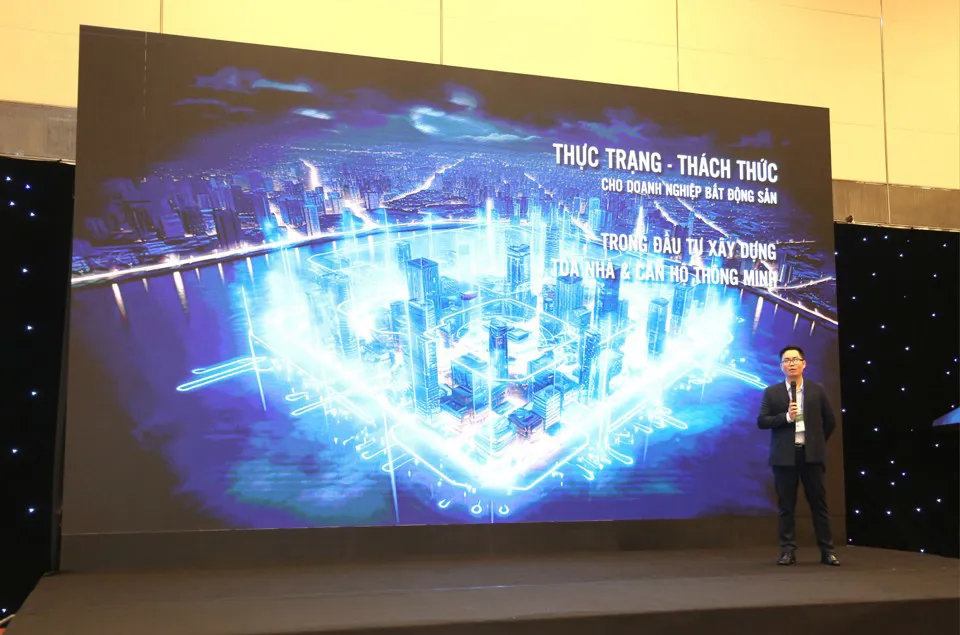
Architect Nguyen Hoang Phuong, a senior expert at Net Zero Company, shared his view at the seminar titled “Convenient life and smart home” held on November 30 under the Vietnam-Asia Smart City Summit 2023 in Hanoi.
Apart from industrial facilities, manufacturing zones, and public infrastructure, households in large cities also contribute significantly to overall energy consumption.
“Given this, optimizing energy usage in large urban areas has the potential to support Vietnam's commitment to achieving net-zero emissions by 2050,” Phuong said.
The question, however, would be “whether each household can function as an energy storage station, releasing energy back to the system as an energy credit unit?"
In this context, prioritizing the implementation of smart home technology that focuses on saving energy and optimizing its usage becomes critical, alongside other considerations such as utility and residential comfort, Phuong stressed.
He expressed optimism about the favorable foundations for the development of smart homes in Vietnam.
Phuong cited Deputy Prime Minister Tran Hong Ha's approval of Decision No.258/QD-TTg on March 17, 2023, outlining the roadmap for the application of Building Information Modeling (BIM) in construction activities as concrete evidence of a specific and proactive plan to promote digitalization in Vietnam's construction sector.
Phuong pointed out the significance of this roadmap, which aims to digitally map the entire three-dimensional space of urban areas, residential zones, and factories.
“This comprehensive mapping includes both above-ground and underground technical infrastructure, encompassing electricity, gas, water supply and drainage systems, and internet connections, all integrated into BIM,” he said.
The establishment of a digital management ecosystem for the construction industry, guided by a specific roadmap and leveraging today's advanced technologies, provides a robust foundation for the development of smart housing, Phuong continued.
Sharing Phuong’s view, Nguyen Thanh Trung, Head of the Real Estate Strategic Marketing Department at TNG Realty Vietnam, referred to a study that predicts by 2050, approximately 60% of the population will reside in cities with smart urban areas, making smart housing an inevitable choice.
Trung highlighted existing smart elements for housing, including smart lighting systems, weather sensors, heat and energy sensors, and advanced technology applications for fire prevention. Despite these advancements, the average expenditure on smart features is a modest $87 per home, representing only a small portion of total income.
He emphasized that smart housing products have yet to take off due to awareness, cost, and pricing issues.
“Currently, only residents of apartments and high-end buildings enjoy these amenities,” Trung noted.
In the long term, he expected the smart home trend to continue, with investors increasingly opting for reputable smart solutions that effectively meet the needs of the majority of users.