Snake: A specialty that gives tourists creeps
There are several exotic dishes that you should try once in Hanoi.
The snake-meat dishes in a village in Long Bien District, Hanoi are recommended by CNN “for adventurous diners”.
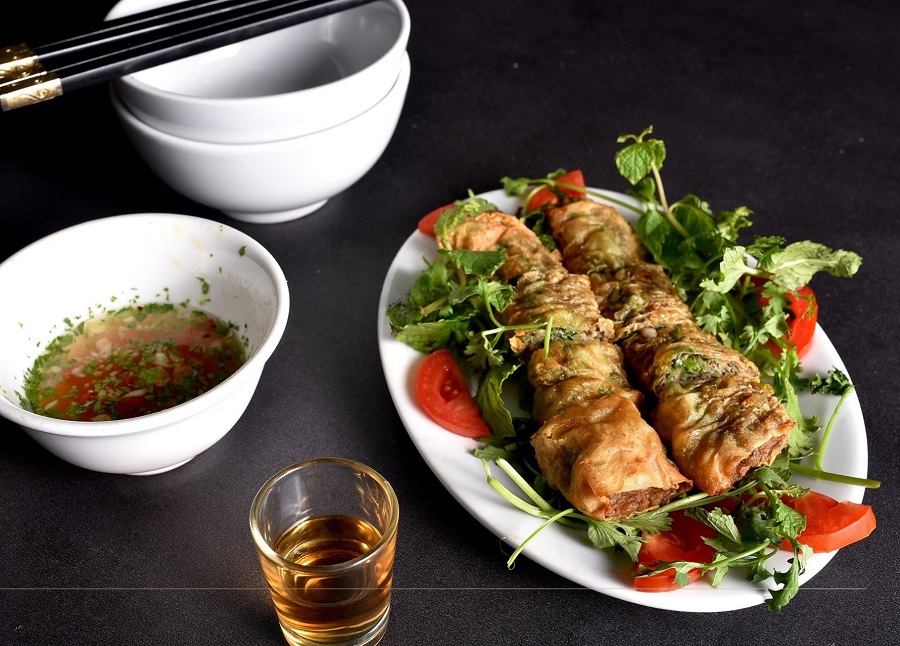
| A specialty of Hanoi: Snake Meat Spring Rolls. Photo: Ran Rao Cuisine Restaurant |
Cuisine for the brave
What is a Hanoi dish giving many tourists the creeps?
It was the subject of Reuters and CNN’s stories in previous years and commanded the attention of international travel bloggers who called it one of the “most unusual destinations in Vietnam”. The place in question is Le Mat Village in Viet Hung Ward, Long Bien District, Hanoi.
The village is famous for snake farming and snake specialty making, recognized by Hanoi as a "traditional craft village" since 2011.
Snakes in Le Mat are mainly king cobras, radiated rat snakes, and Chinese rat snakes.
Coming to the restaurants here, diners will enjoy a variety of snake meat dishes as well as witness the breathtaking scenery of catching snakes. However, the tricks to grab the reptiles, cut their necks and break their fangs are quite a horror, perhaps not for the faint of heart.
The scene of catching snakes and processing snake meat may make many reptile-fearing diners shiver.
A snake weighing about two to three kilos will be cooked into all kinds of bizarre dishes: grilled snake, stir-fried snake, snake ribs with rice paper, snake spring rolls, and snake cake wrapped in guise leaves, among others.
Snake bile, blood and heart are also prepared right before diners’ eyes, and then put in wine for them to enjoy from the beginning of the meal.
The culinary journey continues with strange nibbles, before ending with sticky rice cooked with snake grease, minced snake bones with Vietnamese rice crackers or mung bean porridge to fill the stomach. In general, nothing of the snake from flesh, bones, skin and organs, is wasted.
| These pieces of raw snake meat are ready for the dish of a grilled snake with herbs. Photo: Ran Rao Cuisine Restaurant |
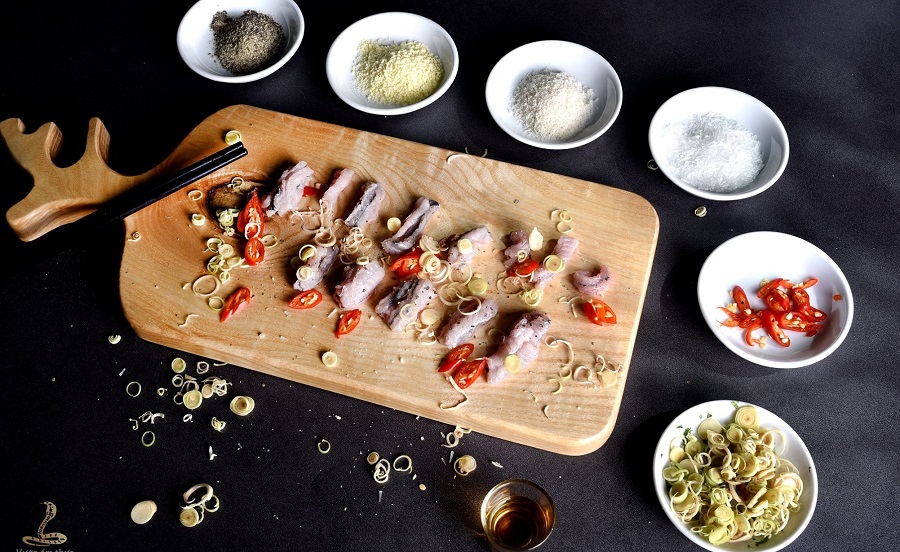
“Snake meat is crunchy, unlike any other. In particular, fried snake meat has a fresh and sweet taste, while crispy fried snake skin is richly scented and even crispier than rice crackers. Each dish has its distinctive flavor,” Nguyen Hoang Long, manager of Nguyen Van Duc Restaurant, Le Mat Village introduced the meat on CNN.
Each kilo of snake meat in Le Mat currently costs around VND800,000 or US$35. The meat is also advertised by restaurants as relieving bone and joint pains, and enhancing sexual vitality, whereas snake blood treats headaches and snake bile cures sore throats.
According to CNN, the menu-free experience at the restaurant means diners can get to choose which snake is going to end up on their table and witnessing the chefs preparing dishes of the snake makes the culinary trip more adventurous.
The CNN team described snake spring rolls, filled with ground reptile meat are “tasty and fresh with herbs found in all Vietnamese cuisine”. Besides, the most popular sauteed snake meat also left imprints as “its texture is the closest thing to poultry or pork - though the snake can't be likened to either”.
A century-old specialty
People in Le Mat still say that the village's snake-breeding and catching trade originated from the Ly Dynasty (1009 to 1225)
Legend has it that King Ly Thai Tong's virtuous eldest princess once sailed down the Thien Duc River or the present-day Duong River was suddenly captured by a sea snake named Jiaolong.
While her entourage was not strong enough to help, fortunately, a young fisherman surnamed Hoang rushed in to fight a fierce battle with the monster, beheaded it and saved the princess.
The knightly man later refused all the titles, gold and silver awarded by the king, and only asked for the establishment of 13 agricultural settlements which were named Cong Vi, Ngoc Ha, Giang Vo, Thu Le, among others, before returning to his hometown and making it so prosperous that it was called “Tru Mat” or “thriving”.
After the Hoang-surnamed man passed away, the villagers built a communal house to worship him as the village's tutelary God. Following his example, the people in Le Mat also developed the trade of catching and breeding snakes besides farming.
It is unclear how truthful this legend is, but snakes have been raised here for medicinal and wine ingredients for several hundred years before they began to be eaten about 20-30 years ago when Le Mat became known as a culinary village.
Today, there are 35 households that live off snake farming in Le Mat.
According to Nguyen Anh Tuan, Chairman of the Executive Board of Le Mat Craft Village Cooperative, the craft village is currently creating a development plan for the coming time.
Specifically, there will be separate areas for raising snakes, displaying and introducing products from snakes such as medicines, wines, and handicrafts among others, processing snake dishes and performing tricks, and so on.