Stand firm and self-reliant - Matter of survival for Vietnam in AI era
The Party chief stated that Vietnam’s enduring strength comes from moral integrity, national unity and its steadfast commitment to peace and international law amid a new race for power defined by innovation, clean energy and digital infrastructure.
THE HANOI TIMES — “How to stand firm, how to be self-reliant” is critical for Vietnam in the era of innovation and artificial intelligence, General Secretary To Lam said during his ongoing official visit to the United Kingdom.
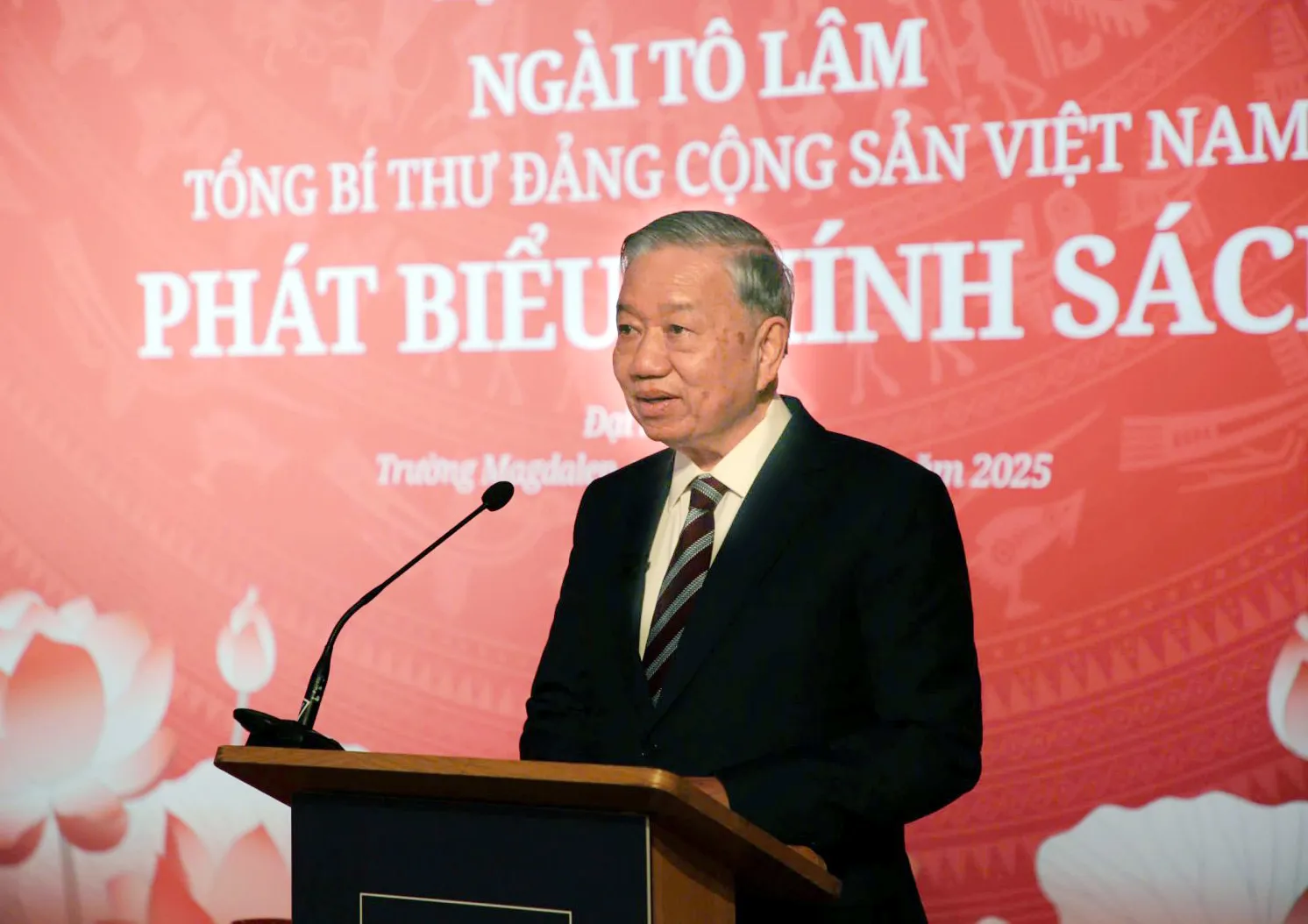
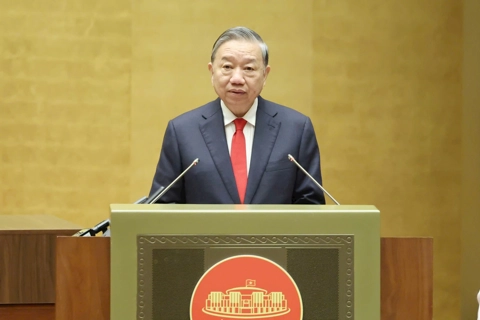
General Secretary of the Communist Party of Vietnam To Lam speaks at the University of Oxford, the UK on October 28. Photos: Nguyen Hong/Baoquocte
The question raised by Party General Secretary To Lam during his speech at the University of Oxford on October 28 has become a defining message for Vietnam in the age of artificial intelligence (AI).
Speaking to scholars, students and policymakers on the three-day visit at the invitation of Prime Minister Keir Starmer, the Party chief shared Vietnam’s vision for national development and international cooperation in the new era.
Addressing one of the world’s most prestigious centers of learning, To Lam said he was honored to present Vietnam’s outlook for the future to those who will help shape it.
He delivered a message that Vietnam seeks to stand firm, act independently and contribute responsibly to global peace, stability and progress.
He structured his speech around three key points, with the first one is that the world is entering a period of intense strategic competition that carries both risks and opportunities for development; Vietnam’s unwavering choice of a peaceful, independent and creative path centered on human development; and the Comprehensive Strategic Partnership between Vietnam and the United Kingdom should become a new model of equitable and mutually beneficial cooperation in the 21st century.
The Party chief noted that strategic competition is no longer limited to politics or security but extends to innovation, core technologies, clean energy and digital infrastructure, which he called a new race for power.
“Whoever controls strategic technologies will shape the rules and likely emerge as the winner,” stated To Lam.
At the same time, he warned that geopolitical tensions, sovereignty disputes and cyber conflicts are becoming more complex. Economic rivalry now centers on access to strategic resources and the setting of new technological standards. In this context, the critical question for every nation is no longer “which side to take” but “how to stand firm and how to be self-reliant.” For Vietnam, this is a matter of survival.
Vietnam’s path
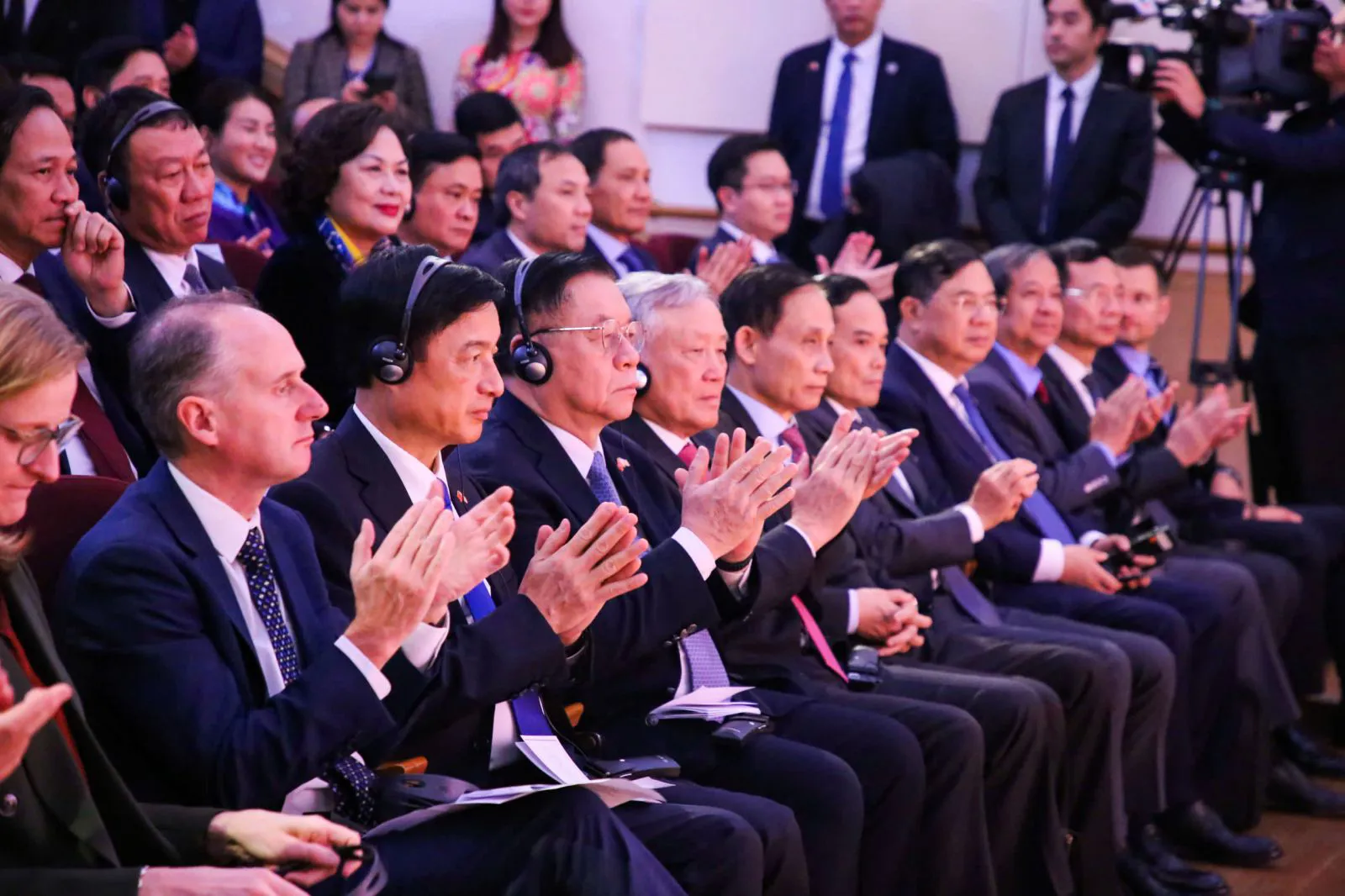
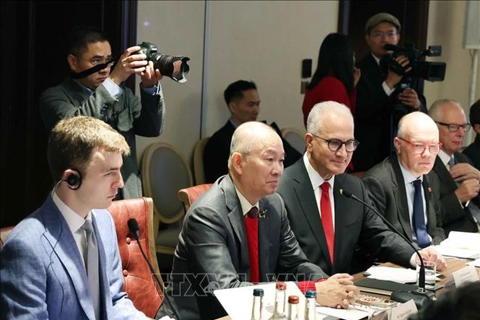
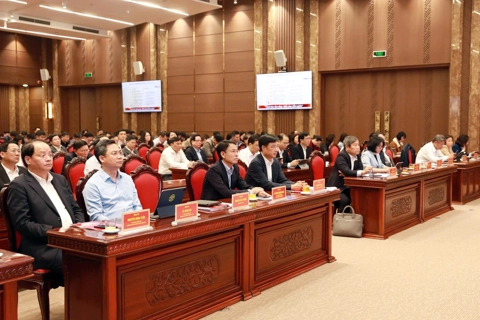
Representatives of both Vietnam and the UK at the speech.
He affirmed that Vietnam has chosen the path of peace, independence and cooperation for development.
As a nation that paid a heavy price for freedom, Vietnam deeply values peace and sovereignty. President Ho Chi Minh’s declaration that “nothing is more precious than independence and freedom” remains the guiding principle of national policy today.
Amid renewed pressures to “choose sides,” Vietnam persists in an independent and self-reliant foreign policy, diversifying relations and promoting multilateralism to maintain internal stability, preserve a peaceful environment and resolve differences through dialogue and international law while placing the legitimate interests of the people above all else.
He emphasized that Vietnam defends its sovereignty through peaceful means, such as by law, culture and cooperation. The country neither supports confrontation nor seeks growth through conflict. It believes in equal dialogue, mutual respect and shared benefit.
This approach has enabled Vietnam to remain politically stable while integrating deeply into the global economy. The country has joined next-generation free trade agreements and expanded multi-level cooperation with partners, including the United Kingdom.
To develop sustainably, Vietnam’s future must be built on science, technology, innovation and a knowledge-based economy instead of natural resources or low-cost labor.
Accordingly, the country is accelerating national digital transformation, promoting green and circular economies and viewing innovation as the lifeblood of competitiveness and resilience.
Meanwhile, institutional reform is an essential part of this process to perfect its socialist-oriented market economy, encouraging fair competition and empowering the private sector as a key driver of growth, while ensuring the state’s guiding and regulatory role in maintaining macroeconomic stability, energy and food security.
He emphasized that economic growth must align with social equity and environmental sustainability to enhance people’s well-being through better healthcare, education, social welfare and equal opportunities.
At the same time, Vietnam aims to achieve industrialization while preserving its cultural identity and ensuring inclusive urban development.
The Party leader reaffirmed Vietnam’s two centennial objectives that include becoming an upper-middle-income and industrialized nation by 2030, marking 100 years of the Communist Party; and a developed and high-income country with a modern, prosperous and cultured society by 2045, the centenary of the Socialist Republic of Vietnam.
For Vietnam-UK partnership role model
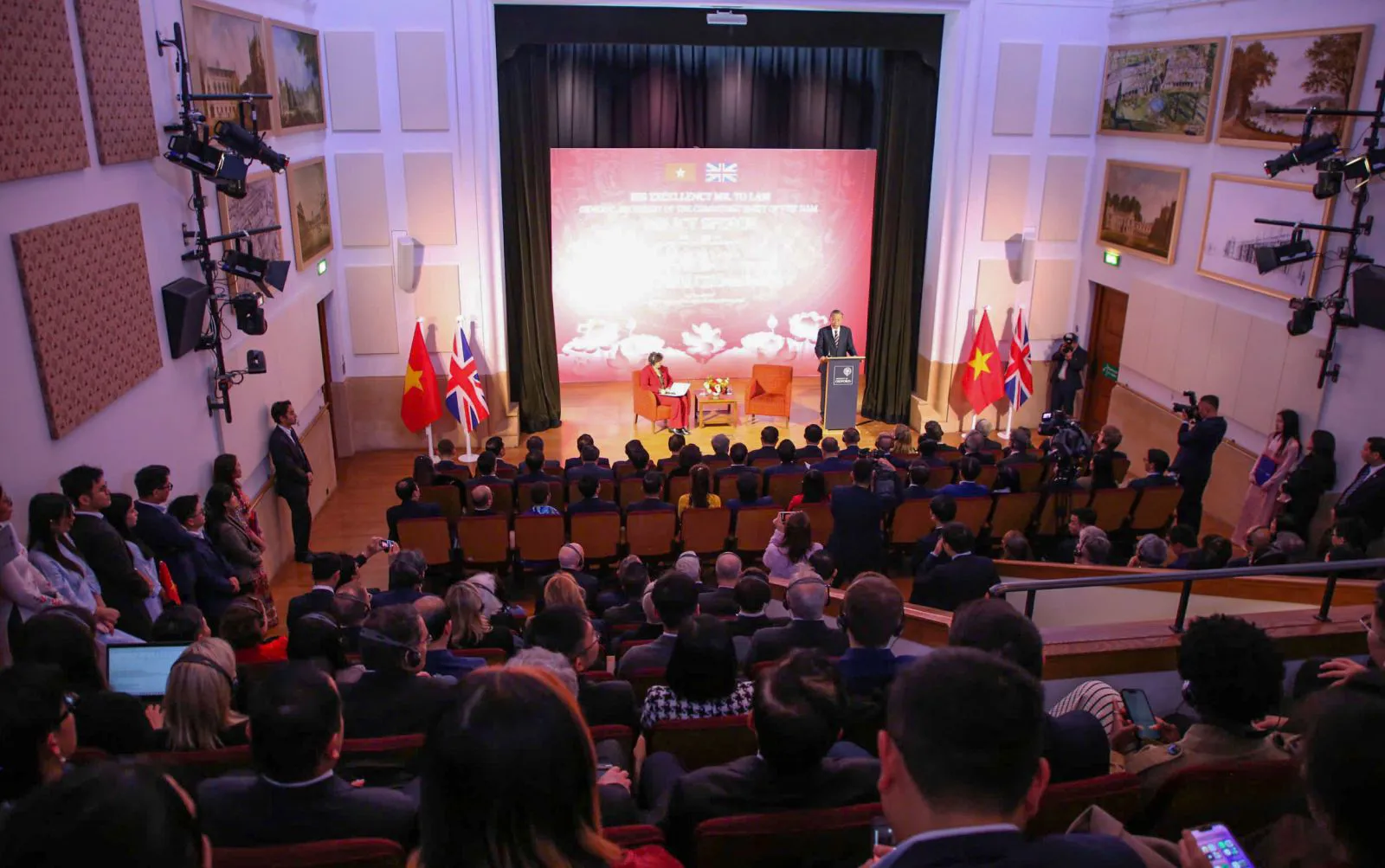
Overview of the event at the University of Oxford.
To Lam also reviewed the 52-year journey of Vietnam–UK relations, from the establishment of diplomatic ties in 1973 to the signing of the Strategic Partnership in 2010 then working to elevate the relationship to a Comprehensive Strategic Partnership – the highest level in Vietnam’s foreign policy framework.
This new stage reflects shared interests in maintaining peace, stability, global supply chains and sustainable development. It also represents the convergence between the UK’s vision of deeper engagement in the Indo-Pacific and Vietnam’s strategy to expand access to high-quality education, technology and finance.
On this occasion, To Lam proposed four specific areas of cooperation between Vietnam and the University of Oxford, including joint research and training in public health, biotechnology, nuclear science, clean energy and responsible AI; expert exchange programs between policy institutes of both countries; support for technological innovation and startups in Vietnam; and pilot projects in sustainable urban development, green finance, digital education and healthcare.
The initiatives will turn the bilateral relationship from high-level declarations into a living network of knowledge, technology and people connecting Hanoi and London, Ho Chi Minh City and Oxford.
The general secretary said Vietnam is entering a new phase of development driven by the aspiration to build a prosperous, humane and modern nation while it aims for a green, smart economy and a fair, civilized society.
He stressed that the most enduring power of a nation lies not in its military or financial capacity but in its moral strength, social unity and international trust. Vietnam cherishes peace, respects international law, rejects coercion and seeks a world united in development.
To Lam called on young people in the UK, as well as scholars, innovators and policymakers, to view Vietnam as a sincere friend and trusted partner in building a fairer and more sustainable global order.
He stressed that if both countries work together on the basis of respect, mutual benefit and long-term vision, the Vietnam–UK relationship will become a model of modern diplomacy and a shared success story contributing to peace, stability and sustainable development in the 21st century.
Vietnam pursues an innovation economy with significant investment in AI. Photo: Asia Society Policy Institute