Stronger government support needed for Covid-19-hit businesses: Expert
It would be more efficient if the government could waive and delay tax payments for one to three years, said a senior local economist.
The Vietnamese government should provide stronger and more specific support for the business community to overcome hardship caused by the Covid-19 pandemic, according to Nguyen Dinh Cung, former director of the Central Institute of Economic Management (CIEM).
| Former CIEM's Director urges stronger government support for businesses hurt by Covid-19. Photo: Nguyen Tung. |
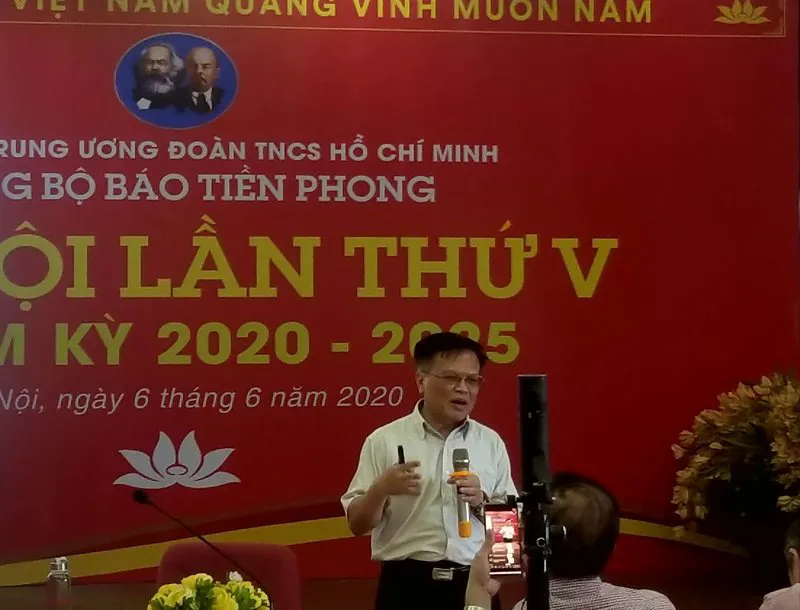
“Support in forms of 5-month payment deferral for taxes, land rental fees, or death gratuity, among others, for nearly 98% of the existing enterprises would mean very little for those severely hit by the pandemic,” Cung said at a talk on June 9.
The former CIEM director suggested it would take significant time and efforts for the majority of firms to fully recover to their pre-Covid-19 state, therefore, it would be more efficient if the government could waive and delay tax payments for one to three years.
Cung said some securities fees have been waived, but the impacts would be limited given the low number of Vietnamese public firms.
Cung suggested the government to cut 15% rental fees of state-owned properties for those that have been forced to suspend operation during the Covid-19 pandemic; 2% reduction in interest rates for both direct and indirect borrowings taken by small and medium enterprises (SMEs).
As the government has planned to offer a number of incentives for the aviation industry, one of the hardest-hit sectors by the pandemic, Cung expected the government to speed up the implementation of these incentives, including waiving fees related to outstanding government-guaranteed loans as of December 31, 2019 for local airlines, and reduce 50% of take-off and landing charges, as well as air navigation service fees for domestic flights from March to September.
Cung said at the current session of the National Assembly (NA), scheduled to end on June 18, NA deputies could agree to cut 30% of the current environmental tax rate until the end of 2020, as well as waive fees for enterprises using water for production.
In addition to financial support, Cung said it is essential for the government to speed up the decision-making process and make substantial changes in administrative reforms.
“The government should apply the Covid-19 fighting spirit in the process of supporting enterprises, so that there would be no delay in administrative procedures or additional obstacles to the business community,” Cung added.
Another focus is to accelerate disbursement of public investment, which is not up to expectation at the moment.
“Public investment is key to stimulate production and consumption, job creation and social security,” Cung asserted.
“For the immediate future, the government should focus on completing a legal framework for e-payment, peer-to-peer lending and mobile payment, so that Vietnam could really benefit from the digital economy,” Cung stressed.
As of present, the government has rolled out several supporting programs such as a credit aid package worth VND300 trillion (US$12.87 billion), a VND180-trillion (US$7.63 billion) fiscal stimulus package in forms of delay of payment of value-added tax, corporate tax and income tax, and a financial support package for vulnerable people worth VND62 trillion (US$2.7 billion).
To continue supporting the economic recovery process, the government has issued Resolution No.84/2020 in late May, which included drastic measures such as waiving taxes.