Trade fraud crackdown nets $80 million in H1 in Hanoi
During the first half of 2025, the authorities in Hanoi handled over 8,500 cases involving smuggling, trade fraud, counterfeit goods, and intellectual property violations and fined over US$80 million.
THE HANOI TIMES — Authorities in Hanoi handled over 8,500 cases involving smuggling, trade fraud, counterfeit goods, and intellectual property violations in the first half of 2025, collecting more than US$80 million in fines, according to Nguyen Manh Quyen, Vice Chairman of the Hanoi People's Committee.
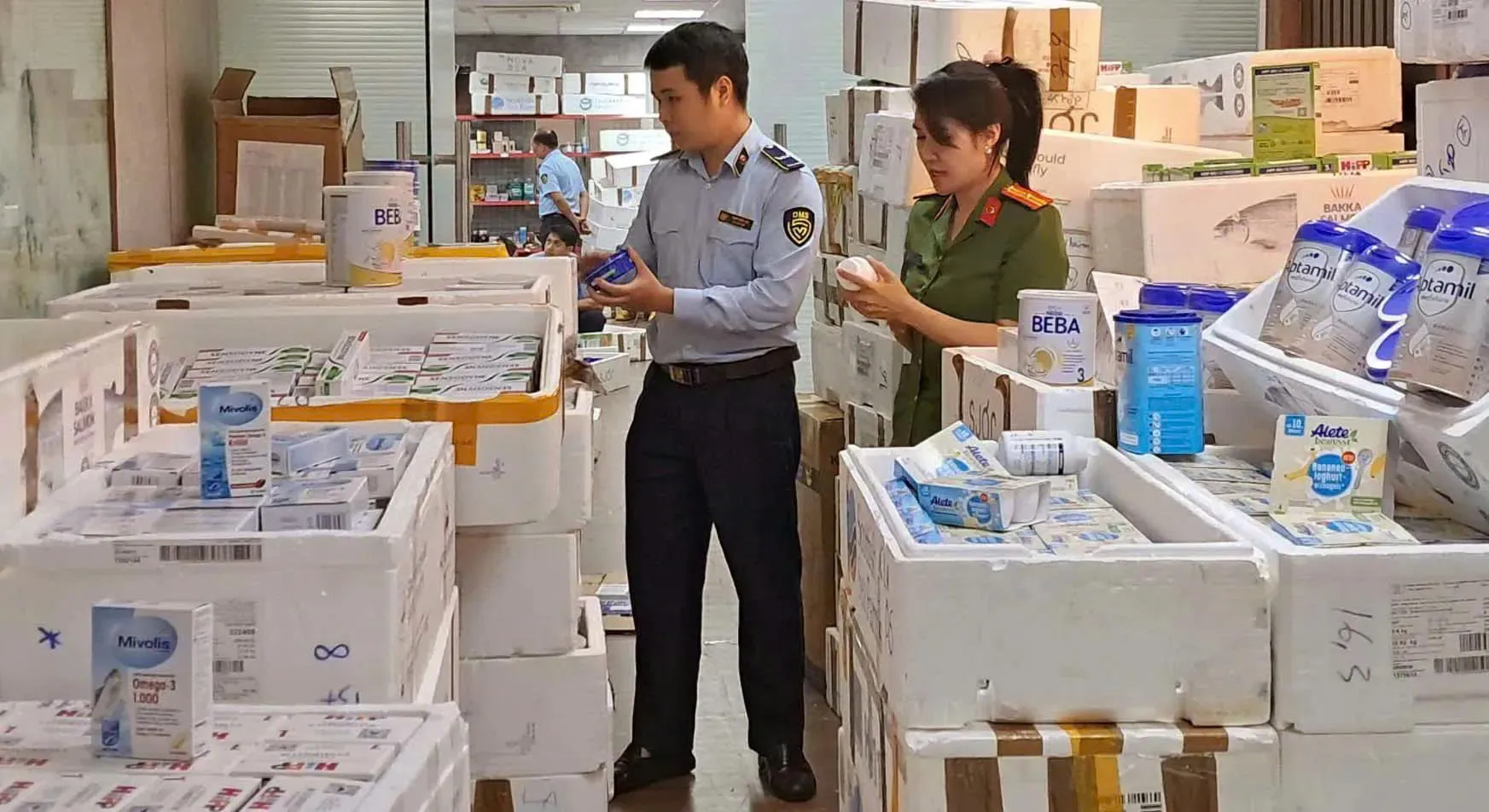
Dairy and food counterfeits seized at a store on Bach Mai Street, Hanoi's Hai Ba Trung District. Photo: Le Nam/The Hanoi Times
Quyen, who also heads the Hanoi Steering Committee Against Smuggling, Trade Frauds, Counterfeits, and Intellectual Property Violations (Hanoi Steering Committee 389), said at a government online conference on June 23 that the city prosecuted 115 criminal cases involving 170 suspects in the first six months of this year.
Notably, in the one-month nationwide crackdown launched under the Prime Minister’s Directive 65, which ran from May 15 to June 15, Hanoi dealt with 814 cases, prosecuted seven with 16 defendants, and collected nearly VND16 billion (US$612,000) in fines and tax arrears.
Le Thanh Hai, Chief of the Office of the National Steering Committee 389, praised Hanoi as one of the top-performing localities in the nationwide campaign.
He stated that authorities in provinces and cities across the country have detected and handled some 50,700 cases, including 10,860 related to smuggling, 36,600 to commercial and tax fraud, and 3,270 to counterfeit goods and intellectual property infringement.
The total fines and seizures during the first six months amounted to over VND6.5 trillion ($248.5 million). In the peak month alone, enforcement agencies processed 10,430 cases, an 80% increase from the previous month, and penalized VND1.3 trillion ($49 million).
Local authorities also launched 204 criminal cases involving 378 individuals, and more than 5,500 retail businesses were shut down or temporarily closed during the crackdown.
Despite these efforts, illegal activities remain rampant due to the enormous profits at stake, said Hai.
Offenders are employing increasingly sophisticated tactics, while legal gaps, insufficient awareness among local leaders, and inadequate interagency data sharing persist as hindrances to enforcement.
Major General Nguyen Hong Thai, Deputy Minister of National Defense, called for institutional reforms, stricter penalties, and stronger deterrents against violations.
The Minister of Industry and Trade, Nguyen Hong Dien, said that his ministry would intensify market surveillance using digital tools, develop interoperable data systems, and enhance legal frameworks that align with modern trade practices.
Deputy Chairman Quyen pledged that Hanoi would continue to support residents and businesses in building brands, registering intellectual property, and complying with product quality regulations.
"The city will carry out unannounced inspections in high-risk areas and sectors, with a focus on online sales of products that affect public health, such as food, pharmaceuticals, and cosmetics, Quyen said. He added that the National Steering Committee 389 would oversee the restructuring of local anti-smuggling units under the new two-tier administrative model.
Prime Minister Pham Minh Chinh criticized lax oversight across ministries and provinces, particularly regarding the licensing and inspection of food production.
He warned that some officials have failed in their responsibilities and have even facilitated illegal activities. "Tackling smuggling, fraud, and counterfeiting must be a top priority and be carried out relentlessly, without sparing any offenders."
He requested that localities and ministries take strong measures to crack down on counterfeit medicines and food, as they pose serious risks to public health and safety.
Chinh also ordered greater public awareness campaigns, tighter control over advertising and product promotions, and improvements in enforcement training, especially in complex areas such as e-commerce, multi-level marketing, and intellectual property crimes.
He called for accelerated digital transformation and information sharing among agencies, as well as the timely handling of citizen reports.
Ministries and local governments must also complete new legal regulations, upgrade infrastructure and logistics facilities, and strengthen local governance capacity under the two-tier system to ensure that laws are enforced after the provincial merger.
The prime minister suggested launching a nationwide movement to encourage all citizens to reject counterfeit and smuggled goods and actively participate in the fight against trade fraud.