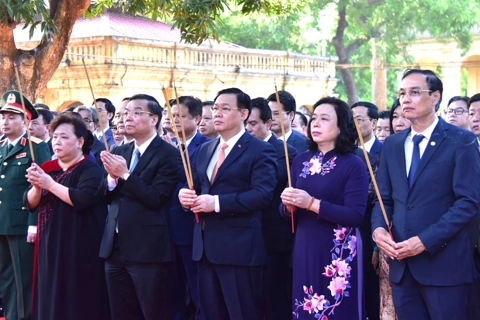
Two places in Hanoi where President Ho Chi Minh used to live and work in August 1945
In the autumn days of 1945, in the boiling revolutionary atmosphere throughout the country, President Ho Chi Minh made the decision to leave Dinh Hoa Safety Zone (Thai Nguyen province) for Hanoi in order to lead the uprising and regain power for the people. Below are the places in Hanoi where Uncle Ho visited and worked before reading the Declaration of Independence.
Madam. Nguyen Thi An's house in Phu Thuong
| Madam. Nguyen Thi An's house (Phu Thuong ward, Tay Ho district, Hanoi) in a small alley running straight to the Red River dyke/ Photo: Bich Hoi |
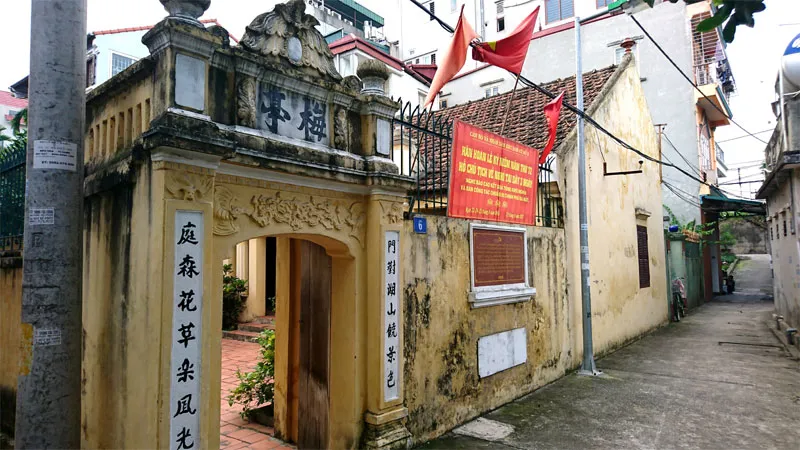
Arriving in Hanoi on August 23rd, 1945, President Ho Chi Minh first visited the communal temple of Phu Xa, Phu Gia (currently Phu Thuong, Tay Ho). After that, Uncle Ho and the delegation of the Central Committee took shelter in the house of Madam Nguyen Thi An and her son, Mr. Cong Ngoc Kha – one of the first five Party members of Phu Thuong village in Phu Thuong.
| The table and chairs set aside for Uncle Ho to work and discuss national affairs in Madam An’s house. |
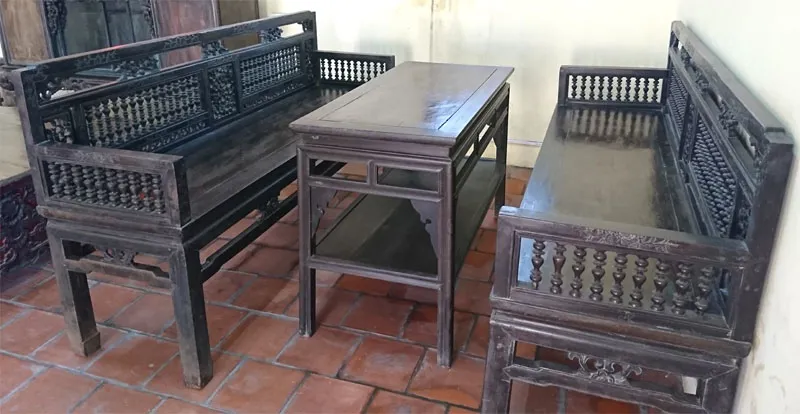
According to Mr. Cong Ngoc Dung, Madam An's grandson, at that time no one in the family and even the revolutionaries there knew that the old man with long beard and gray hair, who worked day and night while having very little sleep, was President Ho Chi Minh (then known as Nguyen Ai Quoc). On August 25th afternoon, Uncle Ho had a talk with Mr. Kha, thanked his family for hosting him for a few days, said goodbye to the whole family and said: "I will come back and visit the family one day."
| The bed where Uncle Ho rested in Madam An's house. |
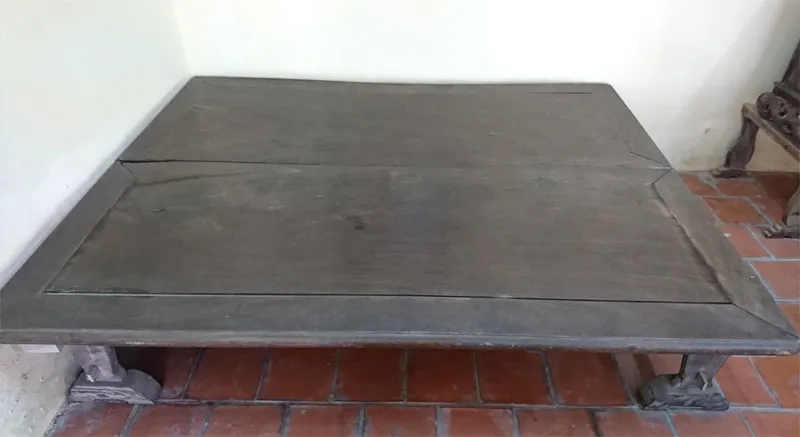
On September 2nd, 1945, Mr. An's family members along with a lot of revolutionaries in Phu Thuong were invited to Ba Dinh Square to listen to Uncle Ho read the Declaration of Independence. At the end of the event, when told by Mr. Hoang Tung that the familiar-looking man who read the Declaration of Independence was Nguyen Ai Quoc, everyone in the family was deeply moved.
The house at 48 Hang Ngang Street
After leaving Madam. An's house, President Ho Chi Minh moved to the house at 48 Hang Ngang Street (Hang Dao Ward, Hoan Kiem District, Hanoi), then belonging to the family of Mr. Trinh Van Bo and Mrs. Hoang Thi Minh Ho, a wealthy and famous silk merchant in Hanoi.
Located in the bustling commercial area of the Old Quarter, with the “tube house” design and two entrances, this house was selected because of Hanoi’s downtown by that time was the center of the revolutionary upsurge.
| The photo of the Provisional Government being kept at 48 Hang Ngang |
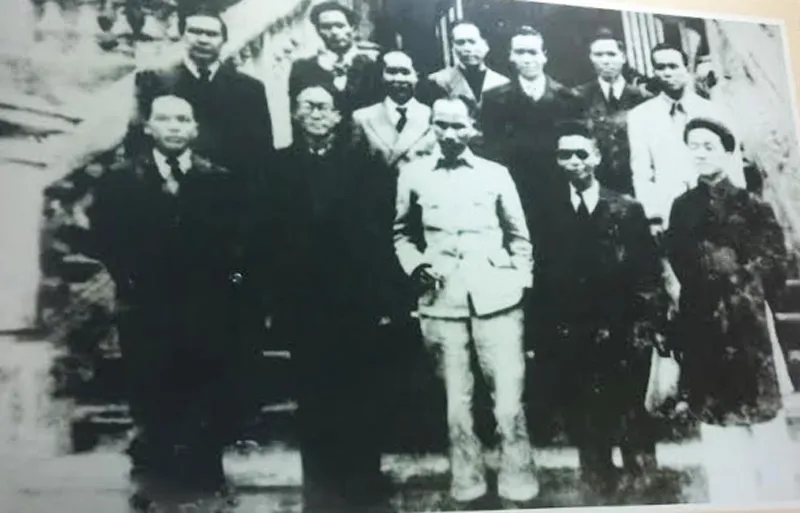
According to tour guide Quach Thi Huong Tra, before the house became the workplace of the Party Central Committee’s Standing Board and President Ho Chi Minh in the first few days after the August Revolution in 1945, it had been a revolutionary base of the Viet Minh (The League for the Independence of Vietnam).
| The clothes of President Ho Chi Minh being kept at 48 Hang Ngang. |
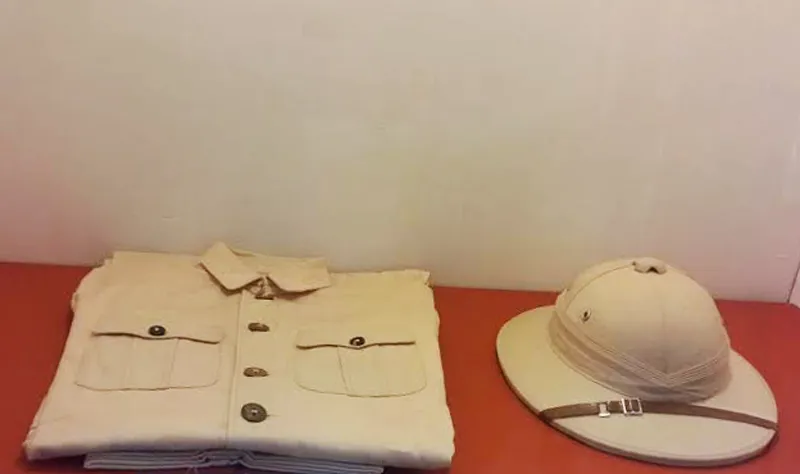
Later on, the house at 48 Hang Ngang Street was donated by Mr. Trinh Van Bo's family to the State. The house has been listed as a National Monument, becoming a revolutionary relic of the country and the pride of Hanoi People. Its architecture remains intact; the first floor is the place to display the photos and objects of President Ho Chi Minh and the senior revolutionaries.
| The first Vietnamese currency note issued at the birth of the Democratic Republic of Vietnam. |
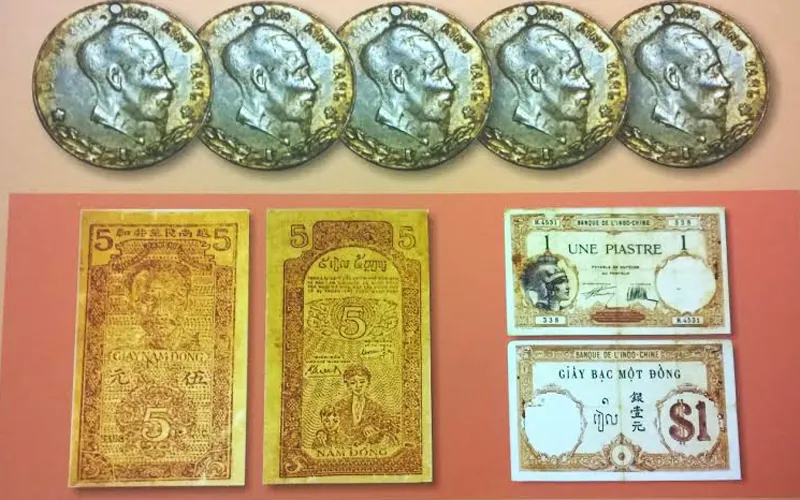
Meanwhile on the second floor, the workplace of the Party Central Committee’s Standing Board and President Ho Chi Minh, the artifacts are still kept intact, including a table and eight chairs, the typewriter used by President Ho Chi Minh to compose the Declaration of Independence, as well as the first currency note issued at the birth of the Democratic Republic of Vietnam in 1945.