14TH NATIONAL CONGRESS OF THE COMMUNIST PARTY OF VIETNAM
Log in
Vietnam

Vietnam affirms no entry restrictions but prioritizing safety

Hanoi said the entry should be selective and socio-economically effective.

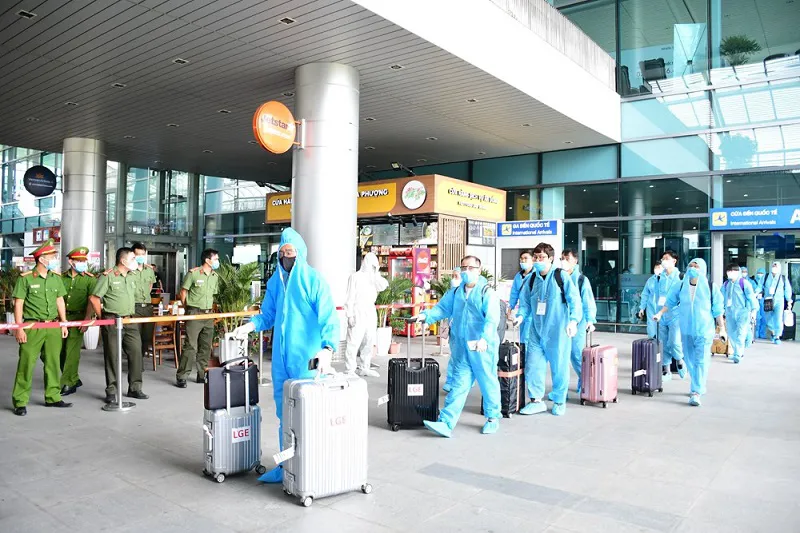
Vietnam has affirmed that there’s no ban on the entry of foreign experts amid the uncertainties of the Covid-19 pandemic evolution.

 A group of South Korean experts upon arrival in Haiphong city in July 2020. Photo: Cong An Hai Phong

However, the permission would ensure that safety regulations are met, Deputy Minister of Health Tran Van Thuan said at a government meeting on May 5.

Allowing the entry of foreign experts must be selective and effective in terms of socio-economic development, Thuan said in a statement.

He noted that since the resurgence of SARS-CoV-2 in Vietnam on April 29, Prime Minister Pham Minh Chinh has requested to reactivate the interdisciplinary working group consisting of five ministries namely National Defense, Foreign Affairs, Public Security, Health, and Transport to consider the entry of foreign experts to Vietnam.

The working group will analyze every single case to decide whether they are eligible to enter Vietnam or not.

At the meeting on May 5, Minister and Chairman of the Government’s Office Tran Van Son also emphasized the importance of safety to the people and for the sake of the country.

He noted that the enforcement of Covid-19 regulations must be tough without exception and any activities that cover up illegal immigration or violations of precautionary measures must be strictly punished, including criminal punishment.

Vietnam has suspended the entry of all foreigners, except for diplomats, officials, foreign investors, experts, and skilled workers since March 22, 2020 with an aim to limit the spread of Covid-19.

The country’s leadership has also affirmed that they would never exchange economic interest to people’s health.

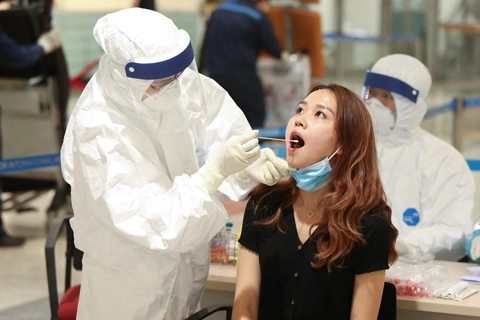
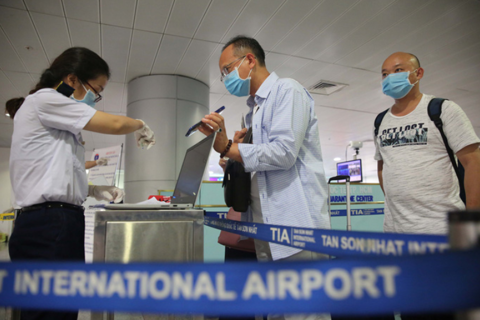
As stipulated by the Ministry of Labor, Invalids and Social Affairs (MOLISA), immigrants who are foreign experts must be negative with RT-PCR test for SARS-CoV-2 taken at least 3-5 days before the entry.

For foreign experts whose visits are just for meetings or signing ceremonies, the meeting location should be near the boundary areas to minimize inland travel.

For those who stay to work in the country, hosting organizations and companies must notify the authorities of lodging facilities, means of transport, quarantine, preventive measures, and lists of people in the contact.

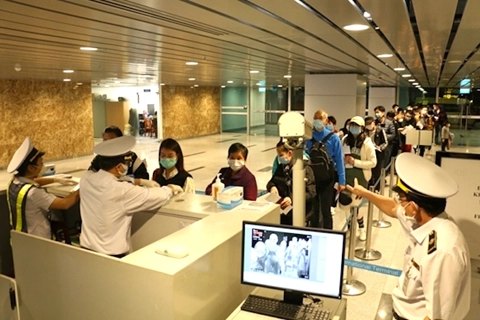
From May 5, the Ministry of Health extended the quarantine period to 21 days from 14 days earlier for foreign arrivals and those who come into contact with Covid-19 patients.

The decision was made after several individuals tested positive for SARS-CoV-2 despite completing the mandatory 14-day quarantine period.

So far, people have some quarantine options, including at state-run quarantine centers and hotel quarantine.
Reactions:
Share:
Trending
Most Viewed
Related news
Hanoi’s Party chief outlines agenda at voter meeting

Hanoi’s Party chief outlines agenda at voter meeting

The candidates pledge institutional reform, infrastructure upgrades and a stronger focus on science, technology and public services as the capital prepares for the 16th National Assembly term.

Young generation steps up to power climate action

Young generation steps up to power climate action

As climate risks intensify across Southeast Asia, young people are being called upon to move from awareness to action, harnessing technology, creativity and policy engagement to accelerate environmental solutions.

Hanoi positions itself at forefront of implementing key Party resolutions

Hanoi positions itself at forefront of implementing key Party resolutions

The three resolutions on education, healthcare reform and cultural development are closely interconnected and mutually reinforcing, all directed toward building a capital that is cultured, civilized, modern and happy.

Party Chief urges stronger state economy and cultural drive

Party Chief urges stronger state economy and cultural drive

Developing the state economy and Vietnamese culture forms the twin pillars of a unified development strategy, one strengthening material capacity, the other reinforcing cultural and social resilience.

Putting people first: Making happiness Hanoi’s measure of success

Putting people first: Making happiness Hanoi’s measure of success

A central message of the 14th National Party Congress and the 18th Congress of the Hanoi Party Organization (2025-2030) is that people’s happiness must be at the core of development. All policies be grounded in citizens’ legitimate rights and interests, with public satisfaction serving as the ultimate measure of success. 

The flavors of Vietnamese Tet linger around the world

The flavors of Vietnamese Tet linger around the world

From Osaka in Japan to Lorient in France, Vietnamese communities are spreading the spirit of Tet through vibrant cultural celebrations.

Vietnam pledges to enhance tax reforms after EU listing decision

Vietnam pledges to enhance tax reforms after EU listing decision

Vietnam has reaffirmed its strong commitment to meeting international standards on tax transparency and information exchange following the European Union's adding Vietnam to its list of non-cooperative tax jurisdictions.

Tet at the mission: Peach blossoms bloom in Africa

Tet at the mission: Peach blossoms bloom in Africa

Under the dry winds and red dust of Abyei and Bentiu, mission compounds glow with paper blossoms and steaming banh chung, as each square rice cake carries from Vietnam to Africa a message of solidarity, compassion and enduring cultural identity.