UNESCO requested to support Vietnam implementing conventions on culture
The implementation of Conventions on culture will enable Vietnam to better preserve heritage in the country home to dozens of UNESCO-recognized sites and elements.
The UNESCO Office in Vietnam has been requested to extend cooperation with the Vietnamese Ministry of of Culture, Sports and Tourism (MCST) to help the country better implement Covnentions on culture.
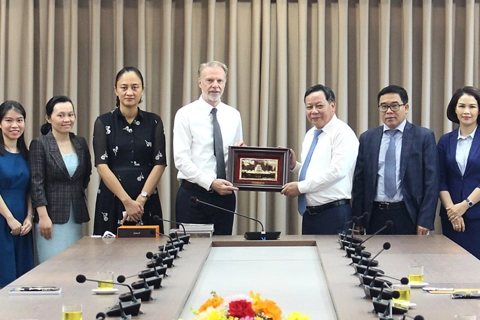
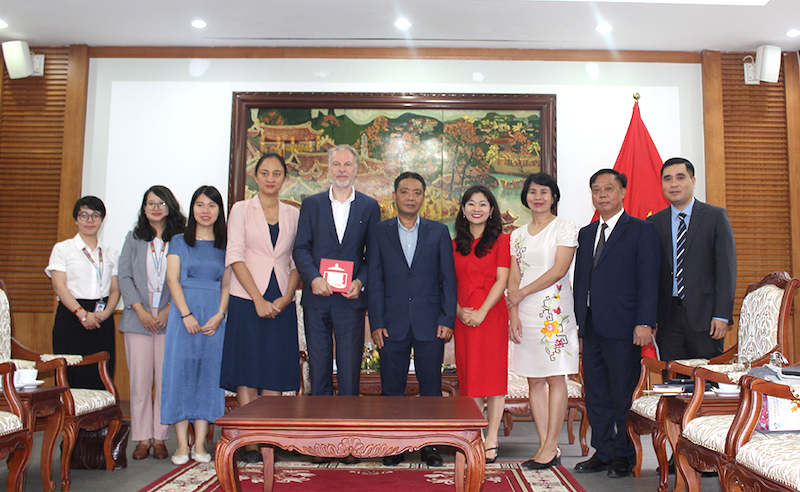
MCST Deputy Minister Hoang Dao Cuong said at the meeting with Christian Manhart, UNESCO Chief Representative in Vietnam on July 5 in Hanoi.
| Delegates attend the meeting in Hanoi. Photo: TITC |
The request was made in the context that Vietnam is an active and responsible member of a number of UNESCO's conventions namely the Protection of the World Cultural and Natural Heritage (adopted in 1972), the Convention for the Safeguarding of the Intangible Cultural Heritage (2003), the Convention on the Protection and Promotion of the Diversity of Cultural Expressions (2005), the Convention on the Means of Prohibiting and Preventing the Illicit Import, Export and Transfer of Ownership of Cultural Property (1970), and the UNESCO Convention Against Doping in Sport (2005), among others.
Accordingly, the guidance by UNESCO Vietnam would enable Vietnam to complete its regulatory framework in culture.
In addition, Vietnam will cooperate with UNESCO to implement a series of activities, including a project to develop a network of creative cities.
For his part, Christian Manhart, UNESCO Chief Representative in Vietnam, highly appreciated Vietnam and the ministry for making efforts in preserving and promoting heritage values. He stated that he and UNESCO experts will support the ministry in amending Law on Cultural Heritage.
In anticipation of the visit of the president of the International Association of Museums (ICOM) to Vietnam in September, he expressed his hope to have a meeting with museums in Vietnam to discuss areas of cooperation and promotion of development.
Vietnam is home to an array of natural heritage sites and elements of intangible cultural heritage recognized by UNESCO. Two natural sites include Ha Long Bay (recognized in 1994 and 2000), Phong Nha – Ke Bang National Park (2003, 2015). One mixed heritage is Trang An Landscape Complex (2014). Five in the world cultural heritage list: Complex of Hué Monuments (1993), Hoi An Ancient Town (1999), My Son Sanctuary (1999), Central Sector of the Imperial Citadel of Thang Long – Hanoi (2010), and Citadel of the Ho Dynasty (2011).
Especially, the Southeast Asian country is home to 14 elements on the list of intangible cultural heritage, including the Art of Xoe dance of the Thai people (recognized in 2021), Practices of Then by Tay, Nung, and Thai ethnic groups (2019), the art of Bai Choi in Central Region (2017), Xoan singing of Phu Tho Province (2019), Practices related to the Viet beliefs in the Mother Goddesses of Three Realms (2016), Tugging rituals and games (2015), Vi and Giam folk songs of Nghe Tinh (2014), Art of Don Ca Tai Tu music and song in southern region (2013), Worship of Hung Kings in Phu Tho (2012), Giong festival of Phu Dong and Soc temples (2010), Ca Tru singing (2009), Quan Ho Bac Ninh fork songs (2009), and Nha Nhac – Vietnam court music, and Space of gong culture (2008).