Vietnam, China push forward railway cooperation in Prime Minister Chinh’s visit
Vietnam and China stressed the importance of railways in economic connectivity as well as social ties.
THE HANOI TIMES — Railway cooperation was at the center of discussions between Vietnam and China during Vietnamese Prime Minister Pham Minh Chinh’s visit to Tianjin on August 31 - September 1.
Prime Minister Chinh visited China to attend the Shanghai Cooperation Organization (SCO) Summit and to hold working sessions with Chinese leaders.
In the meeting between General Secretary and President Xi Jinping and Prime Minister Pham Minh Chinh, the two leaders discussed ways to accelerate railway cooperation.
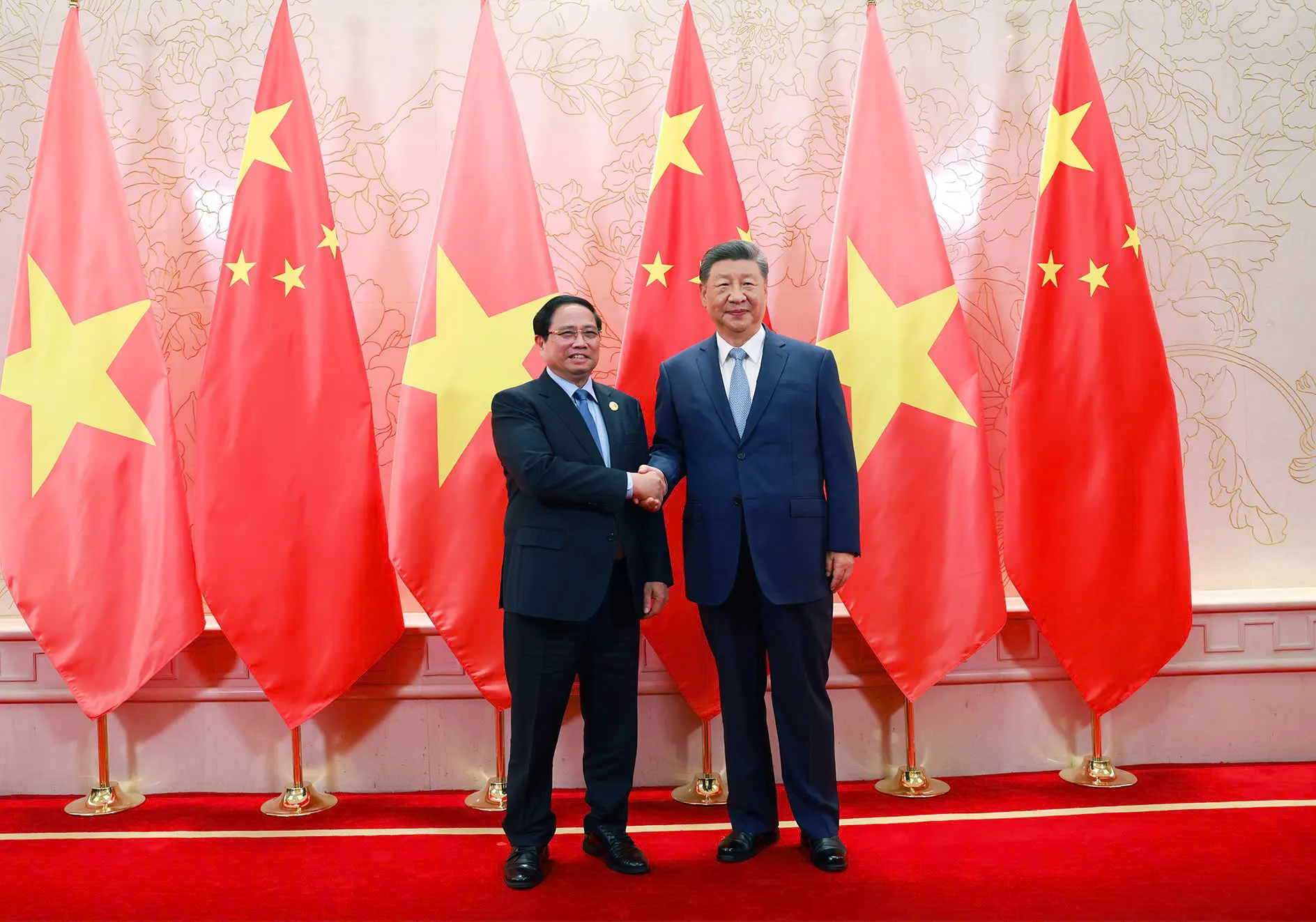
Vietnam’s Prime Minister Pham Minh Chinh meets General Secretary of the Communist Party of China and Chinese President Xi Jinping on August 31. Photos: VGP
They agreed to convene the first meeting of the Vietnam - China Joint Railway Cooperation Committee, include Vietnam on the priority list for railway industry development in the Asia–Pacific, speed up feasibility studies, and negotiate a framework agreement for concessional loans.
China is also expected to support the training of Vietnamese human resources and the development of a railway industry complex.
Vietnam and China have long identified cross-border railway connectivity as a key driver of trade and socio-economic integration.
The multi-provincial railway, linking China’s Yunnan Province to Vietnam’s northern and coastal economic hubs of Lao Cai, Hanoi and Haiphong, has been under discussion for years as a strategic project.
Prime Minister Chinh’s visit provided new momentum for the project.
So far, the two countries have stressed the importance of moving forward with the multi-provincial railway project and have proposed collaboration on financing, smart border gates, cross-border economic zones and workforce training.
Beyond railway issues, Xi and Chinh reaffirmed their commitment to six pillars of cooperation: political trust, trade and investment, defense and security, supply chains, infrastructure, and social and cultural exchanges.
Meetings with Chinese firms
During his stay in Tianjin, Prime Minister Chinh also met with leaders of major Chinese companies in energy, finance and infrastructure.
Their discussions focused on sustainable investment, technology transfer and innovation.
Peng Gangping, Chairman of the China Huadian Engineering, said the company has invested US$2.8 billion in Vietnam.
He added that the company would continue to expand its Vietnamese operations under the “1+1+1+N” model, which combines a business entity, a research center, a manufacturing base, and multiple projects.
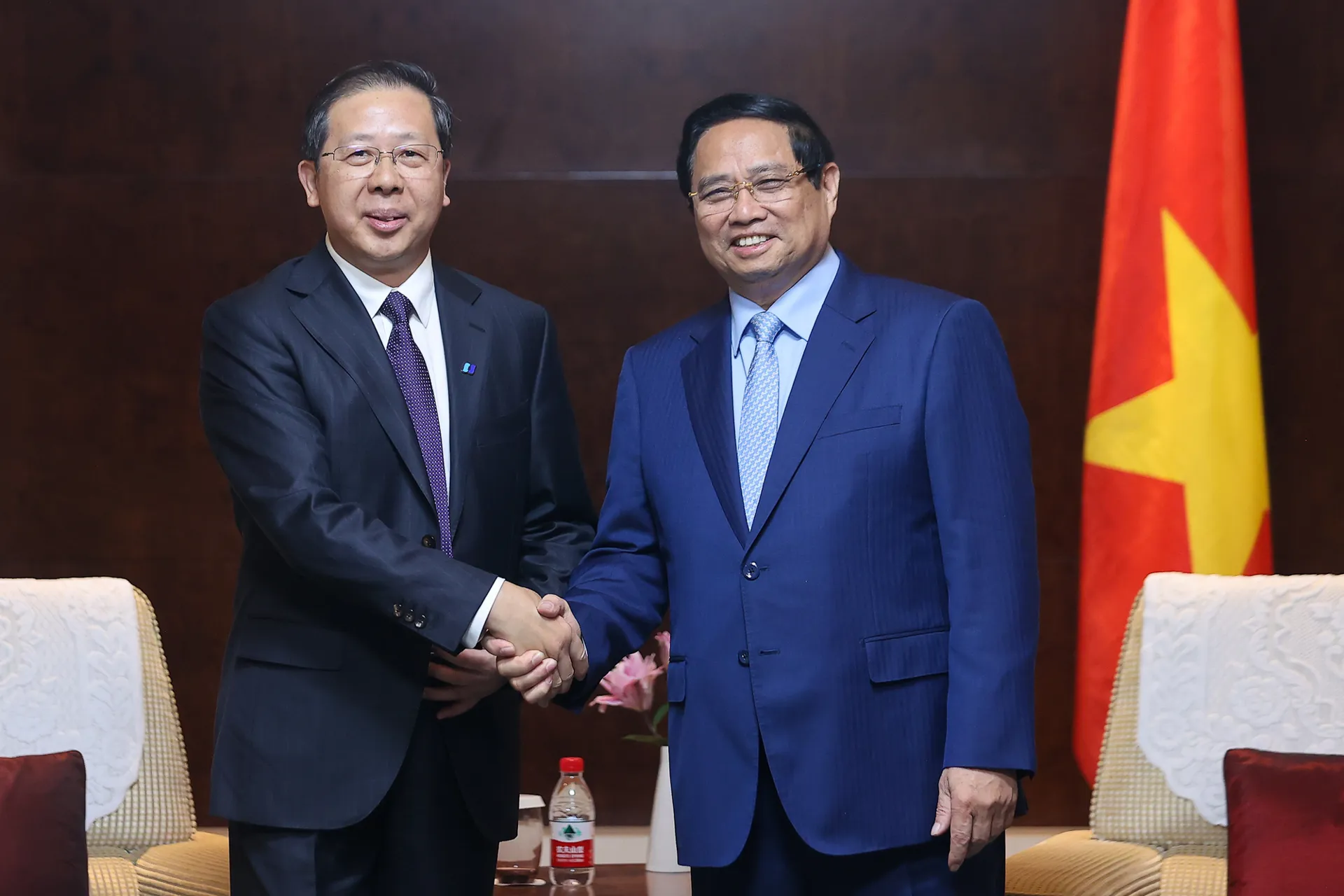
The group has invested in the Duyen Hai 2 Thermal Power Plant and renewable projects in Dak Lak Province.
Prime Minister Chinh welcomed these plans, stressing that Vietnam encourages investments that are long-term, environmentally responsible, and beneficial to both sides.
He urged Chinese enterprises to contribute to Vietnam’s energy transition, green growth and digital transformation.
The Vietnamese government leader also instructed Vietnamese ministries to assist Chinese partners to resolve bottlenecks and ensure effective project implementation.
Meeting the Vietnamese community
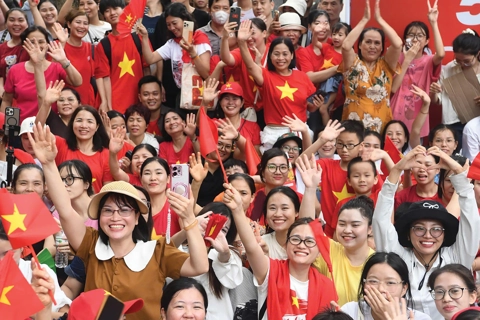
During his visit, the Vietnamese prime minister took time to meet Vietnamese expatriates, students, and professionals living in China.
He spoke to them about the vibrancy in Vietnam during the National Day celebrations, and affirmed that the State always considers overseas Vietnamese to be an inseparable part of the nation.
“No matter where you are, Vietnam is always your home,” Prime Minister Chinh told the gathering.
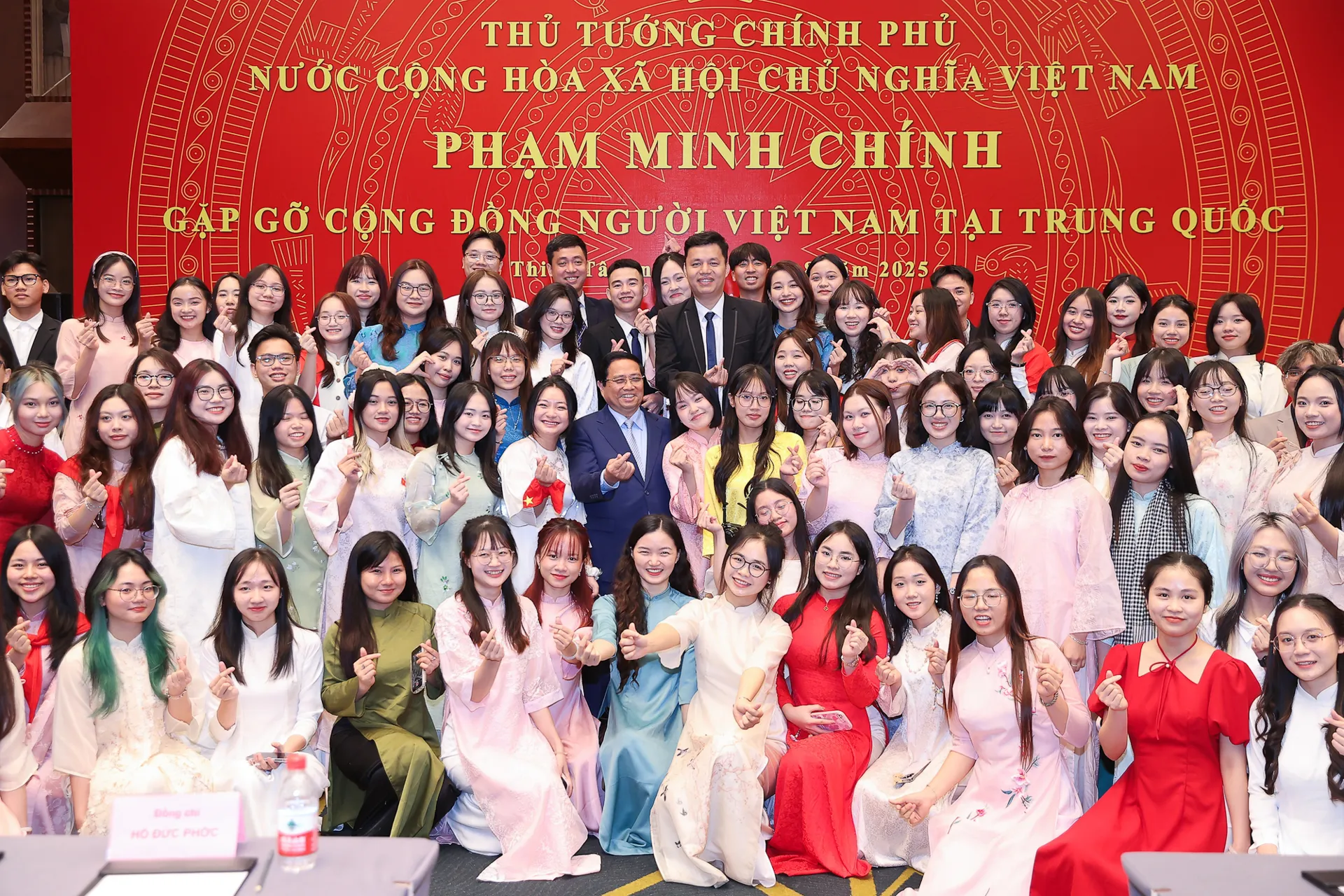
Prime Minister Pham Minh Chinh meets Vietnamese students in China.
For their part, Vietnamese community members in China expressed pride in the country’s achievements.
They wished to contribute to bilateral ties through knowledge, investment and cultural exchange.
Prime Minister Chinh’s visit to China reaffirmed the central role of railway cooperation in the countries' bilateral relations.
The visit also reflected Vietnam’s foreign diplomacy priorities that consolidate political trust with China, attract high-quality investment, and promote national unity abroad.