Vietnam looks to boost agro-forestry-fishery exports to the EU
Vietnam aims to expand its agro-forestry-fishery exports to the European Union by shifting toward green production, higher-value products and stronger cultural branding. Experts say the country still has vast untapped potential in one of the world’s largest food markets.
THE HANOI TIMES — Shifting export thinking, meeting the European Union’s green standards and strengthening branding tied to Vietnamese culture will help expand the country’s agro-forestry-fishery exports to the bloc, as Vietnam still has significant room to grow in this market.
Advantages and challenges
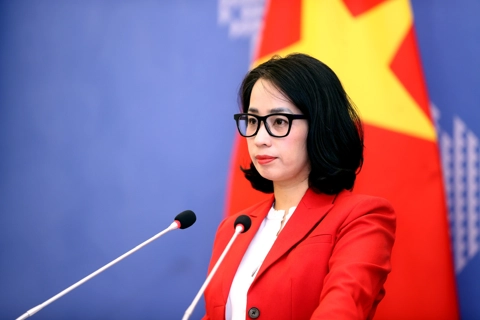
Deputy Minister of Foreign Affairs Le Thi Thu Hang said the European Union (EU) is the world’s third-largest consumer of agricultural, forestry and fishery products, yet Vietnam accounts for only about 3% of the bloc’s total market.

An aquatic farm in the central coastal province of Khanh Hoa. Photo: Vietnam News Agency
Vietnam’s agro-forestry-fishery exports still have major growth potential thanks to strong bilateral ties and mechanisms such as the EU–Vietnam Free Trade Agreement (EVFTA), Hang said at a seminar this week.
Bui Ha Nam, Director General of the European Department under the Ministry of Foreign Affairs, said Vietnam’s advantages in the EU go beyond EVFTA tariff preferences.
He said the complementary structure of products also creates opportunities. Most of Vietnam’s agricultural, forestry and fishery products do not compete directly with EU goods but meet the bloc’s import needs.
European consumers increasingly favor organic, eco-friendly products linked to cultural values, local identity and regional stories, the official added.
“These are areas where Vietnamese farm products can fully meet expectations and even hold advantages if invested properly,” said Nam.
He said the EU is moving rapidly toward a green, clean and sustainable development model. The bloc demands strict standards on food safety, veterinary and plant health, traceability, environmental impact and social factors.
Nam urged Vietnamese businesses to monitor and adjust regularly to keep pace.
Ambassador Nguyen Van Thao, Vietnam’s Ambassador to Belgium, said the EU imports roughly $350 billion of agricultural, forestry and fishery goods every year. Fruits and vegetables account for about $195 billion. This demand has remained stable for many years, even during the Covid-19 pandemic.
However, Vietnamese farm goods make up a very small amount of that US$350 billion market. In the $195 billion fruit and vegetable segment, Vietnam exports only about $3.8 billion, mostly coffee and cocoa.
“This means many market segments remain untapped, from fresh fruit and processed products to regional specialties that can create differentiation,” said Thao.
He added that another advantage is the EU’s growing need to diversify supply chains due to geopolitical shifts and recent trade disruptions. The EU must expand and spread risks by seeking reliable partners.
The ambassador said Vietnam, as the EU’s largest goods trading partner in ASEAN and a country with an effective EVFTA, stands out as a key partner.
Deputy Minister Hang said Vietnam must shift from exporting raw materials to higher-value goods and from focusing on volume to prioritizing sustainable quality that meets the EU’s high standards.
She urged businesses and government agencies to strengthen national branding and develop green, clean products that match European consumer preferences.
“Vietnamese products must carry cultural value and tell a clear local story. Every item must show its own identity instead of blending in,” Hang said.
Proposed solutions
Representatives from local authorities, business associations and enterprises agreed that Vietnam must move away from raw exports and toward high-value goods while focusing on sustainable standards that meet EU requirements.

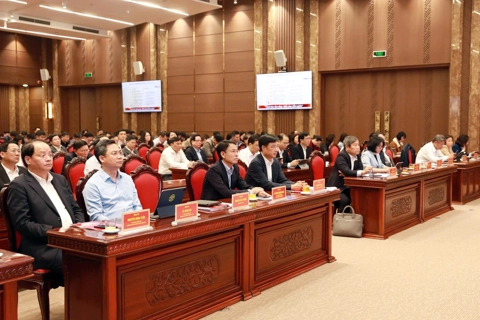
Overview of the seminar held on November 13 by the Ministry of Foreign Affairs to discuss solutions boosting Vietnamese agro and fishery exports to the EU. Photo: MoFA
“Businesses must speed up the green transition and adapt to the EU’s sustainability rules,” said Nguyen Quynh Thien, Vice Chairman of the Vinh Long Provincial People’s Committee.
He said Vinh Long expects its total export revenue to reach US$3.66 billion in 2025. Exports to the EU alone will reach an estimated US$455 million, nearly 20% higher than last year.
The EU remains a promising market, yet Vinh Long’s export share is still modest because the bloc continues to tighten its rules, forcing companies to adapt continuously, the vice chairman said.
Dao Van Cuong, Vice Chairman of the Thanh Hoa Provincial People’s Committee, stressed the need to develop standardized material zones.
He asked ministries to quickly issue clear regulations on clean farming areas, especially standards related to food safety, pesticide residue and environmental protection.
Le Duc Tien, Vice Chairman of the Quang Tri Provincial People’s Committee, called on the Ministry of Foreign Affairs and central agencies to support direct connections between local businesses and major EU distributors through embassies and Vietnam’s trade offices in the bloc.
He asked government bodies to provide market information, technical standards and updates on new EU regulations and to help promote regional specialty products in the market.
He also proposed improving logistics infrastructure in the North Central region, especially by integrating road, rail and seaport transport to reduce export costs.
The Quang Tri official also requested support for regional logistics centers and cold-storage facilities and development of a regional testing and certification center to serve EU exports, lower costs and shorten inspection times.
The Vietnam Association of Seafood Exporters and Producers (VASEP) shared challenges linked to the EU’s “yellow card” for illegal, unreported and unregulated (IUU) fishing.
The association hopes for technical and technological assistance from the EU to improve compliance with sustainable fishing rules.
Mai Hai Lam, founder of the “We Love Pho” network and a Vietnamese entrepreneur in Poland, said Vietnam should learn from global practices by integrating national branding and compelling cultural stories into exported products.
He expressed hope for cooperation with embassies and businesses to organize Pho Weeks across Europe.
Deputy Minister Hang said the Ministry of Foreign Affairs will keep supporting localities, associations and businesses in exploring the EU market more effectively, following the principle of “putting people and businesses at the center.”
She said the ministry will maintain dialogue with EU authorities to address challenges and make the most of opportunities under the EVFTA.