Vietnam now needs to walk the talk on sexual harassment
Five areas of concern must be addressed before the final draft Decree to Guide Policies on Female Workers and to Ensure Gender Equality is submitted to the Ministry of Justice.
Editor's Note and Disclaimer: The Op-Ed is introduced by Mr. Kamal Malhotra, UN Resident Coordinator in Vietnam, and Ms. María Jesús Figa López-Palop, Ambassador of Spain to Viet Nam; Co-Chairs of the Informal Ambassadors and Heads of Agencies Gender Policy Coordination Group. The opinions expressed here are of their own and do not necessarily reflect the views of Hanoitimes.
The amended Labor Code of Vietnam includes a number of positive and important provisions, including a definition of sexual harassment. These changes were accepted by the National Assembly on November 20, 2019. The new Labor Code defines sexual harassment in the workplace for the very first time in Vietnamese labor legislation, hence it is clearly an important step forward. It also contains other progressive changes to empower women in the world of work allowing them access to work of any kind by eliminating a list of occupations from which women had been traditionally excluded. Other provisions should help ensure that having a family does not mean losing access to work given that the new Labor Code clearly mandates the creation of kindergartens and nursing accommodation.
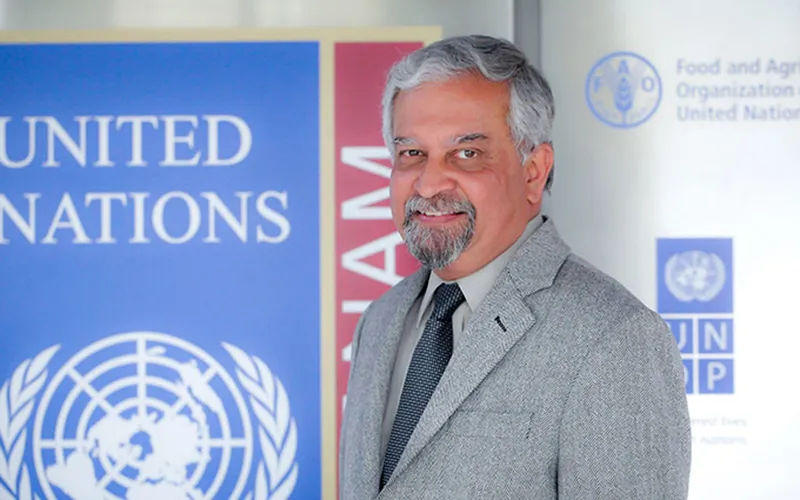
| Kamal Malhotra, UN Resident Coordinator in Vietnam. Photo: vietnam.unfpa.org |
As with all legislation the proof will be in its implementation and enforcement. Vietnam needs now walk the talk. To ensure this, careful attention should be focused on the development of the implementing Decrees, which will set out how the Labor Code will be applied and enforced in practice, once it enters into force on January 1, 2021.
The Informal Ambassadors and Heads of Agencies Gender Policy Coordination Group advocates for the definition of sexual harassment in the Labor Code and is now closely following the development of the Decree to Guide Policies on Female Workers and to Ensure Gender Equality. The draft of that Decree was published this month by the Ministry of Labor, War Invalids and Social Affairs (MOLISA). In order for it to be effective, however, five areas of concern must be addressed before the final draft Decree is submitted to the Ministry of Justice.
First, both surveys in Ho Chi Minh City, Danang, Thai Nguyen, and Dong Nai and consultation workshops organized with the support of UN Women, CARE International, GIZ, and the Scaling Up Nutrition Civil Society Network (SUN CSA) indicate that an illustrative, non-exhaustive list of behavior that constitute sexual harassment should be included in the Decree to ensure clarity for both employers and employees. International experience shows that it should be made clear, at the very least, that sexual harassment can take three different forms: physical, verbal and non-verbal. This approach is also supported by the Code of Conduct on Sexual Harassment in the Workplace that was developed by the MOLISA, the Vietnam Chamber of Commerce and Industry (VCCI), and the International Labor Organization (ILO) in 2015.
Second, the approach to sexual harassment in the workplace must be victim-centred. This is fundamental and has to be a key tenet of both the implementing Decree and its actual implementation and enforcement. A common defense is that the alleged perpetrator was just trying to be funny or friendly. This is unacceptable. Receptiveness to this defense would be indefensible. This risk can be significantly mitigated by inserting the phrase “regardless of the intentions of the alleged perpetrator” or by the insertion of a similar phrase that clearly signals the sentiment that the experience of the alleged victim must be central, not the intentions of the alleged perpetrator.
Another common excuse used to defend inappropriate conduct is that certain behavior is a part of societal and/or workplace culture in a specific country or enterprise. Such relativist excuses are inexcusable and leave victims powerless. For both those and other reasons, it would be a serious mistake to allow the employer to establish a code of conduct as they see fit, leaving its content to their discretion, and moulded according to the nature or character of their business. Whether one works in a textile factory, an office building or a bar, acts of sexual harassment should be defined and enforced in a consistent manner and always prohibited.
Third, although it is commendable that the definition of the workplace in the draft Decree now includes the digital workspace which will now be much more relevant in both the current Covid-19 and future post Covid world, it should also include the daily commute, especially when transportation is provided by the employer. This international standard has been established in ILO Convention 190 which will enter into force on June 25, 2021 and Vietnam should take pride in being ahead of the curve in this area, now that it has the vehicle of a new implementation Decree that goes into effect in January 2021.
The fourth major concern with the draft Decree is the employer’s need for clarity and specificity in order to develop effective codes of conduct in their workplaces, in particular in relation to response and prevention mechanisms. While roles and responsibilities are set out in broad terms in the draft Decree, significant questions remain unanswered. There is no good reason for this. These queries can and should be addressed by using the international standards in the 2019 ILO-UN Women Handbook on Sexual Harassment in the Workplace as well as the 2015 Code of Conduct on Sexual Harassment in Viet Nam.
Fifth and last, as was advocated regarding the definition of sexual harassment in the Labor Code itself, the Decree should encompass both quid pro quo sexual harassment and harassment that creates a hostile work environment. The distinction between these two different types of sexual harassment acknowledges that inappropriate behavior does not merely concern the direct exchange of sexual favors for work or career benefits (quid pro quo harassment), but may also entail unwanted acts, comments or non-verbal behavior of a sexual nature that results in a general atmosphere that makes for an uncomfortable or unsafe work environment (hostile work environment harassment). This distinction has been recognized and has been part of international standards for many years, and it would be unfortunate if Vietnam missed this opportunity to apply universally recognized international concepts and standards when it has a clear opportunity to adopt them.
As Co-Chairs of the Informal Ambassadors and Heads of Agencies Gender Policy Coordination Group, we, on behalf of the Group, respectfully but strongly encourage the MOLISA and the Government of Vietnam to include the above recommendations in the implementing Decree, so as to truly guarantee that it fulfills the new Labor Code’s vision, aspiration and objective of ensuring access to both a safe workplace for all genders and greater empowerment of women in the world of work.