Vietnam refines legislation for better human rights records
Vietnam marked the greater involvement of non-state actors in the 3rd Cycle of the Universal Periodic Review (UPR) of the United Nations Human Rights Council.
Vietnam has worked hard to put into practice the approved 3rd Cycle of the Universal Periodic Review (UPR) of the United Nations Human Rights Council, especially in perfecting the legal framework on human rights.
| Vice Minister Do Hung Viet of Foreign Affairs speaks at the workshop held in Hanoi on Nov 24. Photos: Baoquocte |
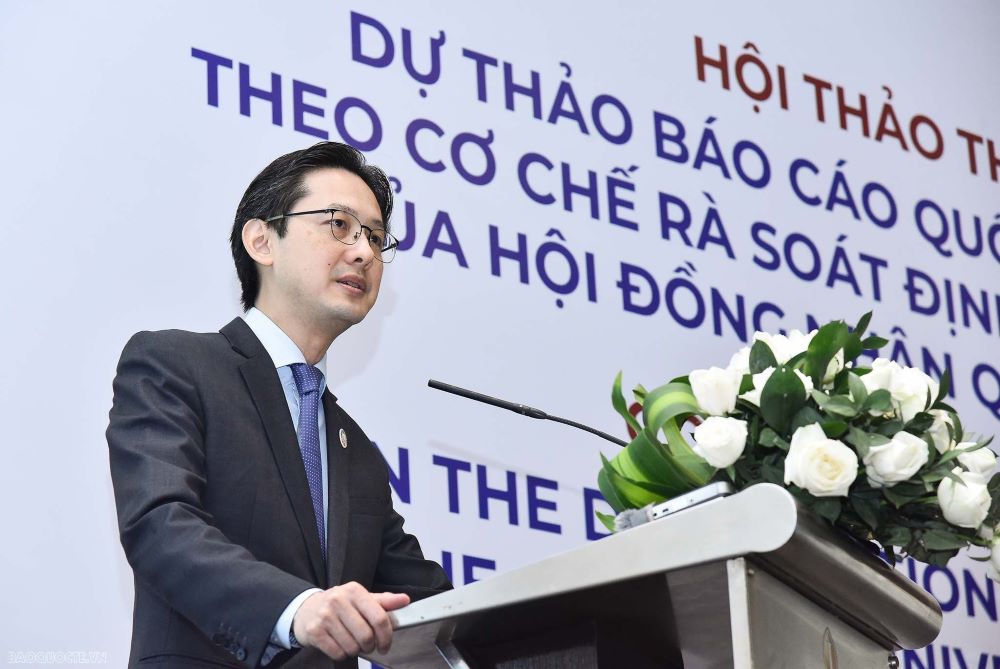
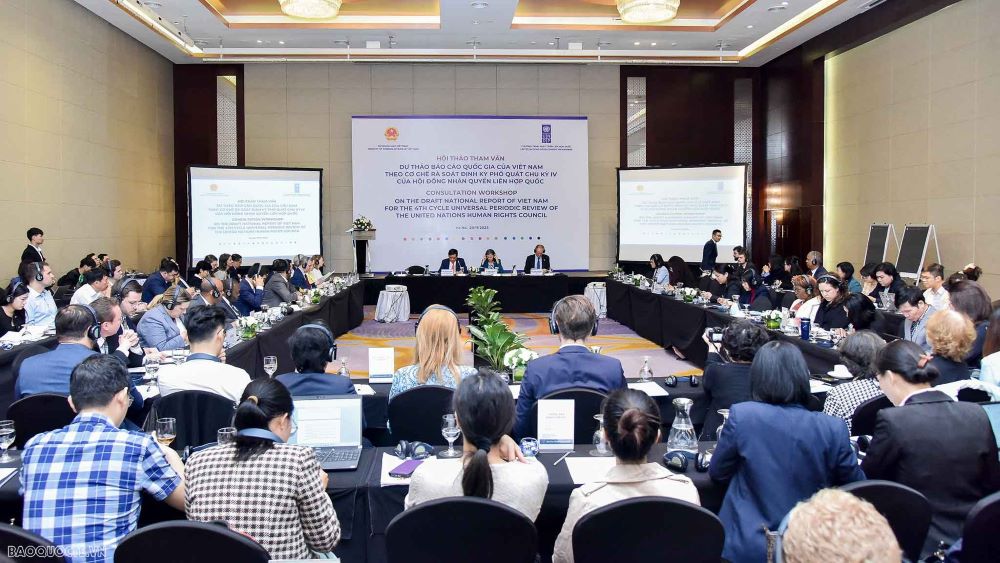
Vice Minister Do Hung Viet of Foreign Affairs told international attendees at a consultation workshop on the Draft National Report of Vietnam for the 4th Cycle of the UPR of the UN Human Rights Council.
The country’s efforts included reducing multidimensional poverty in a sustainable manner, ensuring social security, and improving the rights of vulnerable groups, Viet said at the event held in Hanoi on November 24 in the presence of UN Resident Coordinator Ramla AI Khalidi and various stakeholders.
In the 3rd Cycle of the UPR between 2017 and 2021, Vietnam supported 220 out of 291 recommendations it received, increasing by 13% from the 2nd Cycle (2012-2016).
Ramla Khalidi said in the 3rd Cycle, one of the main factors in the implementation of the accepted recommendations was Vietnam’s 2019 National Master Plan.
She stated that the UPR is a continuous review process. It demanded pledges to actively carry out UPR recommendations rather than just reporting on them.
The commitments cover all international human rights obligations, including those incorporated into the 2030 Agenda for Sustainable Development and Treaty Bodies and Special Procedures.
| UN Resident Coordinator a.i. Ramla Khalidi addresses the event. |
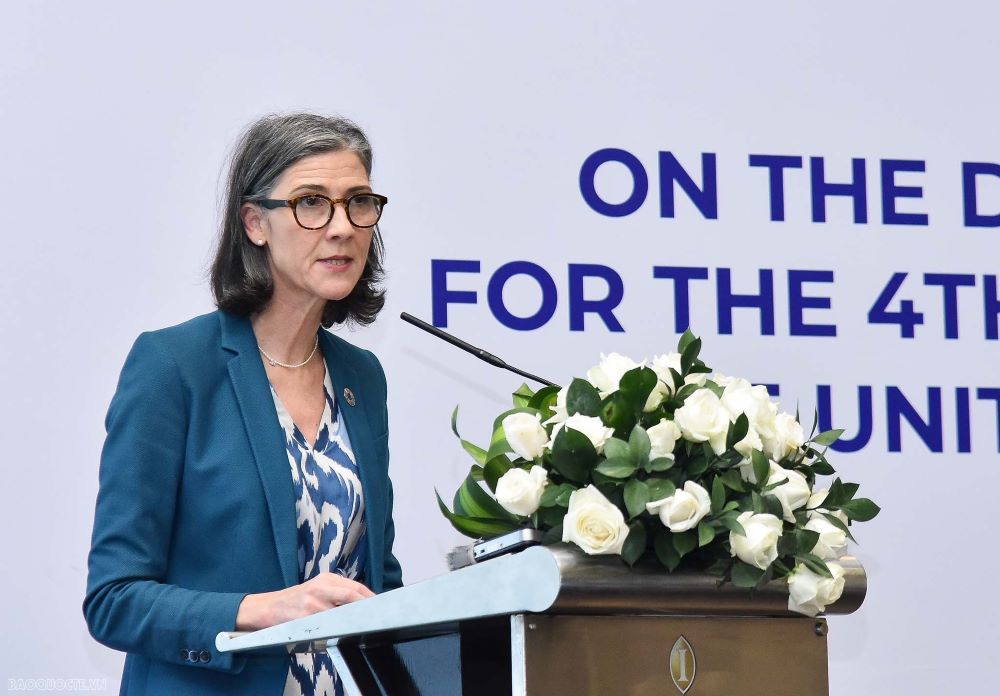
She hoped that by developing a National Master Plan for the 4th Cycle, the government would carry on the excellent work. “I anticipate that Vietnam will persist in showcasing its pioneering role in safeguarding and advancing human rights domestically and internationally,” Ramla Khalidi stressed.
According to Do Hung Viet, as of October 2023, up to 86.7% of the 241 recommendations had been fully implemented by the nation; 30 were in progress, while the remaining two needed further consideration.
He cited the nation’s poverty reduction results as an example of how successfully it had put the recommendations on poverty into practice. One of the accomplishments was that, according to the most recent MPI update, Vietnam was one of 25 nations to successfully cut its global multidimensional poverty index (MPI) in half within a 15-year period.
Patrick Haverman, UNDP Deputy Resident Representative in Vietnam, advised taking the OHCHR guidelines into account when classifying the rights and issues to prevent gaps.
He stressed that Vietnam should organize the recommendations based on theme areas using the SDG framework and use the SDG indicators to gauge progress.
He suggested that Vietnam view the report as a chance to demonstrate its advancements toward voluntary commitments it made as a council member. It aims to examine the progress made toward the 50 recommendations from the 3rd Cycle.
The Universal Periodic Review (UPR) is a unique process that routinely examines the human rights records of all 193 UN Member States. Under the UPR, every State has the chance to report the steps it has taken to enhance the state of human rights and remove obstacles to the exercise of those rights.
| Overview of the workshop. |