Vietnam remains committed to achieving GDP growth target in 2024
GDP growth in Q3 needs to be 7.5% for the economy to expand by 7% in 2024 as planned despite obstacles.
Concerns remain as to whether Vietnam will be able to achieve 7% gross domestic product (GDP) growth by the end of the year, especially after typhoon Yagi wreaked havoc on the country.
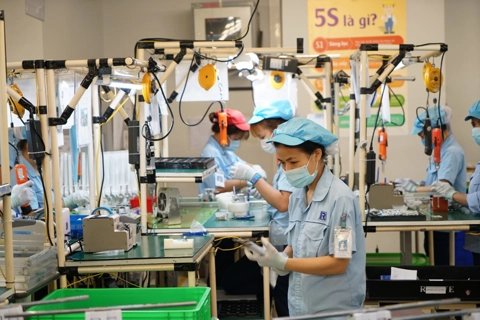
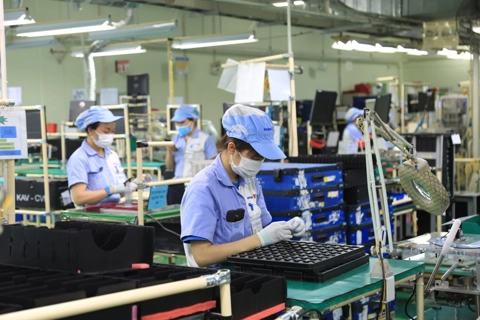
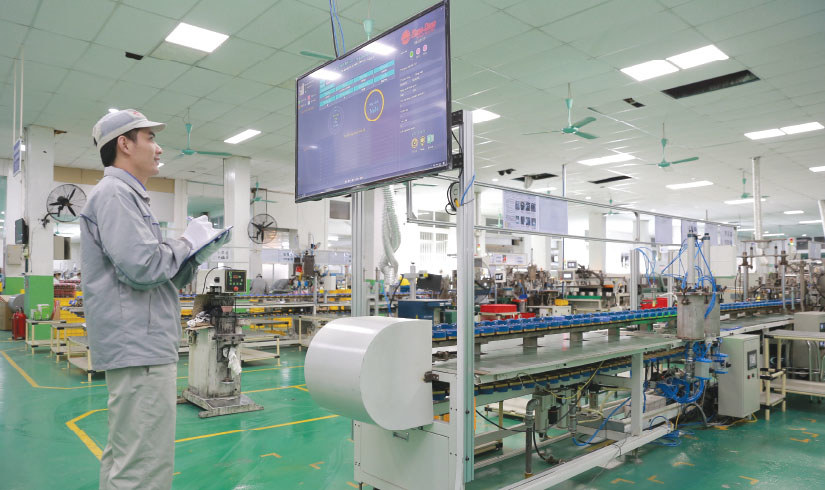
| Production at Rang Dong Light Source & Vacuum Flask JSC. Photo: Thanh Hai/The Hanoi Times |
The typhoon that struck northern Vietnam in late September left minimal short-term impact on industrial and agricultural production inputs, said Nguyen Quoc Viet, Deputy Director of the Vietnam Institute for Economic and Policy Research (VEPR).
However, he said, supply chains will be disrupted and costs will rise because of the long-term damage to infrastructure, machinery, equipment and factories.
Delays in restoring infrastructure and conducting mass safety inspections could affect logistics and drive up input costs for industrial production, Viet warned.
"This will hurt production output and value in Q4 and potentially extend into 2025 if not addressed promptly," he said.
He also noted that safety concerns could dampen tourism in Q4, particularly in the northern mountainous provinces of Ha Giang and Cao Bang, and lead to a decline in the consumer and service sectors.
Viet suggested that Vietnamese businesses expand markets and seek alternative supply chains to reduce the risks of over-reliance on any single market or supplier.
He also recommended that the State Bank maintain a stable and predictable exchange rate policy to support import-export businesses.
According to the Economic Commission of the National Assembly, there are internal obstacles and international challenges that could cause Vietnam to suffer.
The government needs to conduct a more thorough and in-depth assessment of several issues to gain a more comprehensive understanding of the socioeconomic landscape in 2024.
Key concerns include the weak recovery in aggregate demand, lower-than-expected consumer demand in a context of rising inflation, slow growth in public and private investment, and the persistent trade deficit in services.
Investment recovery has been sluggish, with public sector investment rising only 4.1% over the past nine months compared to 15.9% during the same period in 2023, said Nguyen Chi Dung, Minister of Planning and Investment.
A report by the Ministry of Planning and Investment also pointed out that export activities will face more difficulties in the near future, domestic purchasing power remains low, and the target of attracting 18 million international tourists this year is unlikely to be met.
After nine months, international tourist arrivals in Vietnam reached only 12.7 million, leaving a gap of 5.3 million to meet the target.
Accelerating to a solid finish
Despite numerous risks that could affect Vietnam's economic growth in the last quarter of the year, the GSO has identified several factors that could push the economy to higher growth in Q4, helping the country exceed its 7% annual growth target.
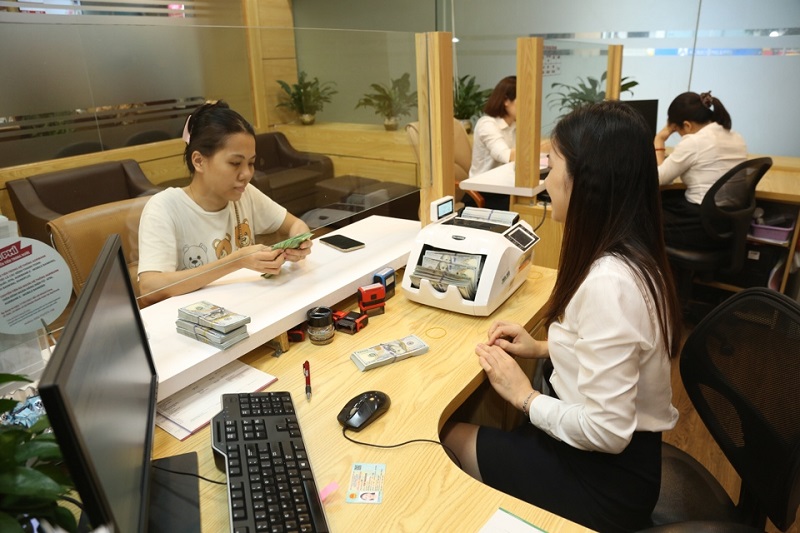
| An Agribank office on Lang Ha Street, Hanoi. Photo: Cong Hung/The Hanoi Times |
Vietnam's Gross Domestic Product (GDP) growth in Q3 reached 7.4%, according to the General Statistics Office (GSO). The figure is in line with the most optimistic scenario and represents the highest quarterly growth compared to the same period last year.
Typhoon Yagi mainly affected the agricultural sector, which accounts for 12% of the economy, said Nguyen Thi Mai Hanh, Director of the National Accounts System Department under the GSO.
She added that the 26 provinces affected by the storm account for just over 20% of the country's agricultural, forestry and fisheries production.
"The damaged areas account for less than 3% of the country's total GDP. Therefore, the overall impact on the agriculture, forestry, and fishery sectors was not significant," Hanh said.
She pointed out that some provinces hit hard by the storm still maintained strong GDP growth in the first nine months, such as Quang Ninh (8.02%), Phu Tho (9.56%), Lao Cai (7.71%), Cao Bang (7%), and Yen Bai (7.15%). Meanwhile, Quang Ninh and Haiphong saw double-digit growth in industrial production in the first half of the year. They would have grown much faster if not for the storm.
According to the GSO, foreign direct investment (FDI) registered in Vietnam as of September 30 reached US$25 billion, up 12% year-on-year. Disbursed FDI for the January-September period rose 9% inter-yearly to $17.3 billion.
Nguyen Thi Huong, Director General of the GSO, recommended that solutions should be found to stabilize the macro-economy, control inflation, keep exchange rates stable, and boost domestic consumption.
She also stressed the need to boost exports and international integration by strengthening trade promotion activities, helping businesses participate in international trade fairs, and expanding export markets.
Huong likewise suggested that authorities speed up the disbursement of public investment, especially in transport infrastructure projects, to stimulate related sectors such as construction, materials production and logistics, and improve the circulation of goods.
It is necessary to accelerate investment in major projects, especially in key industries, while also addressing difficulties and obstacles to ensure that projects are implemented quickly, Minister Dung said.
Speaking at a recent Government meeting, Prime Minister Pham Minh Chinh urged ministries, agencies, and local authorities of 63 provinces and cities to better perform in implementing fiscal, monetary, and economic policies to drive socio-economic growth.
The prime minister called on all sectors to reform existing growth models (investment, exports, consumption), and seek new ones by setting up inter-regional connections and boost urbanization.
He also outlined key tasks, including accelerating institutional and legal reforms, removing legal bottlenecks, streamlining administrative procedures, enhancing digital transformation, and driving breakthrough public investment disbursement while promoting the three national target programs. The goal is to achieve a minimum public investment disbursement rate of 95%.
"GDP growth should be 7.5-8% in Q4 to ensure that overall GDP growth for 2024 reaches the target of 7%," the prime minister said.
The prime minister has issued two directives to speed up the disbursement of public investment and to support enterprises in overcoming difficulties, thereby boosting production and business activities at the end of 2024 and beyond. By effectively implementing these measures, the economy is expected to accelerate and finish strong.
Strong recovery with stable growth for Hanoi's economy By the end of September, Hanoi had attracted US$1.54 billion in foreign direct investment (FDI), including 197 new projects worth over US$1.1 billion. From January to September, 21,840 new businesses were established, with total registered capital of nearly VND200 trillion (US$8 billion). The cumulative total of registered enterprises is 397,000. The consumer price index rose nearly 4.9% in the first three quarters, compared with a 1.2% increase in the same period last year. Meanwhile, social investment in the nine months reached VND352 trillion ($14 billion), up 9.7%, including VND144 trillion ($5.8 billion) in September, reflecting a 10.7% increase year-on-year. In addition, the total capital deposited in credit institutions hit VND5.6 trillion ($226 million), rising 5.1%, while the total outstanding loans reached VND4.1 trillion ($165.6 million), an upturn of 12.6%. |