Vietnam to raise emission bar for older cars in 2026
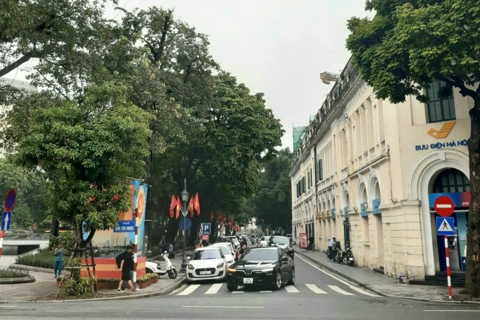
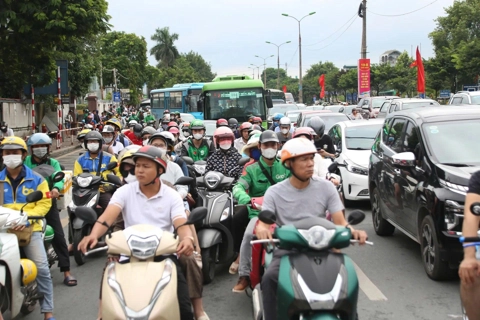
The policy will first be implemented in areas with severe air pollution such as Hanoi and Ho Chi Minh City.
THE HANOI TIMES — The Ministry of Natural Resources and Environment has proposed a roadmap requiring cars manufactured between 2017 and 2021 to comply with Euro 3 emission standards from early 2026, aiming to tighten control over older vehicles and reduce air pollution.
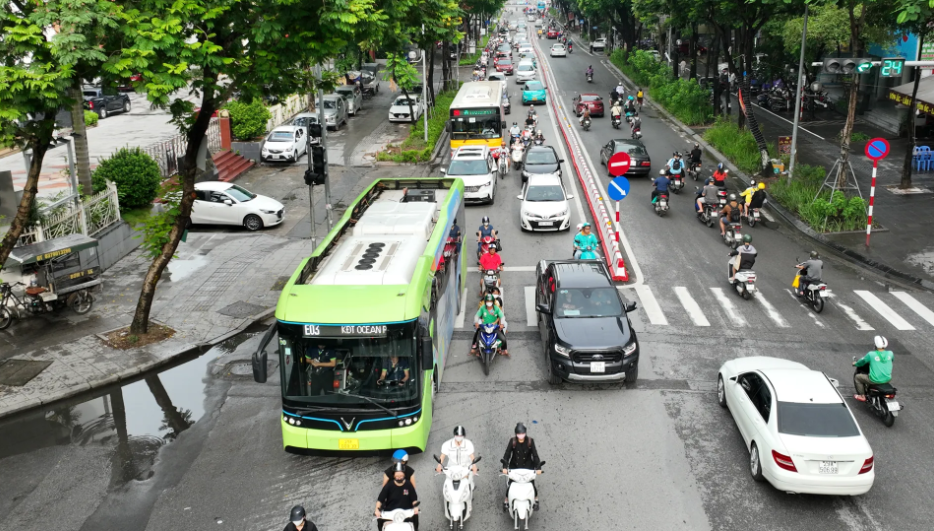
The government is set to tighten vehicle emission standards next year, particularly in major cities such as Hanoi and Ho Chi Minh City. Photo: Pham Hung/The Hanoi Times
The proposal was presented at a government meeting chaired by Deputy Prime Minister Tran Hong Ha on November 11 to discuss a draft decision on national vehicle emission standards.
Accordingly, the ministry suggests applying emission standards based on vehicle production years, starting with heavily polluted areas such as Hanoi and Ho Chi Minh City.
Specifically, vehicles produced from 2017 to 2021 must meet Euro 3 standards from early 2026 and Euro 4 requirements from 2027 in Hanoi and Ho Chi Minh City.
Vehicles manufactured from 2022 must meet Euro 4 standards starting next year and Euro 5 from 2028 in Hanoi and Ho Chi Minh City, with other provinces following four years later.
The Euro standards (Euro 1 to Euro 6) established by the European Union set maximum limits for pollutants such as carbon monoxide (CO), nitrogen oxides (NOx), hydrocarbons (HC) and particulate matter. The higher level means stricter limits.
For example, a gasoline vehicle meeting Euro 3 must limit CO to 2.3 grams per kilometer, HC to 0.2 grams and NOx to 0.15 grams. Under Euro 4, CO is capped at 1 gram, HC at 0.1 gram and NOx at 0.3 grams per kilometer.
The emission standards aim to reduce air pollution, protect public health and boost cleaner vehicles in line with Vietnam’s international commitments on emissions reduction and sustainable transport.
At the meeting, Deputy Minister of Construction Le Anh Tuan estimated that about 16% of vehicles manufactured between 2017 and 2021 in Hanoi and Ho Chi Minh City would fail to meet the new standards if enforced next year, mostly trucks and tractor-trailers.
He expressed concern that stricter standards could raise transport and logistics costs, especially in Ho Chi Minh City, where is home to major ports and cargo hubs.
Regarding the Euro 5 timeline, the Ministry of Construction said that early enforcement could leave about 15% of vehicles noncompliant, causing major disruptions.
The ministry proposed delaying nationwide implementation since cars manufactured from 2022 are currently exempt from their first inspection, making it difficult for authorities to assess the full impact.
The Ministry of Justice also warned that tightening emission standards could affect mobility, production and goods circulation, urging a thorough impact assessment before enforcing Euro 4 and Euro 5 in major cities.
Concluding the meeting, Deputy Prime Minister Ha said that the emission control roadmap must ensure consistency between newly produced or imported vehicles and those already in circulation.
“Imported cars should not face higher standards than domestic ones, as this would create unfair competition,” said Ha.
He requested a thorough review of all measures restricting or banning noncompliant vehicles to ensure fairness and minimize disruption for citizens and businesses.