Vietnam – a typical cooperation model of UNESCO: Director-General
Vietnam, which is home to world-class heritage sites, vows to keep its legacy inherited from the past to leave to the next generations.
Vietnam is a model for effective cooperation with the United Nations Educational, Scientific and Cultural Organization (UNESCO), the UN specialized agency’s Director-General Audrey Azoulay has said.
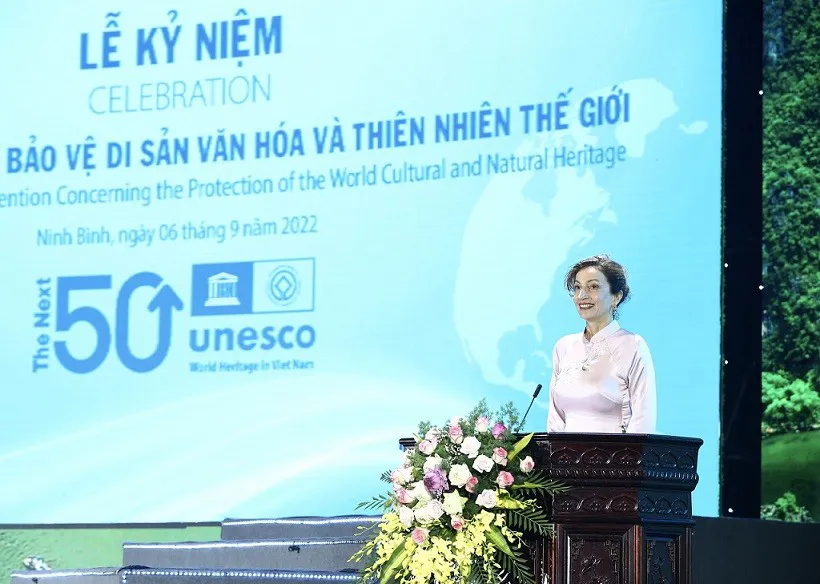
| UNESCO Director-General Audrey Azoulay speaks at the ceremony held in Ninh Binh on September 6. Photo: VNA |
The cooperation between Vietnam and UNESCO was established in 1976, shortly after the country’s reunification and a year before joining the United Nations. Since then, the two sides have built a very solid relationship, Azoulay said in an interview with the Vietnam News Agency.
Together they have developed many joint science projects, most recently two centers for training and research in mathematics and physics were launched in 2021, Azoulay said, adding that both sides support educational development, especially girls’ education.
Vietnam is an active member of the UNESCO Executive Board, to which it was elected in 2021 for a four-year term. The country was also elected with the highest number of votes to UNESCO’s Intergovernmental Committee for the Safeguarding of the Intangible Cultural Heritage in 2022-2026 tenure.
Regarding culture, eight places in Vietnam have been included in the list of World Heritage Sites and 13 other items in the Intangible Cultural Heritage. It also has 11 Biosphere Reserves recognized by UNESCO, ranking the country second after Indonesia in Southeast Asia.
Azoulay shared the information ahead of the visit to Vietnam on September 5-7 where she met Prime Minister Pham Minh Chinh, and Foreign Minister Bui Thanh Son, and attended the ceremony celebrating the 50th anniversary of the Convention Concerning the Protection of the World Cultural and Natural Heritage and visited Hue City, which is home to UNESCO-recognized Complex of Hue Monuments.
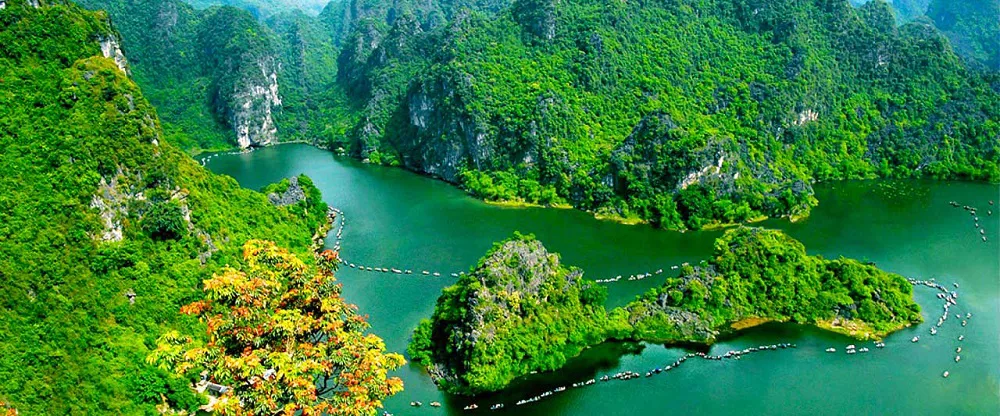
On September 6, the celebration ceremony took place in Vietnam’s Northern Province of Ninh Binh, which is home to the UNESCO-recognized Trang An Scenic Landscape Complex with the attendance of Azoulay, Chairman of Vietnam’s National Assembly Vuong Dinh Hue, Minister of Culture, Sports and Tourism Nguyen Van Hung, Deputy Foreign Minister Ha Kim Ngoc who is also Chairman of the National Commission for UNESCO, and representatives of the international organizations and foreign missions in Vietnam.
Trang An, along with three other world heritage sites, is executing a pilot project on sustainable tourism, to enhance benefits for local communities, especially for women.
Speaking at the event, Azoulay said the ceremony is aimed at marking the 50th anniversary of the World Heritage Convention – an important occasion to honor UNESCO’s most successful Convention worldwide, and 35 years of Vietnam’s acceptance of the Convention.
She said the anniversary demonstrated the growing relations between Vietnam and UNESCO, adding that the organization is intensifying its technical and financial support to Vietnam to implement education strategies in the next 10 years.
She said that effective cooperation will be good for conservation, which is threatened by climate change, and the factor is harmful to both culture and living environment.
On this occasion, UNESCO wants to strengthen cooperation in building the capacity of heritage site managers to better predict long-term consequences of climate change and to effectively deal with emergencies.
Delivering a speech at the event, Minister of Culture, Sports and Tourism Nguyen Van Hung said UNESCO is the first international convention to link the concept of nature protection with the conservation of cultural heritage, bringing a new approach with the necessary legal bases, ensuring a balanced and harmonious relationship between the man and nature, the past, present and future.
Addressing the event, Deputy Foreign Minister Ha Kim Ngoc said as an active and responsible member of the 1972 Convention, Vietnam has been making contributions to the protection, conservation, and education of future generations about the values of world heritage. Vietnam was a member of the World Heritage Committee for the 2013-2017 term and has made many important recommendations on orientations and policies for cultural and natural heritage protection at home and internationally.
He agreed with UNESCO’s “The Next 50: World Heritage as a source of resilience, humanity and innovation.” In this regard, Vietnam is running for the World Heritage Committee for the 2023-2027 tenure as part of its efforts to contribute to the common drive.
| UNESCO-recognized Trang An Landscape Complex. |
Vietnam’s heritage recognized by UNESCO
Vietnam is home to an array of natural heritage sites and elements of intangible cultural heritage recognized by UNESCO. Two natural sites include Ha Long Bay (recognized in 1994 and 2000), Phong Nha – Ke Bang National Park (2003, 2015). One mixed heritage is Trang An Landscape Complex (2014). Five in the world cultural heritage list: Complex of Hue Monuments (1993), Hoi An Ancient Town (1999), My Son Sanctuary (1999), Central Sector of the Imperial Citadel of Thang Long – Hanoi (2010), and Citadel of the Ho Dynasty (2011).
Especially, the Southeast Asian country is home to 14 elements on the list of intangible cultural heritage, including the Art of Xoe dance of the Thai people (recognized in 2021), Practices of Then by Tay, Nung, and Thai ethnic groups (2019), the art of Bai Choi in Central Region (2017), Xoan singing of Phu Tho Province (2019), Practices related to the Viet beliefs in the Mother Goddesses of Three Realms (2016), Tugging rituals and games (2015), Vi and Giam folk songs of Nghe Tinh (2014), Art of Don Ca Tai Tu music and song in the southern region (2013), Worship of Hung Kings in Phu Tho (2012), Giong festival of Phu Dong and Soc temples (2010), Ca Tru singing (2009), Quan Ho Bac Ninh fork songs (2009), and Nha Nhac – Vietnam court music, and Space of gong culture (2008).
Eight sites on the Tentative List include The Area of Old Carved Stone in Sapa (1997), Huong Son Complex of Natural Beauty and Historical Monuments (1991), Cat Tien National Park (2006), Con Moong Cave (2006), Ha Long Bay – Cat Ba Archipelago (2017), Ba Be - Na Hang Natural Heritage Area (2017), The Yen Tu Complex of Monuments and Landscapes (2021), and Oc Eo – Ba The archaeological site (2022).