Vietnam urges global unity against cybercrime at Hanoi Convention signing
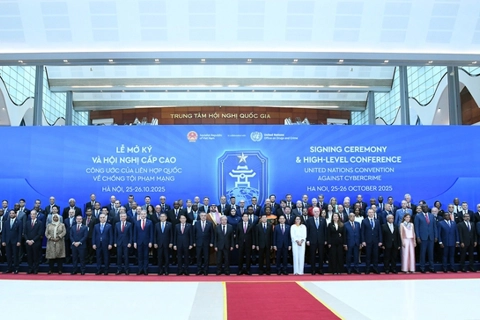
Within just one day, representatives from 65 countries officially signed the United Nations Convention against Cybercrime – known as the Hanoi Convention.
HANOI TIMES — Prime Minister Pham Minh Chinh urged stronger global cooperation and renewed multilateralism to fight cybercrime, calling it a borderless threat that demands a united response.
“No nation, no individual is truly safe if others remain under threat,” he told reporters at a joint press conference with United Nations Secretary-General António Guterres on October 25 in Hanoi, following the signing of the UN Convention against Cybercrime - the Hanoi Convention.
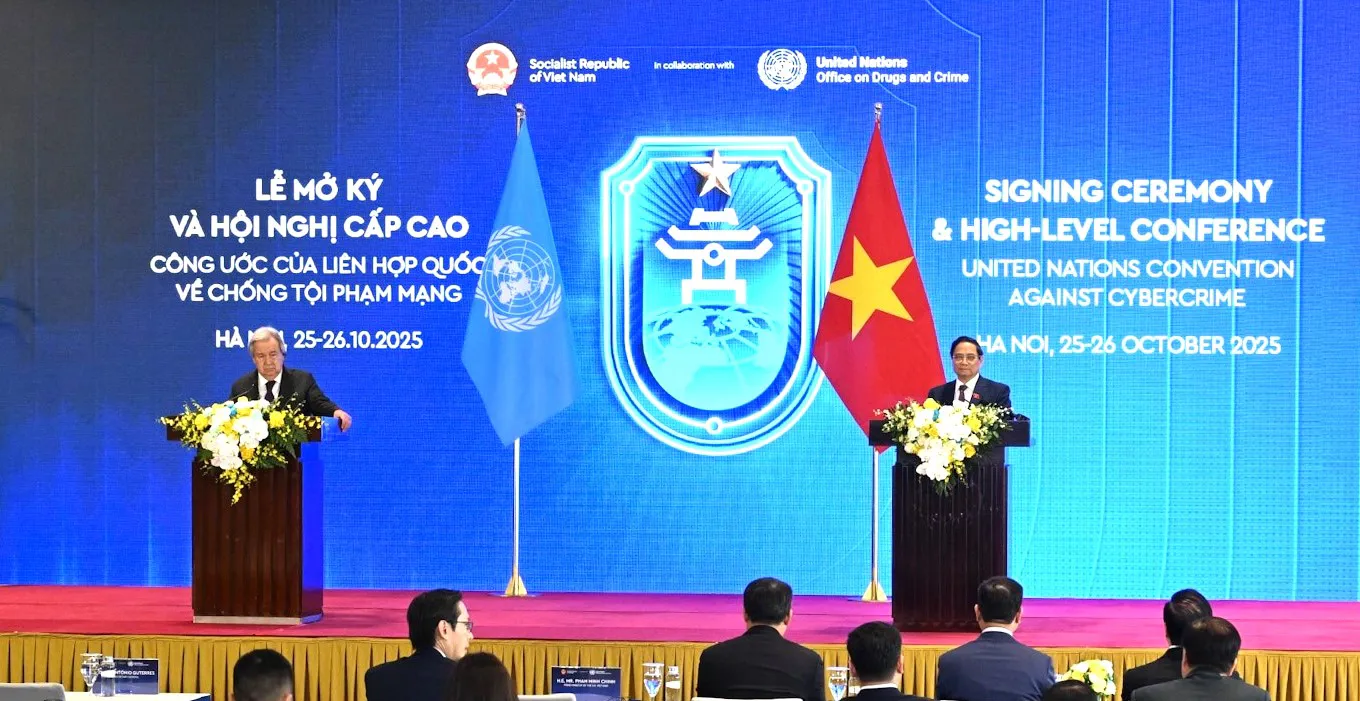
Prime Minister Pham Minh Chinh and United Nations Secretary-General António Guterres jointly chair an international press conference within the signing ceremony and high-level conference of Hanoi Convention. Photo: Cam Anh
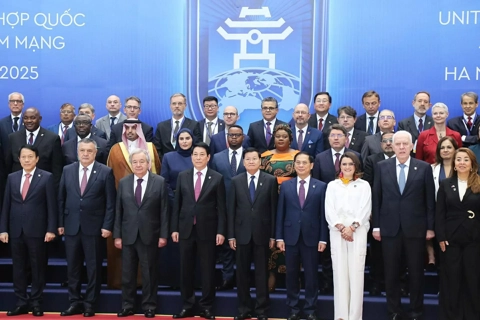
The high-level event drew leaders and delegates from more than 100 countries, underscoring Vietnam’s rising international profile and its active role in addressing global challenges.
Chinh said the United Nations’ decision to select Hanoi for the convention’s signing reflected confidence in Vietnam’s responsible and proactive engagement in multilateral diplomacy and its growing influence in addressing global issues.
He emphasized that the Hanoi Convention tackles one of the most urgent issues of the digital era - cybercrime - by laying a foundation for collective prevention, protection and accountability in cyberspace.
Highlighting Vietnam’s achievements, the Prime Minister noted that nearly five decades of partnership with the United Nations have shaped the country’s development path.
“Vietnam has deepened its international integration, enhanced its resilience and contributed meaningfully to global peace and cooperation,” he said.
Chinh added that Vietnam’s economy is projected to grow by more than 8% this year, reflecting macroeconomic stability, effective inflation control, and social order. The country follows an independent, self-reliant foreign policy and ranks 16th globally in cybersecurity performance.
Vietnam’s economic growth, projected to exceed 8% this year, marks its macroeconomic stability, effective inflation control and continued social order. The country maintains an independent and self-reliant foreign policy, diversified and multilateral relations, and ranks 16th globally in cybersecurity performance, according to the Prime Minister.
In his remarks, UN Secretary-General António Guterres hailed the Hanoi Convention as a crucial step toward establishing a comprehensive legal framework for preventing and combating cybercrime worldwide.
“This is a truly historic and meaningful moment, taking place in Vietnam, a hub of technological innovation and an increasingly vital link in global supply chains,” the Secretary-General said.
He said that the Hanoi Convention will enable countries to better prevent and respond to cybercrime, protect individuals and cross-border trade and establish a 24/7 cooperation network for data sharing and asset recovery.
Guterres outlined two key next steps, including ratification by member states and capacity building for implementation and pledged UN support through the Office on Drugs and Crime (UNODC).
He reaffirmed that human rights and privacy protections were integrated throughout the drafting process and called on all member states to ratify and operationalize the Hanoi Convention without delay.
|
Following the opening ceremony, member states can continue to sign the Hanoi Convention at the United Nations Headquarters until December 31, 2026. With 68 articles divided into nine chapters, the Convention defines clear provisions on criminal liability, legal procedures, international cooperation, enforcement mechanisms, and the protection of human rights in the global fight against cybercrime. The Convention will take effect once at least 40 countries ratify it, and any amendments will require the participation of more than 60 member states. After eight formal negotiation sessions and five intersessional meetings over 30 months (from February 2022 to August 2024), the UN General Assembly adopted the Convention on December 24, 2024. It is expected to serve as a comprehensive and universal legal framework that enables all UN member states to work together more effectively to prevent and combat cybercrime worldwide. |