Vietnam US diplomatic relations after three decades of cooperation and reconciliation
The relationship has developed in all areas, especially overcoming the consequences of war.
THE HANOI TIMES — The National Archives Center III has unveiled a collection of documents marking 30 years of Vietnam-US diplomatic relations.
The most notable documents are President Bill Clinton's statement on establishing normal relations with Vietnam, announced at the White House on July 11, 1995, which is currently kept at the US National Archives, and Prime Minister Vo Van Kiet’s response the next day, now housed in Hanoi.
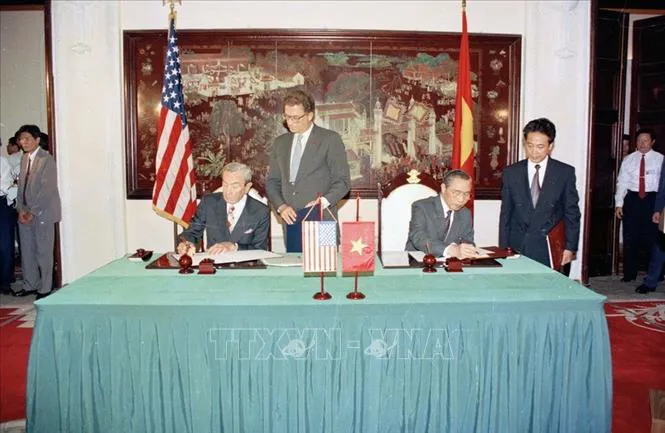
On August 5, 1995, in Hanoi, US Secretary of State Warren Christopher and Foreign Minister Nguyen Manh Cam sign the Protocol, officially establishing Vietnam-US diplomatic relations. File Photo: VNA
Compiled from multiple sources including the Ministry of Foreign Affairs, the Vietnam News Agency, the US Embassy in Hanoi, Texas Tech University, and historical witnesses, the exhibition traces major milestones across politics, economics, culture, education, health, science, and national defense.
Cao Huy, Deputy Minister of the Ministry of Home Affairs, affirmed that displaying the documents provides an opportunity to reflect on the two countries' 30-year journey and contributes to strengthening and developing the Vietnam-US relationship in the new era.
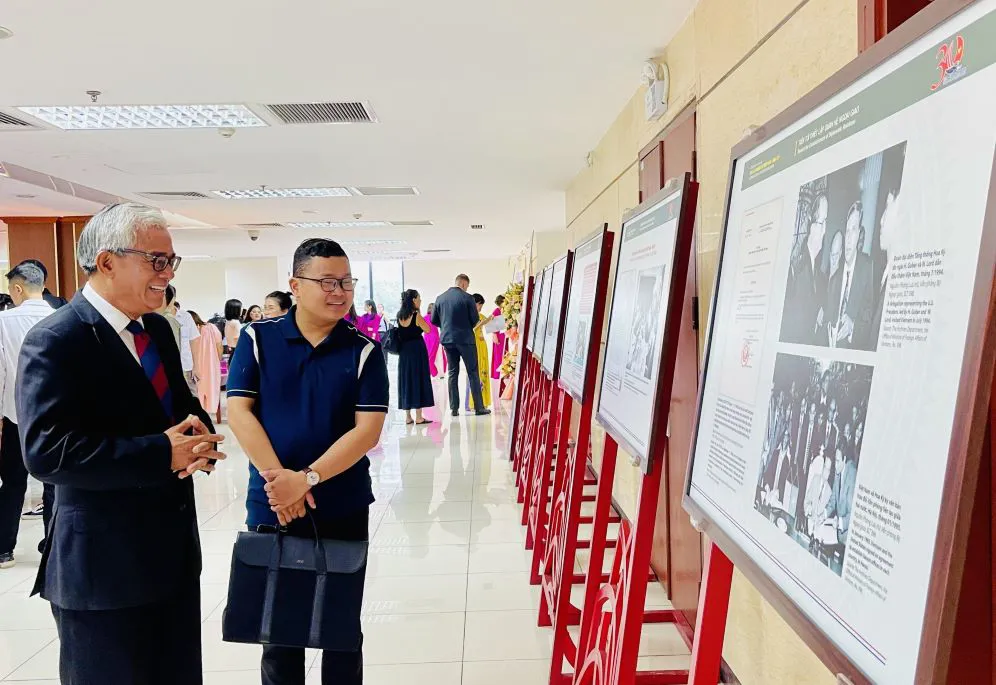
"This exhibition recreates the 30-year journey of the formation and development of relations between our two countries, and it sends a message about a future of stable cooperation, peace, and prosperity," said Huy.
Dang Thanh Tung, Director of the Department of Records and Archives, shared this view: "With memories preserved and cooperation nurtured by goodwill and responsibility, the Vietnam-US relationship promises a bright future for the benefit of both countries' peoples, as well as for a peaceful, stable, humane, and developed world."
Expanding opportunities to heal the wounds of war
The search for missing soldiers in the war against America is expected to yield better results with the active cooperation of archives and humanitarian organizations in Vietnam and the US. This cooperation has not only returned the remains of fallen soldiers but also their belongings, helping ease the grief of their relatives.
The National Archives Center III, in collaboration with the Vietnam-US Association, the Soldiers' Heart Organization, the "Forever 20" Club, and Texas Tech University's Vietnam Center, has given war relics back to the relatives of 22 martyrs and some veterans.
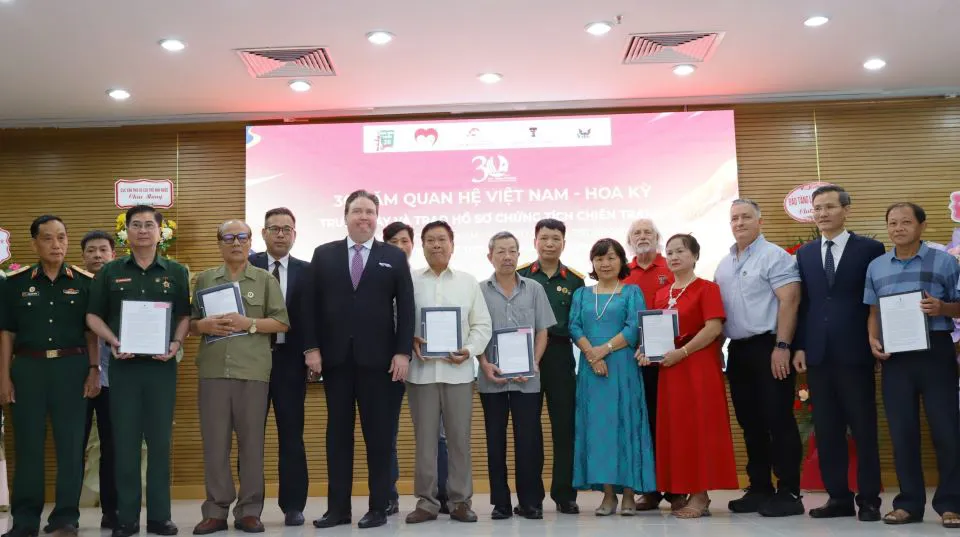
US Ambassador Marc Knapper returns war relics to martyrs' relatives. Photo: Minh Phuong/The Hanoi Times
Tran Thu Ha, the niece of martyr Tran Van Phu, burst into tears when she saw evidence files that included an ID card and a calendar with the tag "Tran Van Phu, Platoon Leader, Unit 90, Division 324."
“We hope that after today's ceremony, the local authorities will allow us to search for his remains there," said Ha.
The files returned to the relatives of 22 martyrs and some veterans represent only a small portion of the Vietnam Center's archives at Texas Tech University.
Currently, the Vietnam Center has a microfilm archive of nearly three million pages containing photographs, writings, images of relics, and memorabilia from the Northern and Southern Liberation Armies during the resistance war before 1975.
Vietnamese and US agencies have been for years cooperating to search for archival documents containing information, relics, and evidence of the war in order to return them to the families of those who fought on both sides. The Vietnam Center has also handed over more than 200 similar files to the National Archives Center III.
Previously, Kelly McKeague, Director of the US Department of Defense's POW/MIA Accounting Agency, discussed strengthening connections for searching for information about Vietnamese and US soldiers missing during the war with Dang Thanh Tung, Director of the National Archives Center III.
The US official said that Vietnam is very proactive in searching for and coordinating the search for missing soldiers, and they are very grateful for that. With Vietnam's support, the US has found and returned 740 missing servicemen to their families. Currently, 1,157 US servicemen are still unaccounted for from the war in Vietnam.
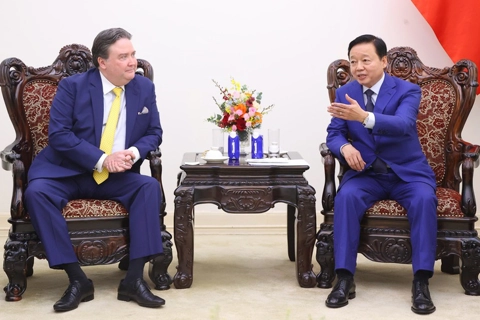
US Ambassador to Vietnam Marc Knapper affirmed that the photos, artifacts, and documents vividly depict the journey the two countries have taken from war to trust and cooperation.
He said this activity demonstrates a spirit of responsibility and goodwill in the Vietnam-US relationship, helping to overcome the consequences of war and strengthen trust and understanding between the two countries' peoples.
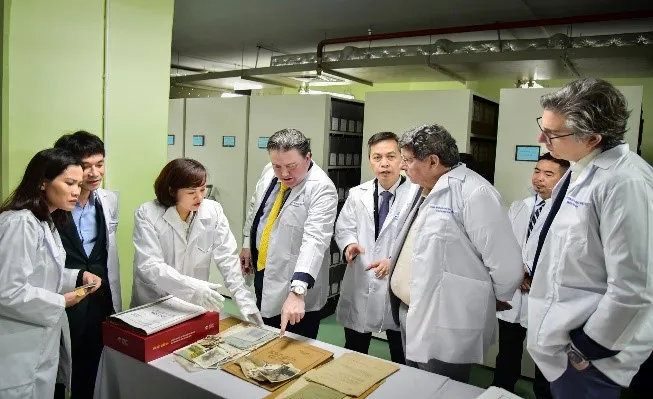
US Ambassador Marc Knapper tours the archives and artifacts storage facility at National Archives Center III on December 10, 2024. Source: National Archives Center III
On this occasion, the US Embassy in Vietnam presented 30 photos to express respect and commitment to continuing to develop the friendly relationship between Vietnam and the United States. The number 30 symbolizes the 30 years of diplomatic relations between the two countries.
According to former Deputy Minister of Foreign Affairs and Chairman of the Vietnam-US Association Ambassador Pham Quang Vinh, over the past 30 years, the two countries have evolved from adversaries to friends and partners, and finally to Comprehensive Strategic Partners.
This relationship has grown stronger in all areas, including politics, diplomacy, economics, trade, investment, national defense, security, culture, education, science, technology, and people-to-people exchanges, especially in overcoming the consequences of war.
Foreign affairs and people-to-people exchanges have been a meaningful part of the bilateral relationship for the past 30 years and are the basis for building and strengthening trust between the two countries.
Ambassador Pham Quang Vinh stated that these achievements are not coincidental, but rather the result of the great efforts and determination of the people and governments of both countries. First, there has been an effort to heal the wounds of war, enhance understanding, promote reconciliation, and build trust. Along with that has been the development of relationships based on equality, fairness, mutual benefit, and shared interests.