Vietnamese PM visits Japan, being 1st guest of Kishida Fumio
Japan is Vietnam’s biggest ODA provider, 2nd largest investor, 3rd tourism market, and 4th trade partner.
Today, Vietnam’s Prime Minister Pham Minh Chinh began an official visit to Japan at the invitation of his Japanese counterpart Kishida Fumio, being his first foreign guest since he took office in early October 2021.
| Vietnam’s Prime Minister Pham Minh Chinh leaves Hanoi Monday afternoon for the four-day visit to Japan. Photo: VGP |

The four-day visit starting on November 22 is expected to promote the multifaceted relations between Vietnam and Japan, its biggest official development assistance (ODA) providers.
The visit will help speed up recovery plans in the post-pandemic era, creating momentum for the all-sided relationship, especially in terms of trade-investment, politics, labor, and education, according to Ambassador of Vietnam to Japan Vu Hong Nam.
The PM’s visit shows Vietnam’s commitment to being a reliable destination for Japanese investors in the global supply chain, Nam said, adding that it is an opportunity to convey Vietnam’s message to support the overseas Vietnamese community as Japan is home to around 450,000 Vietnamese people.
The visit will prepare for the 50th anniversary of the bilateral ties in 2023.
Economic cooperation in the spotlight
This gives both Hanoi and Tokyo an opportunity to express their strong commitments to open doors in the context of rekindling trade protectionism of some economies in the world as both Vietnam and Japan are founding members of free trade agreements like the Comprehensive and Progressive Agreement for Trans-Pacific Partnership (CPTPP) (entered into force in Vietnam on January 14, 2019) and the Regional Comprehensive Economic Partnership (RCEP) (likely takes effect in January 2022).
The two PMs will discuss new policies on facilitating investment and import-export.
According to Ambassador Vu Hong Nam, trade and economics, in general, will dominate the discussions during the visit as production by Japanese investors contributes an important part in Vietnam’s gross domestic product (GDP) and exports.
Accordingly, Vietnam is expected to tackle problems and encourage Japan’s investments into major industries. PM Chinh will work with the Japan International Cooperation Agency (JICA), the Japan External Trade Organization (JETRO), the Japan Business Federation (Keidanren), and big Japanese companies operating in green energy, transport, health, and trading.
Chinh is scheduled to attend the Vietnam-Japan Business Forum to be held in Tokyo and an investment promotion conference in Tochigi where he will boast Vietnam’s preferential policies in foreign investment.
In addition, the digital economy will be part of the cooperation.
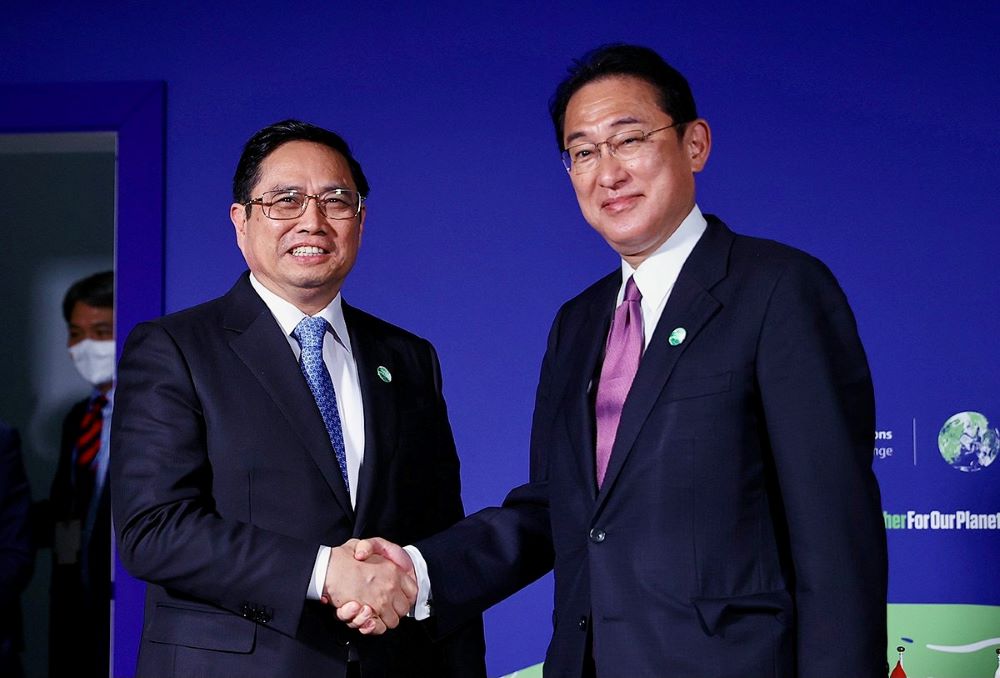
| Vietnam’s Prime Minister Pham Minh Chinh (L) and Japan's PM Kishida Fumio at COP26 in Glasgow, the UK in early November. Photo: VNA |
According to Ambassador Nam, discussions on security and politics would cost them quite a lot of time. The two PMs might set up cooperation strategies to contribute to maintaining peace and stability in the global maritime trade passes through Asia including the South China Sea and the East China Sea.
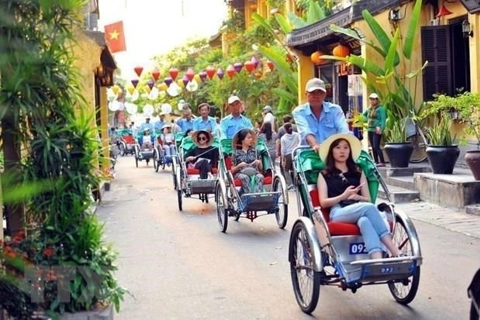
He believed that the two-way trade would surge, especially after the enforcement of RCEP. He said the two countries will see tourism rebound with more visitors from Japan (in 2019, nearly one million Japanese visitors came to Vietnam, up 15% on year).
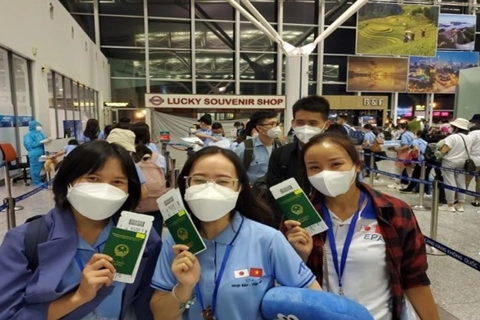
In addition, education, manpower training, and labor force would be covered in the talks. Currently, Vietnam tops countries for the number of interns in Japan with more than 220,000.
Accompanying with the PM in the four-day visit are the ministers of Defense, Foreign Affairs, Home Affairs, Supreme Procuracy, Planning and Investment, Industry and Trade, Agriculture and Rural Development, Natural Resources and Environment, and Health.
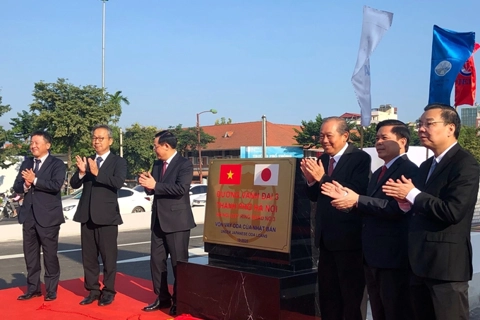
Vietnam and Japan established bilateral ties in 1973. Japan was the first G7 country to set up a strategic partnership with Vietnam (2009) and the first G7 nation recognized Vietnam’s market economy mechanism (2011).
Currently, Japan is the biggest ODA provider (US$23.76 billion as of December 2019), the second-largest investor, and the 3rd tourism market, and the 4th trade partner of Vietnam.
As of September 2021, Japan has poured $63.85 billion into 4,748 projects in Vietnam.
In recent years, Japan has been one of the biggest non-refundable donors for Vietnam’s education and training. It’s also a promising market for Vietnam. Japan considers allowing foreigners, including Vietnamese, in certain blue-collar jobs to stay indefinitely in the country from the 2022 fiscal year. Laborers would be allowed to bring along their families.