Vietnamese youth boost two-tier local government, drive digital shift
As Vietnam accelerates its transition to a two-tier local governance model, a nationwide movement of young digital volunteers is quietly transforming how citizens interact with public services. Far beyond a seasonal initiative, these young people are redefining civic engagement at the grassroots level, one e-form, one conversation, one connection at a time.
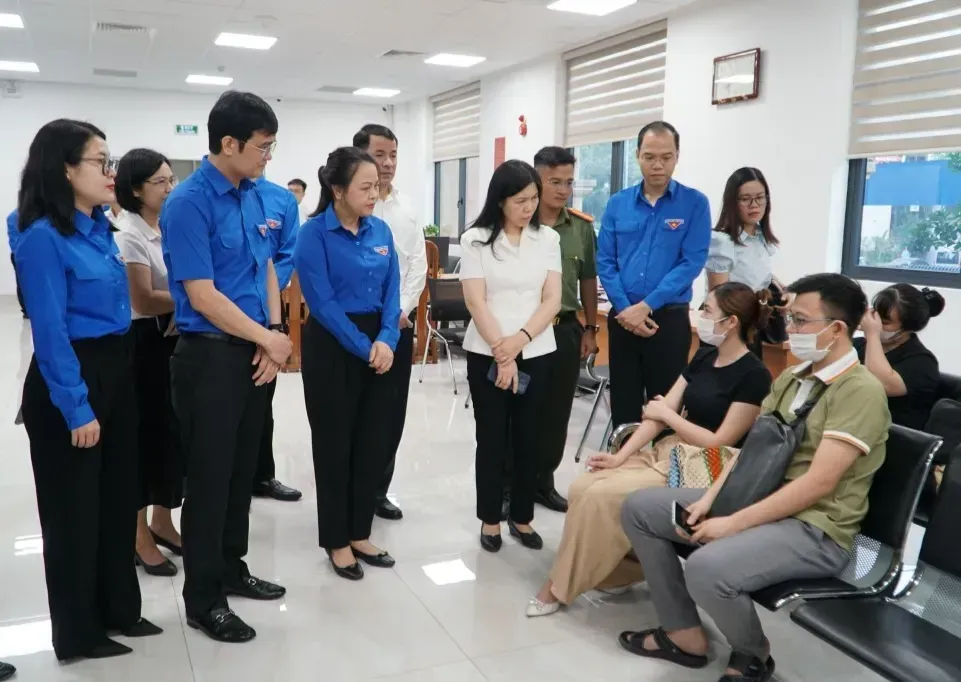
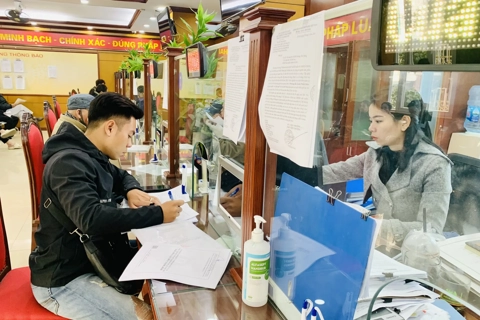
THE HANOI TIMES — At 8 AM, a group of young volunteers in blue shirts files into the public service counter at 59 Hoang Cau Street in Hanoi’s Dong Da District.
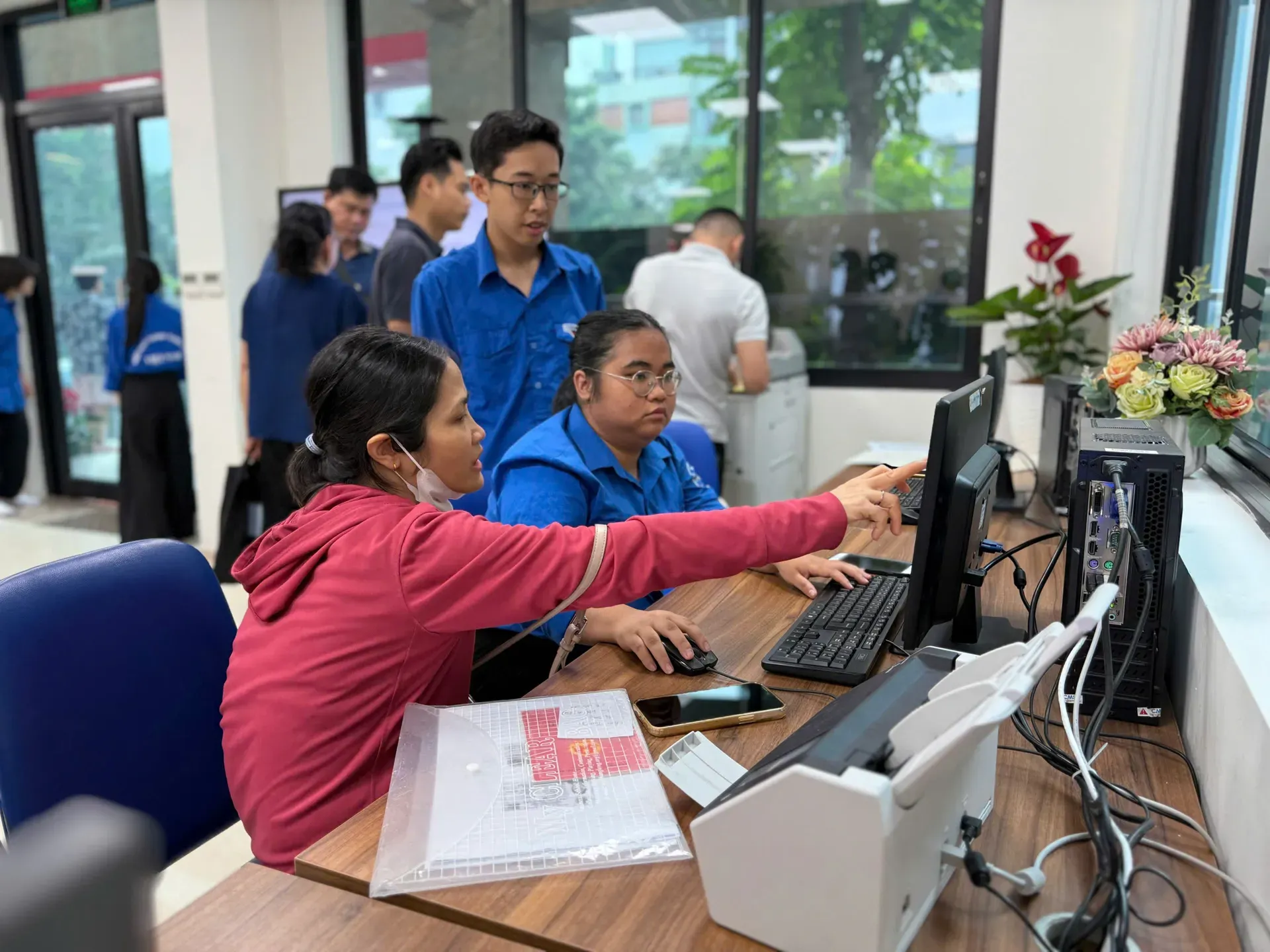
Armed with tablets, clipboards, and a quiet sense of purpose, they greet the morning’s first visitors, mostly elderly citizens navigating the newly consolidated administrative system. One volunteer gently adjusts a woman’s phone screen, guiding her through the VNeID digital ID app, while another answers questions about online tax services.
To the untrained eye, it’s just a helpful youth initiative. But these young people are at the frontline of one of Vietnam’s most significant administrative reforms, making the transition to a streamlined, two-tier local government system.
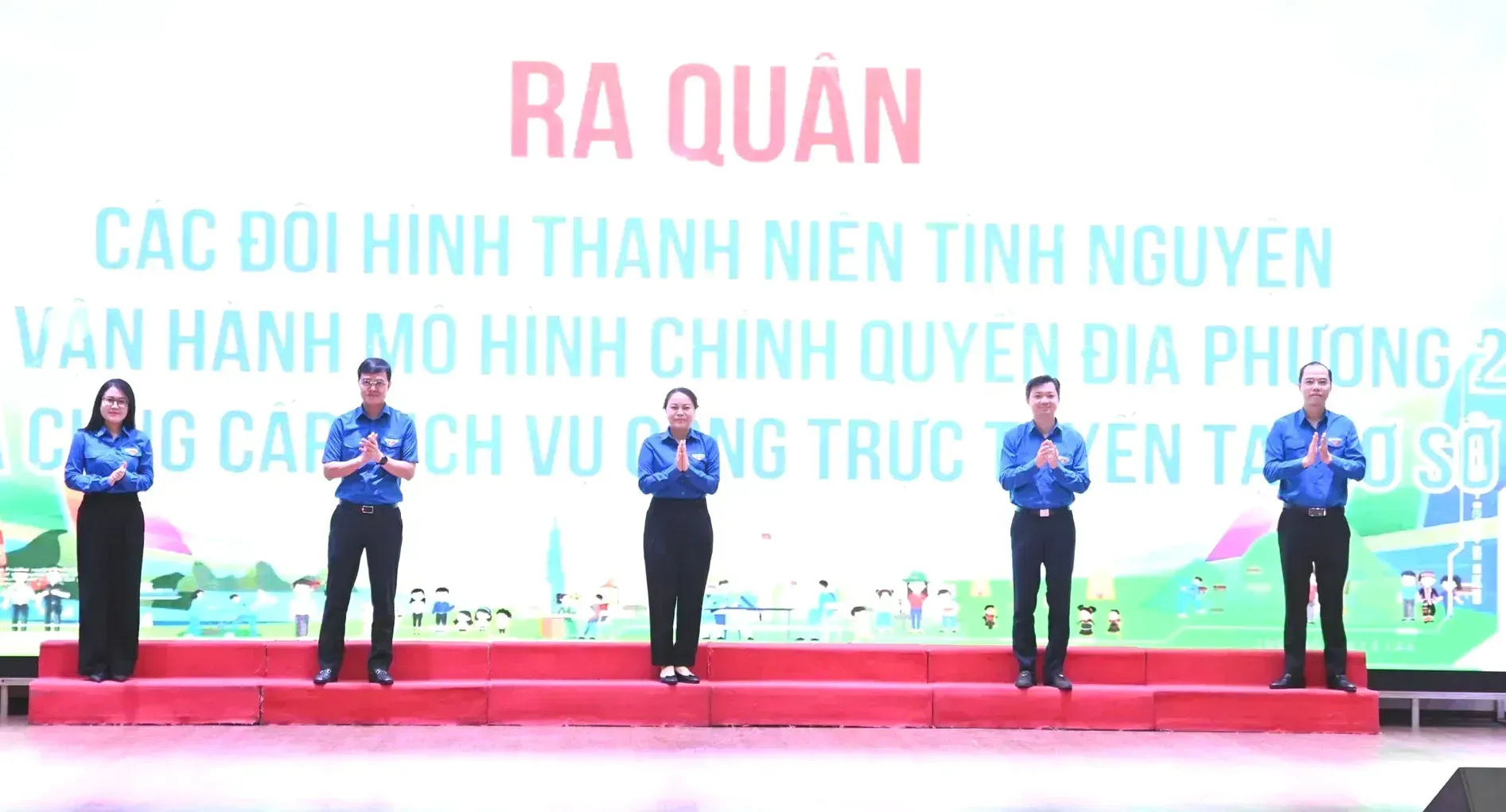
Delegates perform the launching ceremony ritual. Photos: Lam Hai
On July 7, the Central Committee of the Ho Chi Minh Communist Youth Union officially launched a nationwide volunteer campaign aimed at supporting the operation of this new system and facilitating citizen access to digital public services. This sweeping change follows a nationwide restructuring of commune-level administrative units, part of the country’s effort to create a more efficient, people-centered government.
The transformation, however, also poses major logistical and informational challenges, from integrating population data and streamlining bureaucracy to teaching citizens how to navigate online platforms.
With the spirit of “Youth must be the pioneering force,” the campaign reflects a larger commitment by Vietnam’s young generation to national reform efforts, said Nguyen Minh Triet, Secretary of the Central Youth Union and President of the Vietnam National Student Association, at the launch ceremony in Hanoi.
The scope of the campaign is enormous. As of its launch, over 241,000 youth volunteers in more than 4,800 teams deployed simultaneously across 3,321 communes, wards, and special districts nationwide. These teams include grassroots youth union members and 728 “Green Summer” student volunteer squads from 286 universities and colleges.
These aren’t just tech-savvy helpers. They are community connectors, bridging the gap between local governments and everyday citizens.
They assist in updating and cleaning administrative databases following commune mergers. They teach people how to use apps, electronic IDs, and e-government portals. They train local officials on digital tools and set up mobile tech advisory points in villages and neighborhoods. They make technology human.
At the administrative service point in Dong Da Ward, Nguyen Mai Anh, Secretary of the ward’s Youth Union, explains how her seven-member volunteer team has been trained to handle both technical and interpersonal aspects of the job.
“We divide tasks. Some help people fill out forms or navigate apps, while others answer questions about the new local government model. We try to make digital services less intimidating and more accessible,” she said.
Referred to as “community digital engineers,” these young volunteers are enablers of a more inclusive digital future. In areas where residents have never used a smartphone for anything beyond phone calls, the presence of these patient, supportive youth has been transformative. People who were once hesitant or confused are now learning to submit online applications, track documents, and access services that previously seemed out of reach.
The campaign will run through the end of August, with peak activity from July 7 to 30. Youth volunteers are deployed not only to public service offices but also into neighborhoods, markets, and local gathering spaces to maximize outreach. Their impact, local officials say, goes beyond technical support. It’s about trust. It’s about showing citizens that government services can be modern, responsive and delivered with care.
This isn’t just a temporary summer program. It’s a coordinated national strategy to empower youth to take ownership of reform, bridge digital divides, and help implement one of the most ambitious administrative overhauls in recent memory.
Local officials have praised the professionalism and dedication of the volunteers, describing the campaign as a powerful example of civic engagement driven by young people.
Across the country, youth teams are now a common sight at One-Stop Service Centers, helping residents from all walks of life feel more confident in dealing with public administration.
The launch was livestreamed to eight other provinces and cities, including Ho Chi Minh City, Cantho, Danang, Haiphong, Quang Ninh, An Giang, Thai Nguyen, and Cao Bang.
Whether it’s explaining an e-form to an elderly farmer in Thai Nguyen or training a local official in An Giang to use digital population data, these young volunteers are proving that technology and compassion can go hand in hand.
In every commune and ward, they’re becoming the face of Vietnam’s public service reform, not just for what they do, but for how they do it. Quietly, effectively, and with empathy.
As local governments settle into the new two-tier framework, it may be the work of these blue-shirted volunteers that citizens remember most, not just for their digital skills, but for their presence. For showing up. For making change feel possible.