Vietnam’s marine spatial planning matters to net zero targets
The master plan, prepared for the first time in Vietnam, is to sustainably develop the coastal zone and guarantee national defense and security.
Local and international experts believed that the master plan on marine resources will support energy security and help Vietnam meet its carbon neutrality targets by 2050.
| The workshop on Master Plan on Sustainable Exploitation and Use of Coastal Resources from 2021 to 2030, with a Vision to 2045, takes place in Quang Binh on Jan 5-6. Photo: UNDP Vietnam |
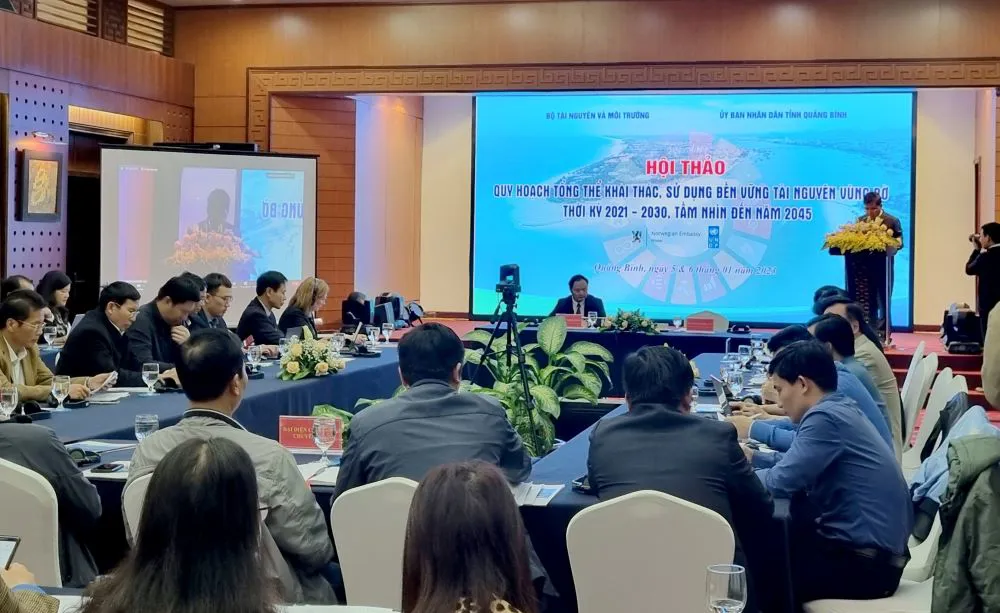
The idea was raised at a two-day workshop held on January 5-6 with the support of the United Nations Development Program (UNDP) and the Norwegian Embassy in Hanoi joined by different stakeholders, including coastal localities from Quang Ninh to Phu Yen.
Prepared for the first time in Vietnam, the Master Plan on Sustainable Exploitation and Use of Coastal Resources from 2021 to 2030, with a Vision to 2045 is multi-sectoral, difficult, and complex planning, which uses the spatial synthesis method.
Patrick Haverman, UNDP Deputy Resident Representative in Vietnam said sustainable management of coastal and marine areas is a crucial tool for Vietnam's development of a blue sea economy, promotion of the growth of new sectors to enhance income, and creation of new jobs.
“Particularly, coastal planning and open marine spatial planning have the chance to capitalize on the vast potential of marine wind energy as an essential renewable energy source for achieving Vietnam's climate objectives,” Haverman noted.
Coastal planning will also help ensure optimal and coordinated development between sectors in the exploitation and use of Vietnam's coastal resources, the conservation of nature and biodiversity, preservation of cultural and historical values, and improvement of climate resilience, he emphasized.
As a country with a long coastline and many islands, facing the challenges of environmental pollution, the decline of marine resources and resources, and the impact of climate change, Vietnam has actively developed policies and laws on the management of seas and islands while enhancing international cooperation over the past few years, said Le Minh Ngan, Deputy Minister of the Ministry of Natural Resources and Environment.
In this regard, the Government of Norway has partly supported the process. Speaking at the workshop, Mette Moglestue, Deputy Head of Mission of the Norwegian Embassy in Hanoi said Norway is happy to share its experience and expertise in developing management plans for coastal and ocean areas as it’s among the first countries to do that. Learning from mistakes along the way over the years, Norwegian ocean areas are now considered to be among the best managed in the world and with a very high level of value creation: 70% of Norway’s export earnings come from the ocean.
Norway’s experiences with the integrated marine management approach show that it is possible to simultaneously develop a prosperous ocean-based economy and to keep our oceans clean and healthy and good marine spatial planning is key to this, the diplomat stated.
| Phu Quy Port in Binh Thuan Province, Vietnam. Photo: Dinh Hoa/Bao Binh Thuan |
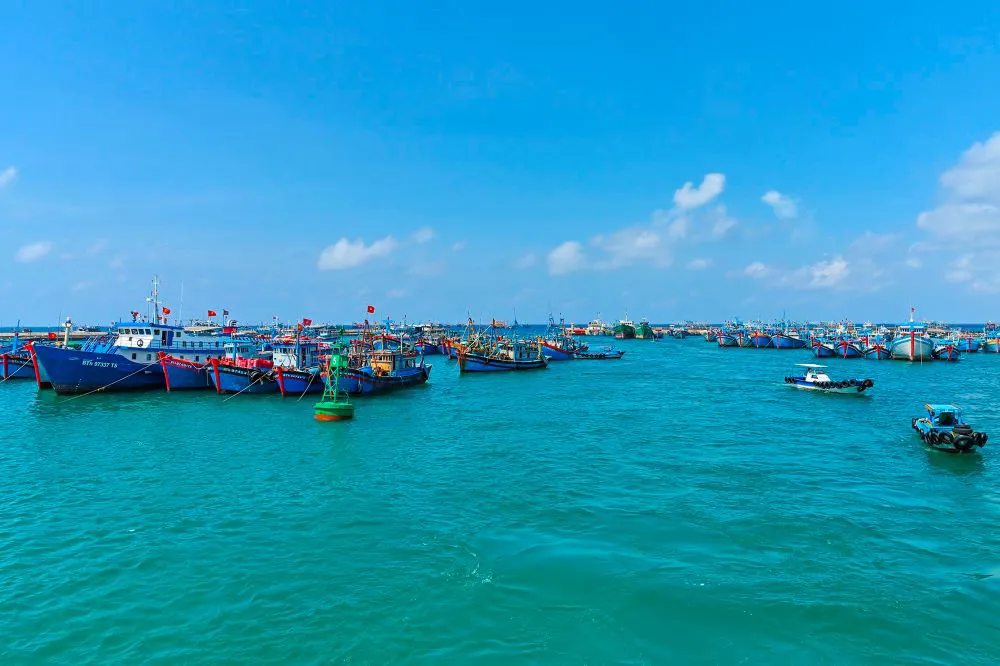
Vietnam’s active move
The master plan was developed based on integrating relevant national sectoral master plans within the coastal zone, but with adjustments and management of overlapping areas in terms of coastal space use to ensure harmony in the exploitation and use of natural resources, environmental protection, and sustainable development of coastal regions.
Vietnam has more than 3,260 kilometers of coastline, which provides great natural capital for economic growth. It offers significant potential for inshore and offshore wind energy production. To fulfill this enormous potential, Vietnam adopted a Resolution in 2018 on the strategy for sustainable marine economic growth in Vietnam to 2030, with a vision to 2045.
For that reason, developing a national marine spatial plan and a master plan for the sustainable exploitation and use of coastal resources is an essential solution.
According to the Resolution, the scope of the Coastal Zone Plan includes the coastal waters and land.
The objective of the master plan is to sustainably develop the coastal zone by enhancing the efficiency of resource management, exploitation, and utilization within an integrated management framework, while proactively adapting to climate change and sea level rise.
It also aims to enhance the lifestyles and living conditions of the coastal communities in conjunction with the conservation and development of natural, ecological, and cultural qualities, maintain social order and guarantee national defense and security.
Maximizing benefits and the use of coastal resources, the planning contributes to the economic growth of 28 coastal provinces and cities to over 7.5%/year, aiming to achieve net emissions of "zero" by 2050.
Regarding social culture, the master plan aims to advance social justice, safeguard the right of coastal people to access the sea, and strengthen the active and responsible participation of people in protecting natural resources, environment, and cultural and historical values in coastal areas.
Concerning environment, it aims to protect the ecosystems in the coastal areas, and manage pollution sources from the mainland, and plastic waste pollution in coastal areas.
The sea and coastal areas of Vietnam account for approximately 47-48% of the country's GDP. The marine economy alone makes up about 20-22% of its GDP.