Water, sanitation and hygiene key to Pacific’s ongoing Covid strategy
Pacific island nations have been among the top performers worldwide in controlling Covid-19. A greater emphasis on water, sanitation and hygiene practices will help continue that success.
Covid-19 has forced Pacific island nations to close borders to prevent the disease’s entry. This has been a largely successful strategy, however, more needs to be done. As UNICEF and the World Health Organization have indicated, good water, sanitation and hygiene practices also play a critical role in blocking transmission, particularly hand hygiene. Most Pacific island nations have a poor track record with regard to water, sanitation and hygiene policies.
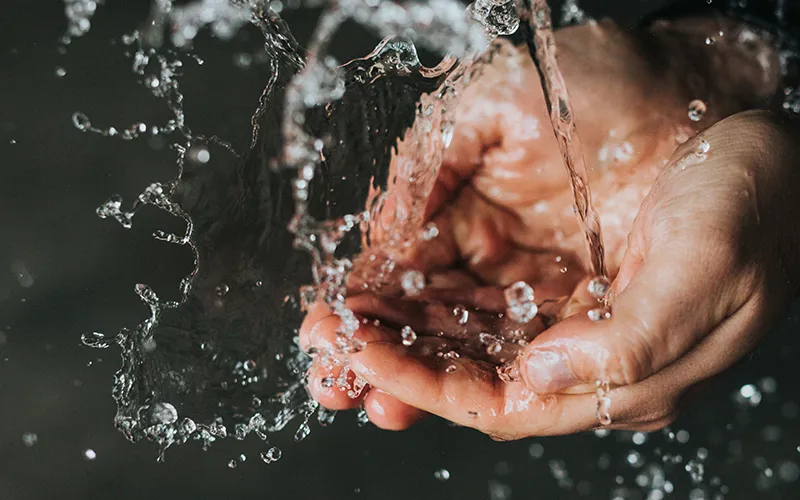
Hand washing and other basic hygiene can be challenging on Pacific island where water is scare. Photo: Nathan Dumlao |
Limited hand-washing facilities, high population densities, large household sizes and weak health services, compound the risk that the virus could spread quickly once it has a presence in Pacific communities. To address Covid-19 and other human-to-human transmissible diseases, water, sanitation and hygiene practices should reach the three major goals: universal access, efficiency, and sustainability.
Universal access. Water, sanitation and hygiene campaigns have been conducted in many Pacific countries but they have never achieved universal access due to a lack of access to reliable water and sanitation infrastructure. Pacific island states have some of the lowest rates internationally of access to basic water supply and sanitation. Handwashing facilities with flowing water and soap are not always available in public areas. Hand sanitizer should be introduced for hand hygiene, with a specific focus on schools, markets and clinics. In some countries, the water supply is limited and intermittent. In this case, the provision of small water tank systems to accompany handwashing stations should be considered to provide flowing water for hand washing. Universal access will help women, girls and other children to maintain their hygiene, at least in schools and public toilets, when they do not have household water connections.
Efficiency. In some areas with continuous water supply, poor hand hygiene behavior is still prevalent. The Covid-19 crisis has greatly undermined the efficiency of water, sanitation and hygiene and handwashing, particularly in public areas and health clinics. People should be trained on hand hygiene in the why, when and how in households and public areas. Following the WHO’s “My 5 Moments for Hand Hygiene” approach, proper locations for handwashing facilities should be ensured within five meters of toilets, as well as in waiting and dining rooms and other public areas. The efficiency of water, sanitation and hygiene will also require proper sanitation service and solid waste collection to prevent the virus from spreading with dirty water or infectious waste. Efficiency here will also require the efficient use of fresh water resources since proper handwashing demands 20-40 seconds of flowing water, which uses two to five liters of water. In many island countries, the fresh water comes from sea water desalination with high costs. In this case, water conservation taps should be considered.
Sustainability. One of the key challenges is ensuring the sustainability of hygiene interventions where the provision of water supply and sanitation is often inadequate. This can be addressed by supporting water, sanitation and solid waste management financing. Water and wastewater utilities, government regulators and decision makers should also actively join water, sanitation and hygiene activities. After all, it is important to develop a culture that values hand hygiene, especially with the support of senior officials.
Existing WHO guidance on the safe management of drinking water and sanitation services is adequate to deal with the Covid-19 outbreak. The pandemic makes access to water, sanitation and hygiene a more urgent priority.
Many co-benefits will be realized through good water, sanitation and hygiene, including the prevention of other infectious and water-borne diseases which cause many deaths in the Pacific each year. By bringing about a clean, and hygienic environment, good water, sanitation and hygiene practices contribute to safety first in the community. They will also help restore local economies, including tourism, which is critical for many islands.
If Pacific island nations can work toward these three goals, they increase the chances that they will not only survive but thrive in the wake of Covid-19.
Jingmin Huang is Director, Pacific Department, ADB.