West Lake restoration to make Hanoi a global cultural hub: Architect
Architect Hoang Huu Phe who has participated in planning and designing many projects in Vietnam, such as Vietnam National Circus Theatre and Can Tho University, talks with The Hanoi Times about a new perspective on the planning of the Quang An peninsula.
You have witnessed the transformation of Hanoi in urban planning through many periods, can you describe more clearly the changing trends of the capital city's urban area during the past time?
In my opinion, the transformation of Hanoi in terms of urban planning is the top concern. In 2008, when I actively participated in the debate on expanding Hanoi's administrative boundaries, I strongly supported this proposal, with the main argument being to improve Hanoi's competitiveness as a capital city in the global urban network.
The most important trend in Hanoi’s urban planning, which can only emerge after expansion, is the change of the capital city from a monopolar city to a multipolar city. This transformation allows Hanoi to compete favorably in two fundamental areas of its strengths, including knowledge and comfort, in which the socio-cultural resources of Hanoi play a very important role.
I think the West Lake chosen to be a sports and culture center for Hanoi is the right choice. We have seen the great potential of this area a long time ago. The problem is how to restore this area so that it can best contribute to the development of Hanoi, making it a significant position in the international urban network.
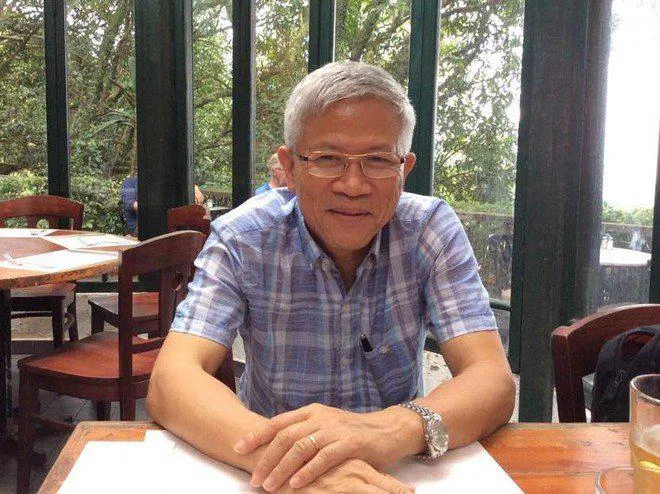
| Architect Hoang Huu Phe. Photos: The Hanoi Times |
Hanoi is planning to build West Lake into a new cultural center of the capital city with a system of works such as a pedestrian landscape, square, art museum, exhibition house, and the floating theater on Dam Tri Lake... How do you assess the necessity of this planning? And what does Hanoi need to do so that the planning can soon be implemented?
These works are necessary elements for the new cultural center.
However, the decisive factor for success is its intangible elements or its soul. The West Lake Cultural Center must reflect core social values, match the urban landscape, and become a prominent positional pole.
To implement this project soon, it needed to follow the approved process, including collecting public opinions. In many similar cases not only in Vietnam but also in many parts of the world, the public opinions can be very different. To get consensus, it is never superfluous to try to provide information, and explanations, and organize seminars.
In 2010, Vinaconex R&D Company, directed by me, was selected by the Hanoi People's Committee as a consultant for the International Architecture Competition at the Hanoi Opera House. We sent invitations and made official phone calls to four firms of architects considered to be the world's leading ones at that time, including Norman Foster (UK), Renzo Piano (Italy), Zaha Hadid (UK) and Paul Andrew (France).
Zaha and Paul could not participate because they were busy, and Renzo Piano's proposal was selected by a prestigious international jury under the direction of Professor Christine Hawley, who at that time was head of the Bartlett School of Architecture, University College London.
The architecture competition took place with the highest level of expertise and experience in the world, and we, along with the jury, were convinced that if the investment is decided, this will be a prominent feature of Vietnam to bring the country integrate into the cultural activities of the international community.
Like many countries in the world that have succeeded in the cultural industry thanks to its building of many iconic works, Hanoi wishes to build a large-scale theater that will be a cultural symbol not only of the capital city but also of the whole country. In your opinion, if we need such a project to create a brand, even a future for the land of thousands of years of civilization in the process of integration?
The economic powers of the world are all cultural powers, and their soft power based on cultural capital has significantly contributed to maintaining the high competitiveness of these economies. However, for some of the later developed countries, the cultural industry has become a key force in the country's development strategy.
A very clear and vivid example is South Korea. The government has moved away from the focus of political control over cultural industries in the past to see them as an important part of the country's cultural export-led economic development strategy.
As a result, their cultural products (from traditional Kimchi culture to modern K-pop) are effectively supported by the government’s investment in related industries such as information technology and communication.
Since the 1990s, Korea has been actively participating in the East Asian market. Ten years later, the country has become a truly special phenomenon in the global market, helping it become one of the fastest growing countries in all aspects in the world. In our Southeast Asia region, Singapore and Thailand also heavily rely on their cultural capital to thrive and compete successfully on a global scale.
If we have great trust in the intangible values of Vietnam as a premise to ensure the strong development of the cultural industry, then along with them, the tangible values must also be generated at a commensurate level.
A cultural industry that wants to operate and develop to its peak needs to create a material and technical basis for all seven traditional arts, including architecture, sculpture, painting, literature, music, performance and cinema.
For music, performance and cinema, high-quality dedicated spaces are the requirement. The success depends almost entirely on modern audio-visual technology, which has made great strides, and required specialized equipment and carefully designed spaces.
The current performance facilities in Hanoi, although they have served the urban community excellently since the day of their construction, have limited capacity and are no longer suitable for large-scale cultural activities of regional or global stature - this is the target of Vietnam's new cultural industry.
A large-scale theater with auxiliary spaces and systems will be the focal point for creating a strong attraction for local people and friends from all over the world.
The world-class theater will be a place for training talents who will contribute to building the country’s soft power - a significant role in the economic development strategies of Vietnam.
No need to keep the status quo, but the soul of West Lake
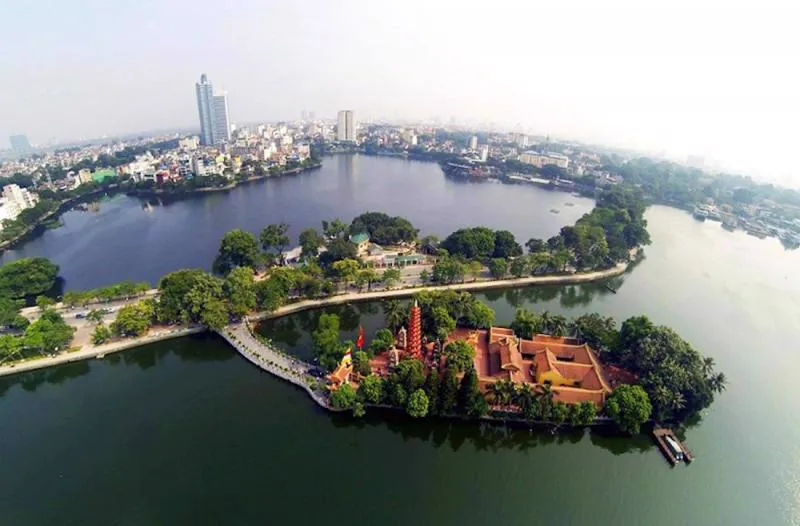
| A corner of West Lake. Hanoi Opera House is designed to be a prominent part of the capital city. |
What should Hanoi pay attention to harmonize conservation and development?
First of all, it should be said that, in front of an area or work with heritage elements that need to be protected, we have three levels of treatment depending on the importance and urban situation: Historic Preservation, Heritage Restoration, and Redevelopment.
In the world, the first level, or Historic Preservation, will be applied for special heritage buildings, especially when it is necessary to maintain the historical status quo, with details including paint colors and original materials. They are, for example, castles and places of worship in Rome, Paris, Beijing, or the Citadel in Hue citadel.
Large landscape areas such as West Lake need to apply the second level of Heritage Restoration. Recent studies around the world, especially by active members of ICOMOS (International Council of Monuments and Sites), have shown that this level is completely consistent with the principles of sustainable development. That's exactly what we need for Hanoi.
Heritage Restoration allows us to take advantage of all resources to quickly develop the West Lake Center for Culture - International Trade. Changes that follow the principles of sustainable development and ensure the preservation of the region's identity are normal activities, even in the cities with the strictest regulations on heritage planning.
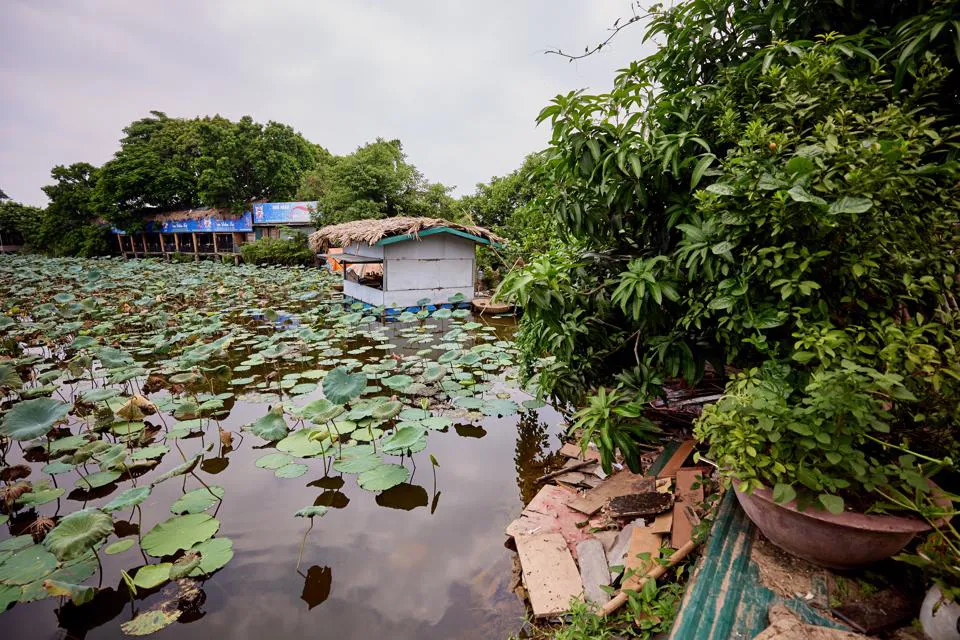
| Lotus - a special flower of the West Lake is threatened by pollution caused by restaurants and temporary tents. |
West Lake is a gem of Hanoi, also known by many as a “sacred land”, but in fact, for many years this place has been encroached by spontaneous residential areas and messy shops. What should Hanoi do to preserve West Lake with its inherent title after becoming a cultural and international exchange center as planned?
As mentioned above, the West Lake area is a historical landscape, so it should be treated on the level of Heritage Restoration, instead of Historic Preservation, but it’s needed to keep intangible characteristics, or the soul of the place, the basic values of the place, or commonly known as cultural memory. To realize this, it is necessary to establish a restoration/conservation area, where architectural/natural features are kept and considered valuable and need to be protected.
It can be said that this is the place with the highest concentration of cultural and artistic activities, so the approach to planning and architecture suitable for a very large number of people needs to be carefully considered, with special attention to public safety and environmental quality.
We have been preserving many legacies left over from years in history. Over the past several decades, have we had any more tangible and intangible creations that could become a legacy for future generations?
To be honest, in Vietnam - a country that has witnessed a lot of changes in history and the fierce destruction of many wars, the field of creating tangible and intangible cultural products is very difficult, and we haven’t done much.
The major historical works such as the Imperial Citadel of Thang Long and Hue Citadel were no longer intact. After 1954 and after the country's reunification in 1975, there were more cultural works appeared such as Cheo Theatre, Ethnology Museum, Tuoi Tre Theater, and National Cinema Center... and other works supported by other countries including Cong Nhan (Workers) Theatre and Ho Chi Minh Museum, where have attracted a large number of people.
However, outstanding works, both in terms of technology level and architectural value compared to the region and the world, are probably still ahead. We will certainly progress to the development of these buildings through many international architectural competitions as most countries do in the world, including the most developed countries.
To have a successful project left to future generations, what should be noted?
It must first bear a clear mark of the time it is born, in all aspects, including knowledge and modern technology based on a global level, the core social values of the country, suitability with the ever-changing urban landscape towards sustainable development, and the site’s ability to confer significant social status.