Yagi storm exposes need for more car parks in Hanoi
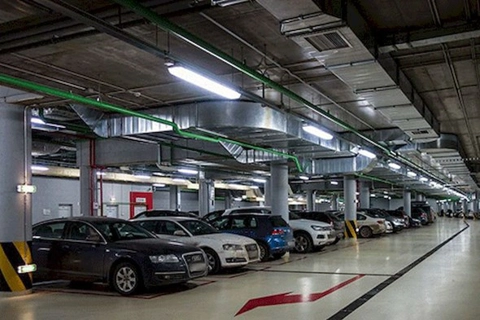
As many cars were damaged during the storm while parked outdoors, the capital's authorities would speed up the construction of car parks, including underground garages.
Parking shortages and traffic jams in Hanoi and during Typhoon Yagi took a heavy toll, with many cars damaged while parked outside.
| A car crushed by a tree on Lang Road on the night of September 7. Photo: The Hanoi Times |
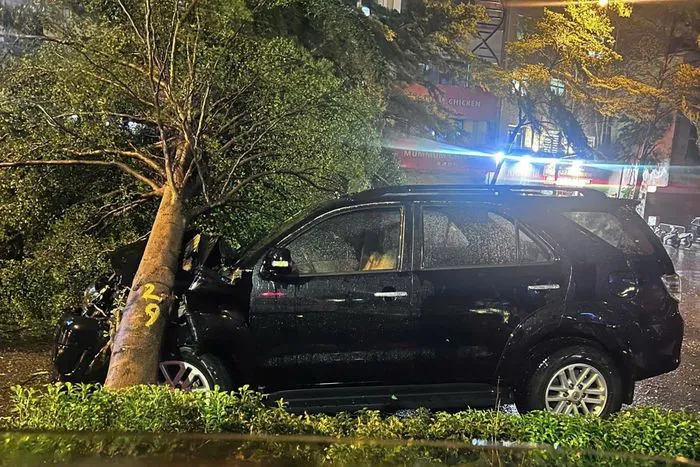
Many car owners could only watch in despair as their vehicles, some worth billions of dong, were crushed by falling trees.
As of September 10, major insurance companies had received hundreds of claims for damaged vehicles.
BIDV Insurance Corp. received more than 180 claims, while Saigon-Hanoi Insurance received 250.
Phuong, a car owner who lives in the Linh Dam Urban Area of Hoang Mai District, said that although she had been warned of the severity of the storm, she had no choice but to park on the side of the road or in a makeshift car park as all licensed parking spaces were full.
All the car parks in Linh Dam were full, and if there were any spaces left, they were far from home and very expensive, she told the online newspaper Xay Dung (Construction).
Dung, who parked his car in a lot on Nguyen Duy Trinh Street in Hoang Mai District, said he was frustrated to see his car damaged.
"My car and several others were crushed under trees. It was no longer intact, with shattered windows and deformed doors," he said.
In recent years, Hanoi has planned to develop more car parks, with a focus on underground garages to meet the demand for parking in Hanoi's four core districts.
| Better urban planning is also seen as a key to creating more underground space. Photo: Thai San/The Hanoi Times |
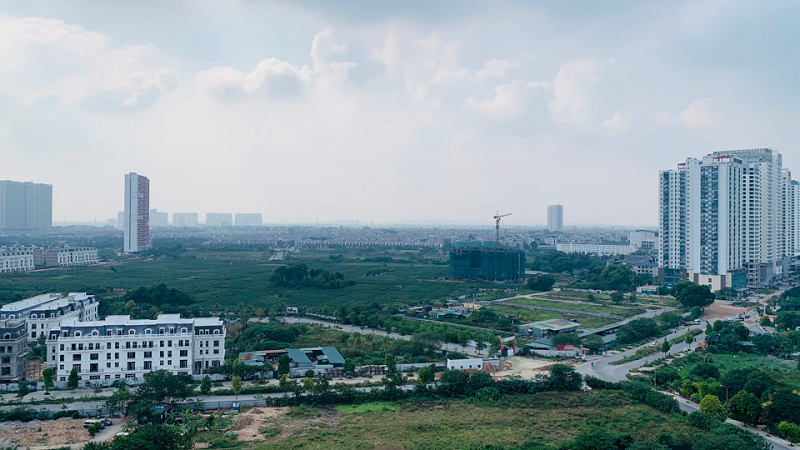
However the plans have remained theoretical, with significant challenges delaying their execution.
Tran Huy Anh, permanent member of the Standing Committee of the Hanoi Architects Association, said the lack of parking spaces is a common problem in big cities like Hanoi.
The problem stems from poor planning, which results in infrastructure that doesn't meet the needs of the market, especially when high-rise residential areas are developed with little thought given to parking spaces, he said.
In the old districts, where the population is high and dense, people often park their cars at street corners and under trees, Anh said.
These places do not provide safe shelter for the vehicles, he added.
Drawing from international lessons, Hanoi was the first locality in Vietnam to approve underground space planning.
In 2022, the Hanoi People's Committee approved a master plan for underground development in Hanoi by 2030, with a vision for 2050.
As part of the plan, the city government is encouraging existing car park operators to expand their facilities downwards by creating underground car parks and building mechanic parking lots to save land.
Nguyen Cong Giang, Dean of the Underground Construction Faculty at Hanoi University of Architecture, said there are plans to build underground car parks at shopping centers.
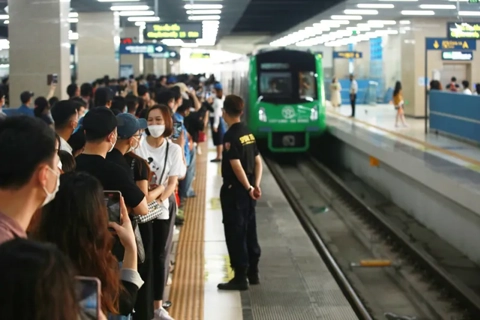
These include one under the Friendship Culture Palace, which is connected to the underground S12 terminal of the Nhon-Hanoi metro line, he said, adding that these projects have been delayed due to various factors.
"Japanese experts have suggested that the Hanoi authorities develop a master plan that links underground car parks," he told Construction newspaper.
"This would allow different buildings in the same area to share underground facilities," he said.
Giang added that there are no specific laws governing the sharing of underground space between government offices, commercial buildings and people's homes in the capital.
Architect Anh also noted that the development of underground space in Hanoi is uneven.
Citing an example of metro lines that are poorly connected to other underground facilities, he said that underground construction should be integrated with existing infrastructure to avoid overlap and costly budget overruns.
Better urban planning at the root
Giang, an expert from the Hanoi University of Architecture, said it was necessary to regulate ownership of underground space.
| Experts suggest that the best solution is to make sure public infrastructures are connected underground. Photo: Thai San/The Hanoi Times |
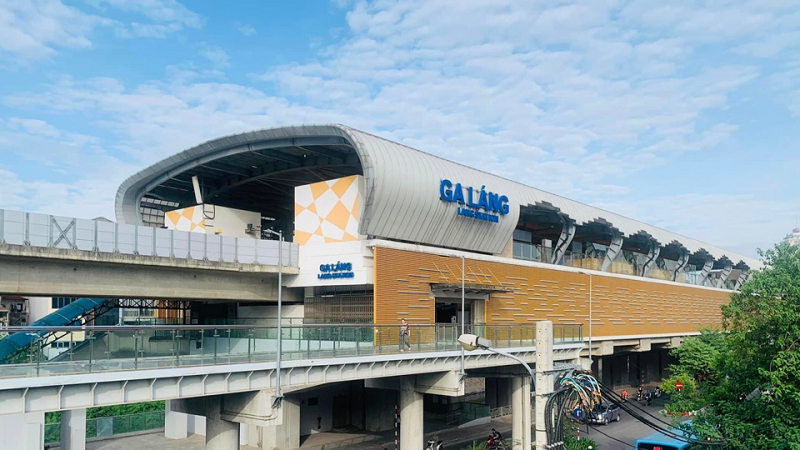
It is necessary to build underground facilities under high-rise and low-rise buildings, depending on the depth of their foundations, he said.
The developer can go deep into the ground without compensating landowners as long as the project doesn't affect the surface structure, Giang said, adding that this experience is successful in Japan.
According to Giang, the main obstacle to the development of underground facilities is the overlapping power of ministries and government agencies, as they have different jurisdictions over a given site.
Administrative procedures in tendering and financing are also an obstacle that adds complexity to project development and implementation, he said.
Giang suggested that the Ministry of Construction be empowered to take jurisdiction over underground parking projects.
He also recommended that professional expertise, proper regulations, and better planning are at the heart of the solution, allowing capable contractors to participate in underground projects.
Underground parking projects should not conflict with existing structures, said architect Anh, citing the controversial C9 metro terminal near Ngoc Son Temple and Hoan Kiem Lake as an example.
Underground spaces should also serve various purposes, such as parking, commercial centers, or logistics hubs, to maximize their utility in urban areas, he added.
Hoang Van Cuong, member of the National Assembly's Finance and Budget Committee, believed that the new Capital Law 2024 will be the key to solving existing problems related to the development of underground spaces.
"The law encourages the development of underground spaces into an 'underground city' connected by transportation systems such as metro lines, attracting people to live and work in these areas," Cuong told The Hanoi Times.
For this to succeed, specific regulations on the depth of underground spaces should be established to accommodate defense or security zones. The government should issue detailed regulations for different areas instead of applying a blanket depth restriction, he suggested.