Hanoi prioritizes investment in underground infrastructure
Subsurface planning is as important as surface planning. Both must be considered as a whole to ensure balanced development.
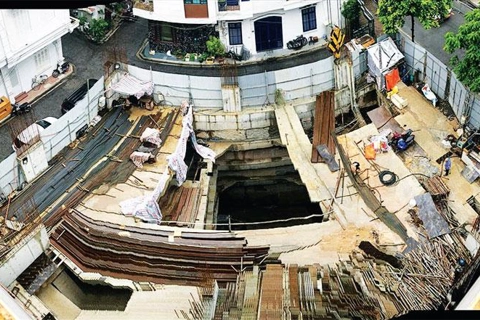
Hanoi has made significant investments in developing underground infrastructure to address the city's transportation challenges. These investments include the construction of underpasses, which will open up new development opportunities in previously disconnected areas of the capital.
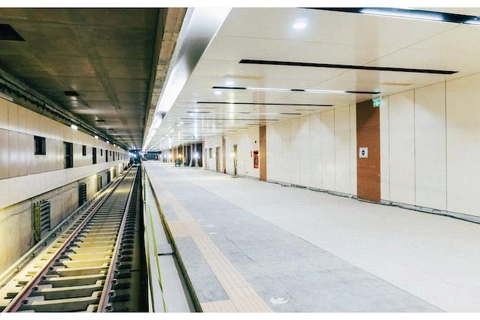
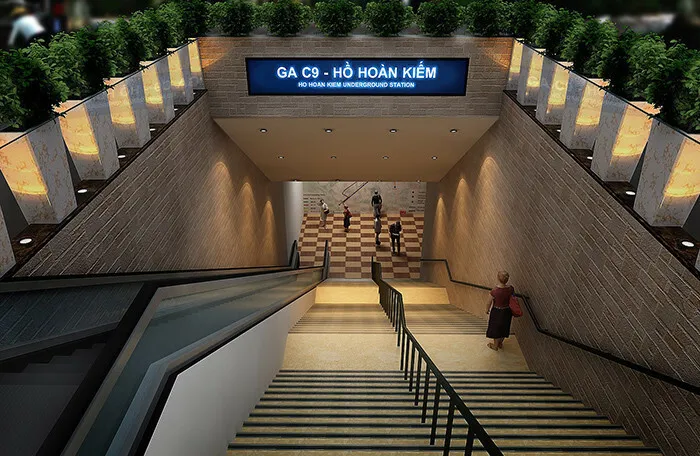
| The design of the C9 underground station for a metro project near Hoan Kiem Lake. |
Experts noted that since the 2000s, Hanoi had implemented various solutions for underground infrastructure, including pedestrian underpasses at Kim Lien, Thanh Xuan, and Trung Hoa intersections, underground parking lots, and basements in certain hotels and commercial centers.
However, the underground projects in the capital have primarily been individual works that serve specific purposes and are not connected to a network from a citywide or regional perspective.
Architect Dao Ngoc Nghiem, Vice Chairman of the Vietnam Association for Urban Planning and Development, noted that in the past, Hanoi had proposed underground parking projects at Hang Dau Flower Garden, Thong Nhat Park, Quan Ngua Sports Palace, Thu Le Park, Friendship Cultural Palace, and Hanoi Opera House Square.
These projects faced several challenges and were not implemented.
"Based on global trends and the need for efficient resource utilization, especially in light of the current status of underground development, it is time for Hanoi to seriously consider and prioritize comprehensive and systematic underground planning for sustainable development," Nghiem stressed.
He points out that Hanoi has recently devoted significant resources to developing underground infrastructure as a means of solving urban traffic problems. In particular, several underground projects have been implemented to connect different regions and facilitate the development of previously divided areas within the capital.
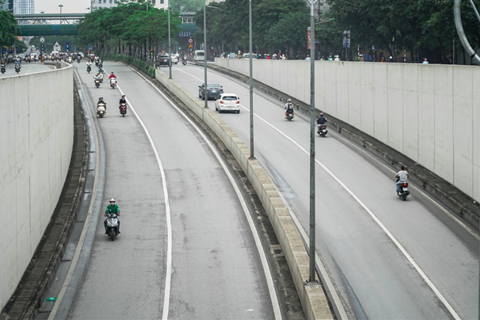
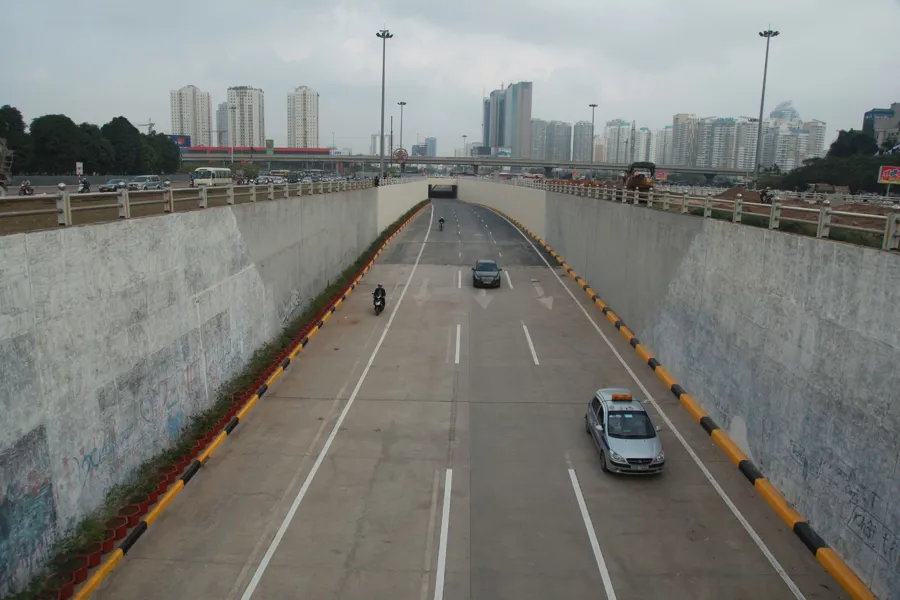
One notable example is the Le Van Luong-Khuat Duy Tien underpass, which required an investment of nearly VND700 billion (US$29.5 million) and has been open to traffic since late 2022.
This tunnel is part of a series of six key transport projects in Hanoi and has successfully reduced traffic congestion in the southwest of the city. In addition, Hanoi is actively building urban railways, many of which will run underground, with stations that will serve both transportation and commercial purposes.
Furthermore, Hanoi is prioritizing the construction of underground parking facilities. The city's General Planning for underground urban construction space until 2030, with a vision towards 2050 (approved in March 2022), includes the development of 78 underground parking lots across four districts. In the central areas of Hoan Kiem, Ba Dinh, Dong Da, and Tay Ho, there are plans to build underground parking facilities with up to five underground levels.
| Tran Duy Hung - Ring Road No.3 underpass. Photo: Pham Hung/The Hanoi Times |
Legal frameworks required
Although the development of underground space is in line with the trends observed in modern urban areas, there is currently no specific legal framework for urban underground construction. To establish a legal basis, amendments to the Land Law should address various aspects related to land use planning, including the issuance of land use right certificates for underground construction projects.
Architect Tran Huy Anh, a standing member of the Hanoi Association of Architects, stressed the need for the amended Land Law to provide more specific guidelines.
"This is crucial because it will serve as the basis for issuing circulars and decrees related to technical land management. The involvement of the Ministry of Construction is necessary, as this is not an issue under the purview of the Ministry of Natural Resources and Environment alone," Anh said.
To facilitate the development of urban underground spaces, it is essential to prioritize the rapid improvement of institutional frameworks and policies. This includes formulating laws on the use and development of underground spaces and ensuring their synchronization with the existing legal framework for land, construction, planning, and more. In addition, it is necessary to issue documents that define the powers and responsibilities of relevant organizations and individuals involved in the planning, construction, exploitation and use of underground spaces, he continued.
At the same time, it is crucial to draw up regulations on financial mechanisms to raise funds for the maintenance and operation of public underground spaces. Defining the rights and obligations of organizations and individuals in the joint use of the city's underground spaces and developing mechanisms, policies, and regulations on compensation and site clearance for land reclamation are also important aspects to be addressed, Anh said.
Architect Pham Thanh Tung, Head of the office of the Vietnam Association of Architects, added that underground planning is as important as surface planning. Both need to be considered together to ensure balanced development.
"In Hanoi, without proper underground planning, future construction will face significant challenges. In addition, when addressing traffic congestion issues, it is imperative to consider not only the surface but also the underground aspects of the city's infrastructure," Tung said.