Young innovators across Asia share green solutions and climate finance insights in Hanoi
Young innovators from Vietnam and several Asian countries gathered in Hanoi to exchange ideas, showcase practical green initiatives and learn how climate finance can help early-stage solutions grow into sustainable community models.
THE HANOI TIMES — Young innovators from Vietnam and neighboring countries gathered this week in Hanoi to exchange ideas and showcase 23 green initiatives at a conference organized by ActionAid International Vietnam this week.
The young delegates used the dialogue to compare approaches, strengthen their solutions and join climate finance discussions, with several projects earning strong praise from international participants.
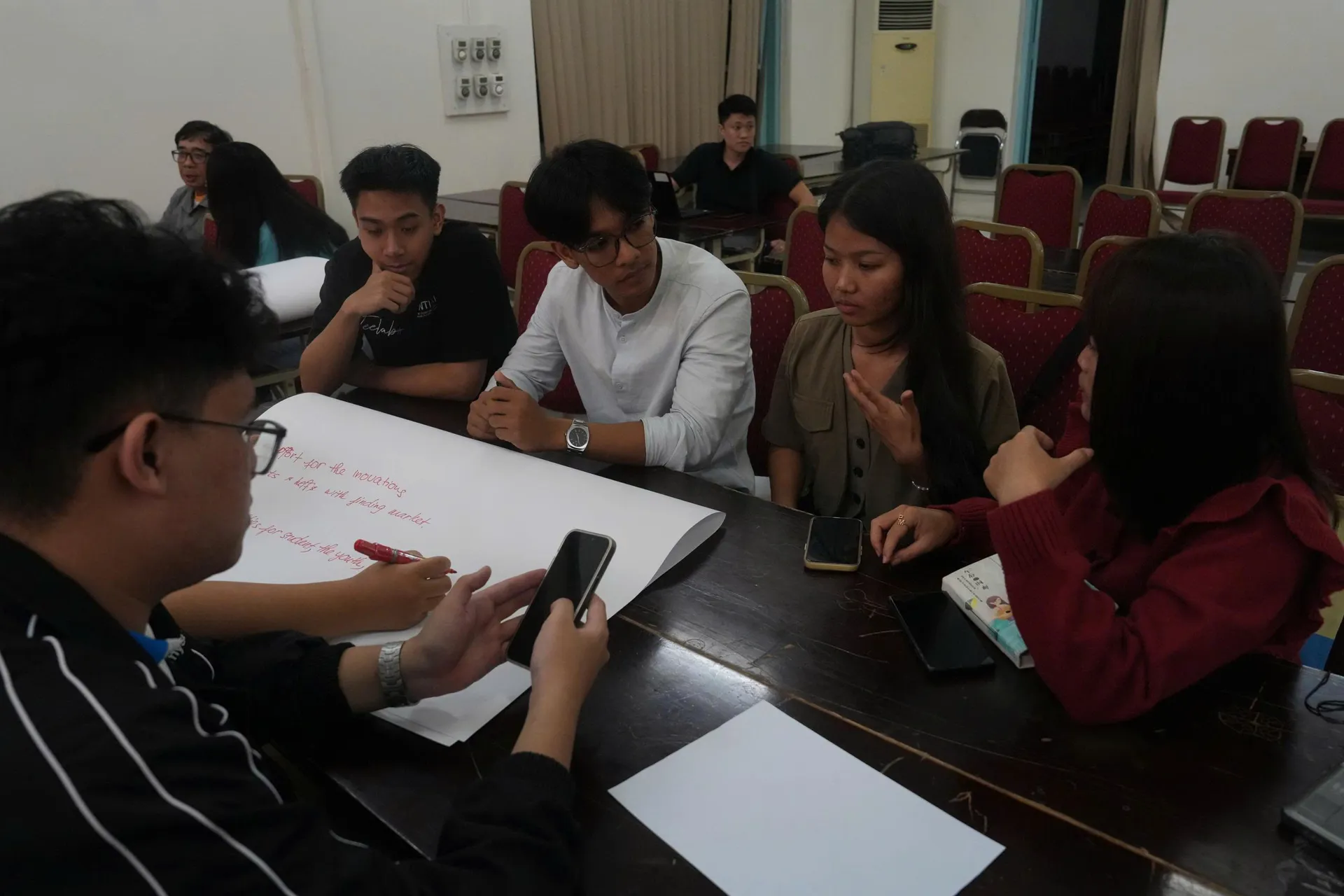
Vietnamese and international delegates exchange ideas during a group discussion. Photos: Hoang Huy
The innovations on display showed how climate action among young people spans simple materials and applied technology.
Vietnamese and international students presented products made from recycled coffee grounds, organic soap for low-waste households, aeroponic vegetable systems suited to dense urban areas, solar-powered learning stations for schools with unstable electricity and community models that help ethnic minority women collect and process cinnamon by-products.
Placed side by side, the projects highlighted how youth-led ideas draw from local ecosystems, community needs and accessible technology rather than high-cost interventions.
For many participants, seeing this diversity in one place was the most valuable part of the program.
Bui Anh Ngoc, a student from Ho Chi Minh City working on an aeroponics project, said the dialogue helped her understand why similar models succeed in different provinces and regions.
"Listening to other teams “showed clearly how an idea grows only when it reaches more people,” she said.
The event pushed her to think beyond university-level prototyping and consider how a model can scale in real communities.
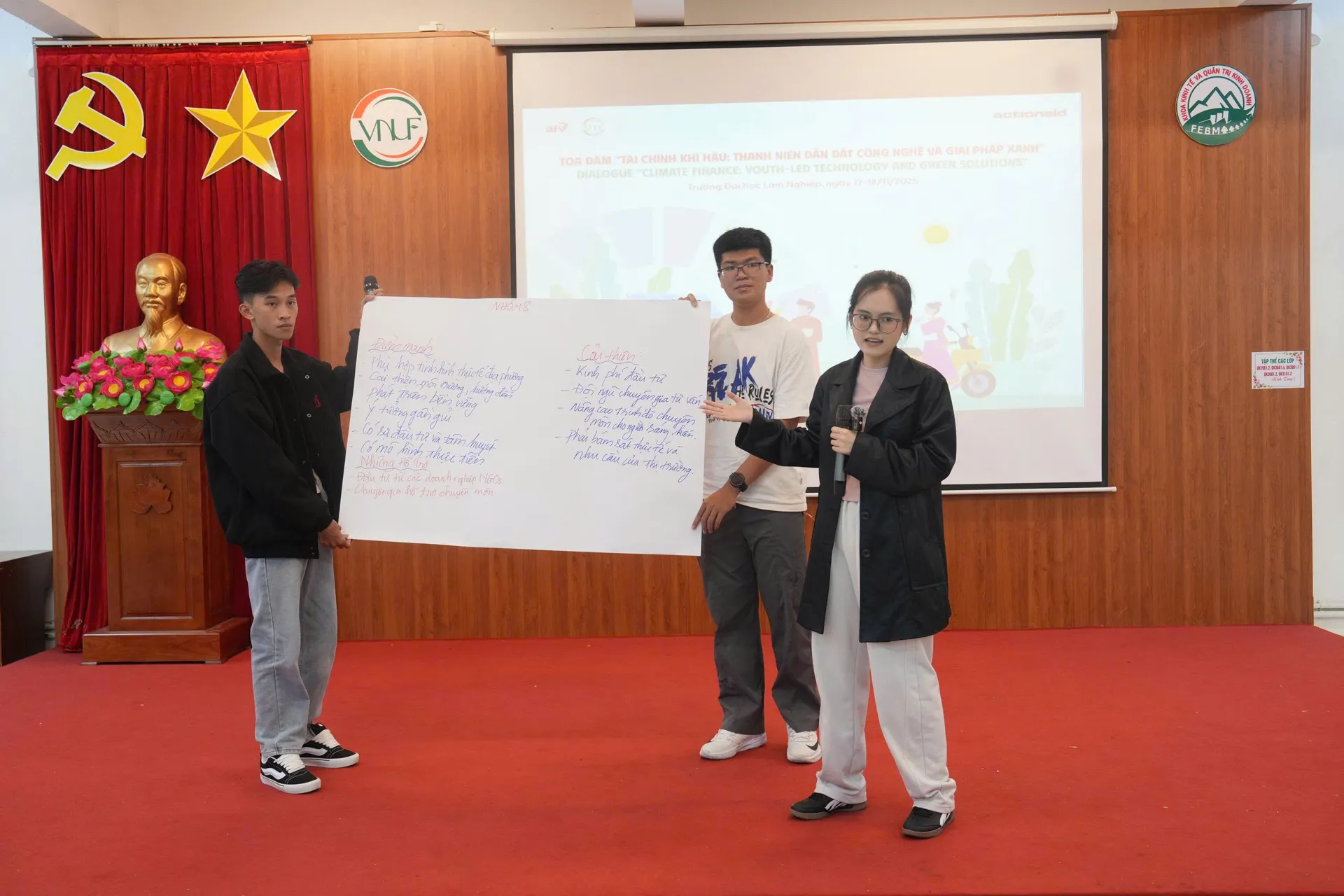
Participants from Cambodia, Laos, Myanmar and China shared similar impressions. Hul Naruoth from Cambodia said she is struck by how closely Vietnamese projects connect to local environmental problems, from soil degradation to household waste.
She noted that several ideas raised by Vietnamese youth years ago “have already become real products,” showing persistence, community testing and continuous refinement.
“These examples show how youth-led solutions can mature when they stay grounded in local realities,” said Hul Naruoth.
Aeroponics, biodiversity-focused digital tools, upcycled consumer goods and renewable-energy mini-stations each approached climate challenges differently but converged on one concern: how to turn small concepts into self-sustaining models beyond campus settings.
The dialogue, coordinated by ActionAid Vietnam and the Social Protection Support Fund (AFV), brought more than 150 participants to the Vietnam National University of Forestry on November 17–18.
After the innovation showcases, the program shifted toward climate finance, the theme that shaped the two-day event.
Experts from the Department of Climate Change and the Institute of Policy and Finance introduced Vietnam’s COP30 commitments, international financing mechanisms and the role of market-based resources in supporting community-level projects.
Instead of presenting these topics as abstract policy, the speakers focused on what young innovators need to move ideas beyond pilot stages.
They discussed budgeting, partnership-building, community engagement and designing products or services with sustainable income flows.
Many participants said this helped them understand why promising ideas often stall after early development and what they must strengthen to avoid that outcome.
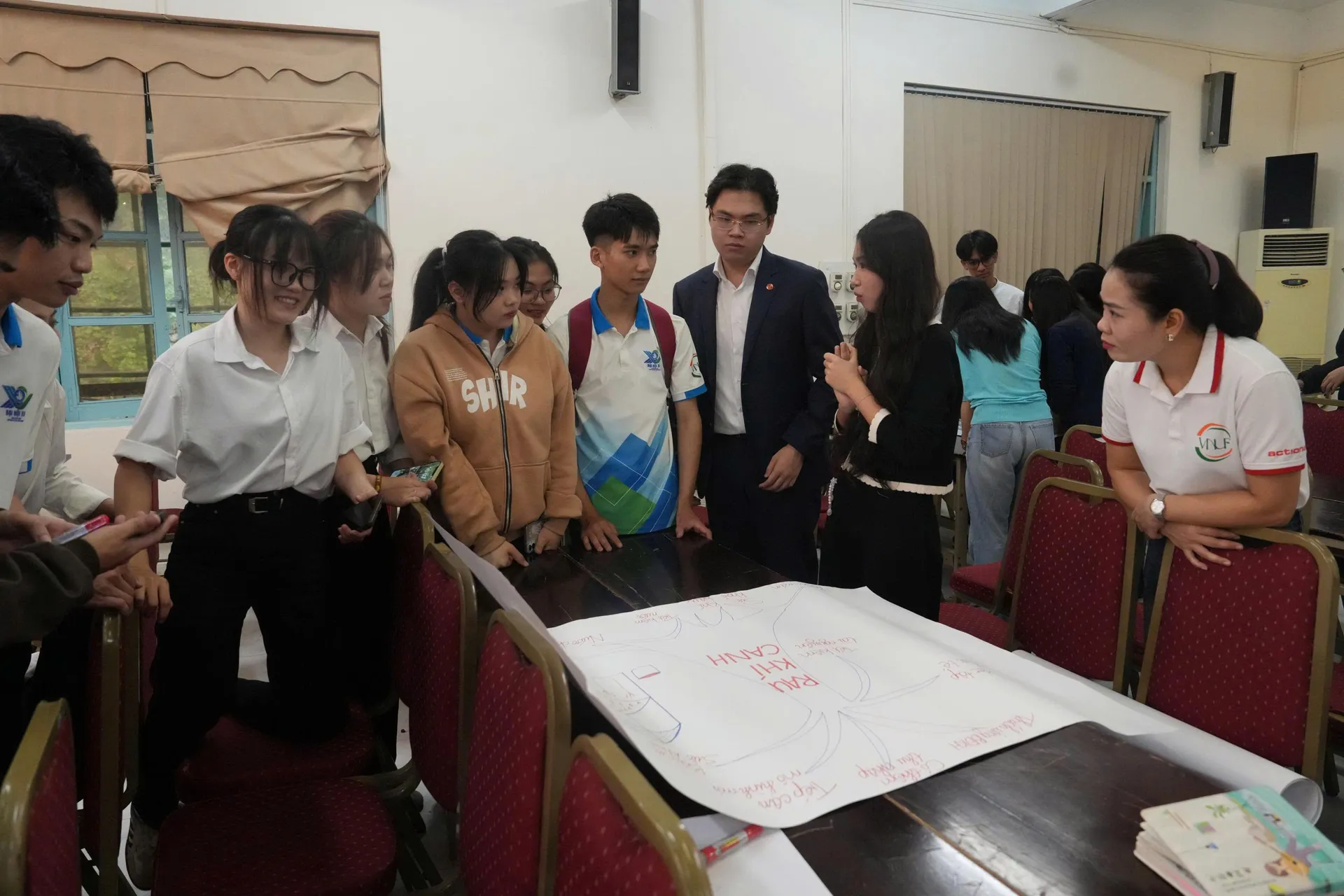
Participants review a student team’s green project at the Vietnam National University of Forestry.
Several teams said the sessions reshaped their understanding of climate work. Many arrived thinking mainly about technical solutions or prototypes but left with a clearer view of the financial foundations required to keep a project alive.
The emphasis on long-term planning encouraged participants to reconsider how they design solutions and how they engage the communities they aim to support.
For Vietnamese students, the strongest message came from linking technical innovation with market awareness and community impact.
Viet Linh from the Forestry University’s Student Association said the dialogue showed how collaboration across regions strengthens youth-led initiatives.
He said the event created a rare environment for learning from international peers and receiving recognition for their work, which encouraged many participants to refine their projects and aim for broader application.

Hoang Phuong Thao, Executive Director of ActionAid International Vietnam, said the dialogue is part of the organization’s long-term cooperation with youth networks across ASEAN.
She said ActionAid has supported more than 100 initiatives on environmental protection and climate adaptation, focusing on equipping young people with practical skills and confidence.
Representatives emphasized that youth participation is essential for meeting Vietnam’s climate commitments and ensuring that adaptation strategies remain relevant to local communities.
The two-day event ended with group reflections in which students identified key lessons: the need to refine technical solutions, the importance of involving communities early and the challenge of securing resources for long-term operation.
Many said recognition from international participants encouraged them to continue improving their projects and explore new partnerships.
Participants left with new contacts, clearer development plans and a more grounded understanding of climate finance in practice. For many, the momentum built during the dialogue will help shape the next generation of community-level green solutions.