Capital Law drives Hanoi’s unprecedented US$16.5 million land payout
Compensation is not simply about paying cash but ensuring that residents have a better future after giving up land for the capital’s development.
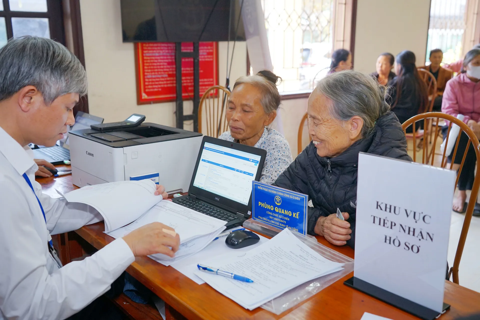
THE HANOI TIMES — The VND400 billion ($16.5 million) compensation paid to a household on Hang Quat Street shows Hanoi’s new approach to urban governance, where land clearance follows clear legal standards and prioritizes residents’ long-term living conditions rather than ad hoc negotiations.
Public attention has recently focused on the unusually high compensation amount, equivalent to about VND1.1 billion ($45,000) per square meter, paid to a household in Hanoi’s Old Quarter.
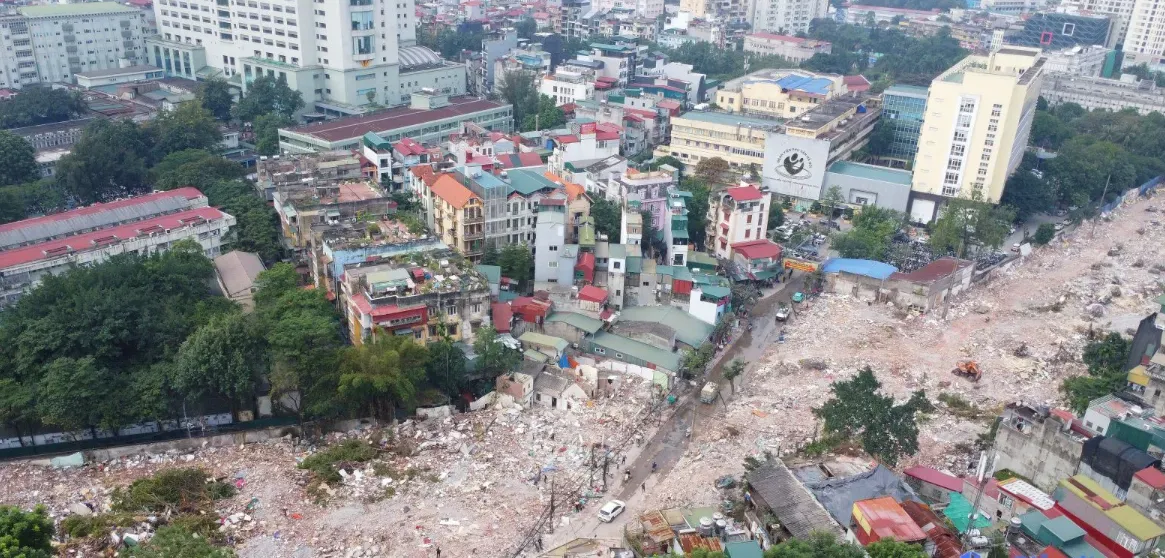
Nearly 2,000 households have agreed to hand over land, helping Hanoi remove a long-standing bottleneck on the Hoang Cau–Voi Phuc section of Ring Road 1 and marking a major boost in progress under the two-tier local government model. Photo: The Hanoi Times
Commenting on the case, Le Trung Hieu, Deputy Director of the Hanoi Department of Finance, said that while the figure appears unprecedented to the public, it represents a direct and lawful application of Vietnam’s updated land regulations.
“The payment is not an exception or a temporary concession but a direct application of the core principles of the 2024 Land Law. Under this approach, compensation is not simply about paying cash but ensuring that residents have a better future after giving up land for the capital’s development,” said Hieu.
According to Hieu, the Hang Quat Street case illustrates how Hanoi is implementing a consistent and predictable framework for land recovery, aligned with its long-term vision of developing internationally scaled public spaces.
A key factor behind the high level of consensus among residents, Hieu said, is the strict enforcement of Article 111 of the 2024 Land Law.
Under this provision, households whose residential land is recovered must be provided with replacement housing that offers living conditions equal to or better than their previous homes, including access to infrastructure such as roads, electricity and water, as well as social services such as schools, healthcare facilities and markets.
Hieu said this requirement is no longer a policy promise but a binding legal obligation. “When residents see that relocation does not disrupt their lives and that they can stabilize their income while accessing better services either nearby or at resettlement sites, they are more willing to support the city’s shared development goals,” said Hieu.
He also pointed to Resolution No. 258/2025/QH15, which pilots special mechanisms for major projects in Hanoi, as a decisive factor in speeding up land clearance.
The resolution’s Article 7 allows land clearance projects to be implemented in advance using public investment capital, with costs later incorporated into the main project’s total investment. This mechanism removes a long-standing financial bottleneck.
“This mechanism enables Hanoi to disburse hundreds of billions of dong from the budget as soon as planning is approved without waiting for the full procedures of the main project,” Hieu stated.
Solving chronic problem
Hieu said the capital is being developed not only with concrete and steel but also through public trust and support. Therefore, effective land clearance measures like those applied on Hang Quat Street will help resolve the chronic problem of capital waiting for cleared land.
This proactive approach is expected to allow public investment funds in 2026 to flow quickly to residents while enabling faster and fairer compensation payments so households can secure new housing sooner.
With Resolution 258 in place, compensation funds are now available as an independent resource rather than being delayed for years by construction bidding procedures. Proper compensation reassures residents during land handover and allows the city to develop public spaces at a much faster pace, preventing prime land from being left idle due to prolonged price disputes.
To address long-term funding needs, Hanoi has adopted flexible capital mobilization plans, including issuing capital bonds to tap into idle funds among residents and ensure timely payments in line with the resolution.
On the other hand, it is applying a land value capture model. As new parks and squares are developed, surrounding land values rise sharply, allowing the city to auction nearby prime plots to generate revenue that offsets initial compensation and resettlement infrastructure costs. This approach helps public assets generate returns and circulate benefits back to the community.
The ultimate goal of these policy efforts is to revive urban space, which remains limited in Hanoi.
In this regard, paying fair compensation and carefully arranging new housing for Old Quarter residents is seen as a necessary cost to create meaningful squares, gardens and pedestrian streets.
Land that was once cramped and fragmented will become shared assets where residents of the capital can enjoy open space and relief from the pressures of daily life.