Covid-19 outbreak puts Hanoi's home rentals on slope
Though the current market of retail space is facing falling rents, many foreign brands look for Vietnam's retail property.
Hanoi landlords continue to face declining retail rents due to social distancing measures as well as competition from e-commerce.
Tran Van Thien, a landlord in Gia Ngu Street, Hoan Kiem District, keeps looking for tenants though he has offered a 50% rent reduction since last year. Thien is one of many landlords who are struggling with pandemic-caused impacts.
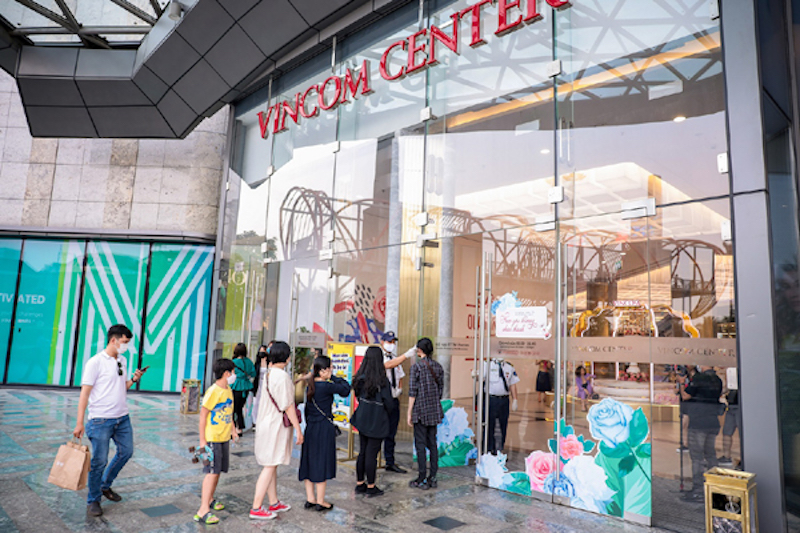
| Vincom Centre is set in prime locations in Hanoi. Photo: Vingroup |
Struggling with the decline
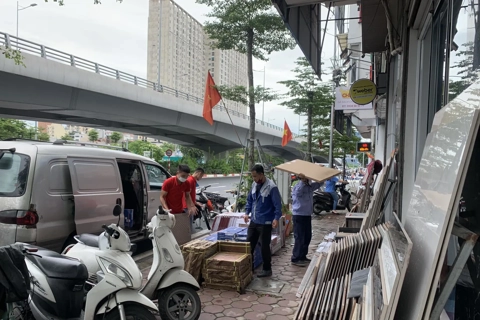
Retail spaces on prime locations in the city's central districts of Hoan Kiem and Dong Da have long been left empty.
Nguyen Dinh Sa, a property broker in Dong Da Street, said that many landlords in Thai Ha Street keep seeking tenants since the third wave of Covid-19. “Even they have offered a 50% rent reduction, no tenant has shown up,” he told Hanotimes.
Experts have said that the ongoing fourth wave of the pandemic has impoverished many retailers, making rental costs unbearable for them, ultimately leading to their withdrawal from the market. The number of tenants of shophouses and stores in shopping centers is dropping.
Meanwhile, the number of retailers who have switched to online models is increasing.
According to the Vietnamese FPT Retail, about 30% of retailers have gone online, another 30% planned to switch to the online model. “Due to Covid-19, online business and home delivery grow strongly, making consumers changed their purchase behavior,” the company noted.
Hoang Nguyet Minh, Director of the Commercial Leasing Department at Savills Hanoi said that the flexibility of the delivery service helps local retailers operating food & beverage chains boost sales and retain customers in the context of suspension of on-site services.
“For that reason, the online model also contributes significantly to reducing the demand for the shophouse and store rental, especially in the mid-range and low-end brand segments,” she told Hanoitimes.
A destination for luxury brands
Facing the decline, many retail space owners have offered flexible and realistic adjustments of payment time and rental price.
Minh commented that shopping mall developers have applied many support policies for tenants, based on their business situation. “As a result, their adaptability and business recovery will improve,” she added.
However, it is only a short-term solution for the developers. “The biggest issue of the landlords is not only how to recover in post-Covid-19 but also to find new ways to compete with e-commerce in long term,” she underlined.
According to Minh, premium brands still tend to look for space in the downtown area, where utility services meeting the demand and the development of the brand and customers are available. “Meanwhile, e-commerce targets low-and middle-end brands,” she said.
As tenants accounting for 70% of the commercial center's area are brands in fashion, cosmetics, and home appliances, Minh suggested the developers should focus on other segments including cafes, restaurants, amusement parks, cinemas and showrooms.
In the context of Covid-19 impacts, Matthew Powell, Director of Savills Hanoi, gave his optimistic view on the retail space in Vietnam, especially Hanoi. The demand for retail space from foreign brands in Hanoi is higher than from domestic retailers since the second half of 2020.
“High-end retail in Vietnam is one of the best-performing markets in the world. There are many luxury brands wishing to expand and join the Vietnamese market,” he said.
Retail rent in Vietnam is relatively low compared to other Asian locations such as Hong Kong, Singapore and Tokyo. Due to travel restrictions, high-income customers have mainly purchased luxury products in Vietnam instead of shopping abroad. “It is the reason for the luxury brands to expand the targeted market here,” he said.
In the big cities of Hanoi and Ho Chi Minh City, the retail real estate market saw the expansion of foreign brands such as Uniqlo, Muji, and Decathlon over the last two years. Luxury brands such as Balenciaga and Tiffany are planning to enter the market.
“The retailers are targeting a number of customers in all segments, not only in a single one as previously,” Powell said.