Distressed real estate developers to get debt payments extended
Real estate projects that comply with the law, have positive sales prospects and viable repayment plans will have easier access to credit.
Real estate firms struggling with liquidity will be eligible to restructure their debt groups and reschedule both principal and interest payments.
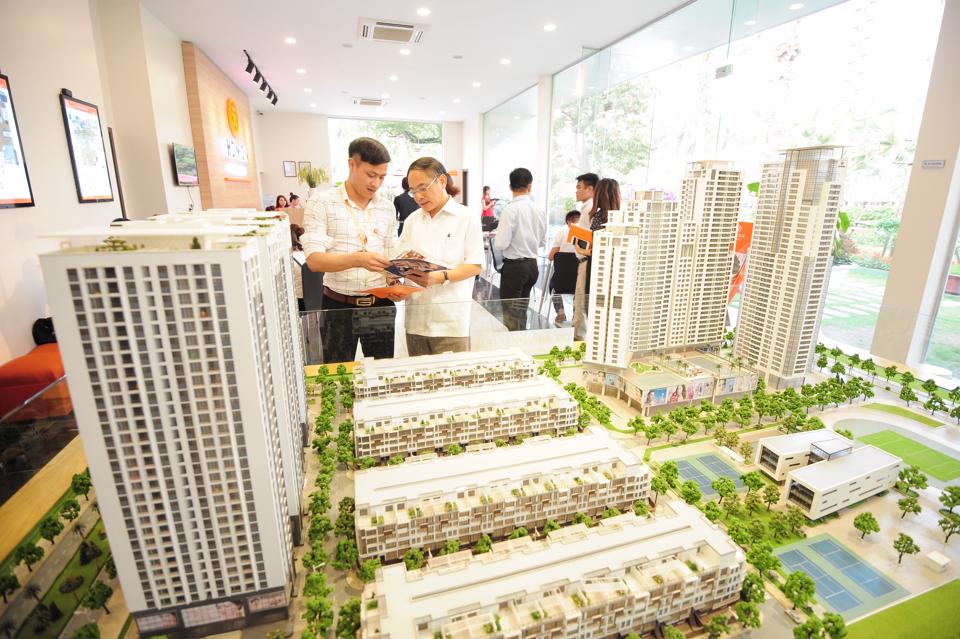
| Buyers looking at a real estate project in Hanoi. Photo: Cong Hung/The Hanoi Times |
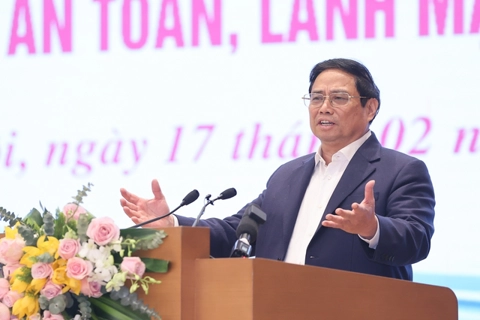
The move was mentioned in the Government’s latest Resolution No.33, which takes effect immediately and outlines solutions to resolve issues in the real estate market.
The resolution is expected to address two main obstacles to the market's growth, namely legal bottlenecks and cash flow issues. Regarding cash flow, struggling real estate firms will have the option to extend their principal and interest loans, as well as restructure their debt pools.
Projects that meet the market's actual needs, are efficient and have good liquidity, such as social housing, office spaces for lease, renovation of old apartments, and real estate for production, industry, and tourism loans will be prioritized for the Government’s support.
Moreover, real estate projects with legal compliance, positive sales prospects, and feasible repayment plans will be given easier access to credit.
Loans will be granted primarily to social housing projects, worker housing, and other real estate types for production, business, and social security.
“Capital flows should be channeled to feasible projects and customers with the financial capacity who can repay their debts on time and in full,” it noted.
The Government urges banks to evaluate each enterprise's production and business situation, their project's potential, and each real estate segment (social housing, worker housing, industrial real estate, tourism, etc.) to adjust loan conditions, without conflating policy with risky ventures.
At present, the State Bank of Vietnam is contemplating adjusting risk coefficients for real estate segments, while commercial banks are taking steps to reduce lending rates and support the real estate market.
Although real estate companies will continue to resort to the stock market to raise capital through the issuance of bonds, the governing body will take measures to regulate this process. In addition, measures will be taken to regulate the issuance of private bonds by companies related to the real estate sector, banks and companies with large issuance volumes and high interest rates to avoid price manipulation, speculation and inflation.
However, the resolution noted that these measures should not prevent qualified and efficient enterprises from raising capital for their recovery and growth.
To increase market supply, the government has ordered local administrations to compile lists of housing and real estate projects, draw up short- and long-term land use plans, and use them as the basis for approving project guidelines.
It also stressed the need for enterprises to restructure their prices and products to meet market demand and to prioritize resources for debt repayment, especially bond debt.
Over the next five years, the government aims to build at least one million social housing units to address the shortage of such housing in the market and meet rising demand.
While waiting for the National Assembly to pass the amended Housing Law, which is expected to address the obstacles and challenges in housing development, the government said it would prepare a separate resolution for the National Assembly. This resolution will serve as a pilot policy for the development of social housing and will address major obstacles in planning, allocation of land for social housing construction, selection of investors and incentives for the construction of social housing.
The policy will also address difficulties in determining the sale price, rental and lease-purchase options for social housing, as well as the identification of beneficiaries and the terms and conditions of the policy.
In order to secure the necessary funding for the development of at least one million social and worker housing units, the Government has tasked the State Bank with implementing a credit package worth VND120 trillion (US$5.1 billion). This package will be financed by the contributed capital of four state-owned banks, namely Agribank, BIDV, VietcomBank and VietinBank.
The credit package will be extended to investors and homebuyers of social and worker housing projects, and its interest rate will be 1.5-2% lower than the average rate for medium and long-term loans offered by state-owned commercial banks during each period.