EU eyes upgrade of Vietnam ties to comprehensive strategic partnership
The European Union is preparing to take its relationship with Vietnam to a new level as senior leaders meet in Hanoi, signaling stronger cooperation at a time of global uncertainty and shifting economic priorities.
THE HANOI TIMES — The European Union (EU) plans to deepen its relationship with Vietnam during the official visit by European Council President António Costa on January 28-29, signaling a potential upgrade to a Comprehensive Strategic Partnership, according to Julien Guerrier, EU Ambassador to Vietnam and Head of the EU Delegation.
“The time is ripe for both sides to upgrade relations to a new level,” Guerrier said at a press briefing on January 26, noting that the two sides have already agreed in principle to pursue such an upgrade.
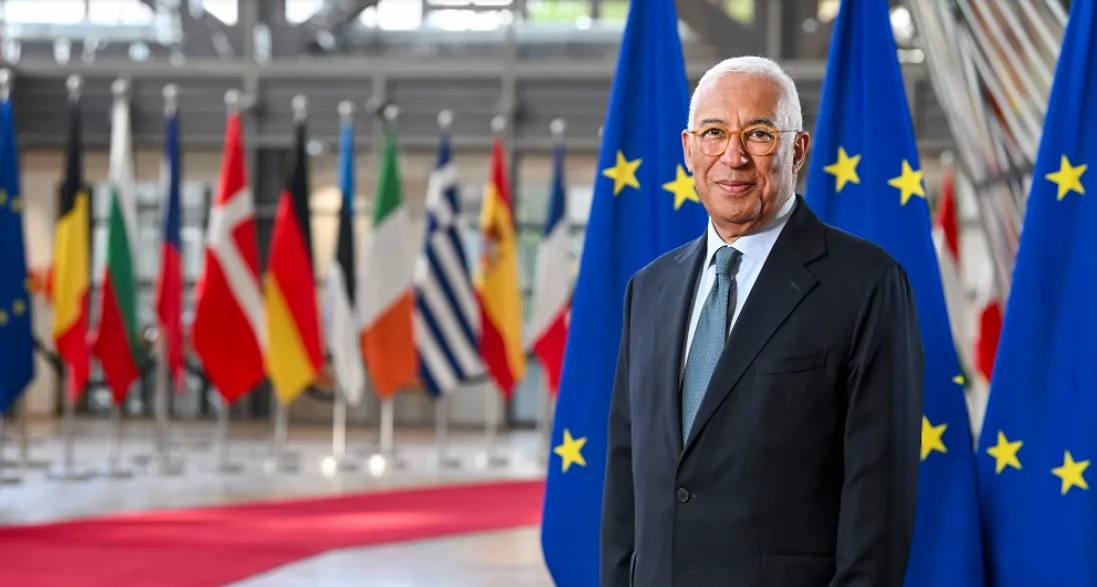
European Council President António Costa is scheduled to pay an official visit to Vietnam on January 28-29. Photo: EU
If realized, the move would make Vietnam the first ASEAN country to hold such a status with the EU, placing it in a pioneering position and setting a reference point for the bloc’s future relations in Southeast Asia, he said.
Guerrier stressed that the visit carries added weight as global geopolitical tensions continue to grow more complex.
"The Vietnam-EU relations are currently assessed as deep, comprehensive and closely intertwined", he said.
Reviewing 35 years of ties, the ambassador said relations have expanded from limited humanitarian cooperation in the early 1990s into one of the region’s most dynamic partnerships, spanning trade, investment, sustainable development, security, defense and people-to-people exchanges.
Through the visit, the EU aims to signal clearly its readiness to strengthen cooperation with key trade partners, including Vietnam, he added.
Guerrier said President Costa’s visit could inject fresh momentum into both established and emerging areas of cooperation.
During the trip, Costa is expected to visit Hanoi’s Metro Line 3 (Nhon-Hanoi Station), a project that reflects strong European involvement.
Infrastructure remains a priority area for the EU and a promising field for deeper cooperation with Vietnam. Under the EU’s Global Gateway initiative, several projects are underway in Vietnam, particularly in energy, transport and green infrastructure.
A central pillar is the Just Energy Transition Partnership (JETP), which supports Vietnam’s shift toward clean energy while reinforcing energy security and sustainable growth.
Science and technology also offer significant untapped potential. Guerrier noted Vietnam’s participation in several projects under Horizon Europe, the world’s largest publicly funded research and innovation program.
"The EU plans to sign a memorandum of understanding with Vietnam’s Ministry of Science and Technology to deepen cooperation in research and development, expert exchanges, participation in programs such as Marie Skłodowska-Curie and other initiatives", he said.
The framework would enable both sides to translate scientific cooperation into concrete and lasting outcomes.
The EU is also seeking to expand cooperation in green transport, railways, seaports, airports, high-speed rail and urban metro systems.
Guerrier said the EU Commissioner for Infrastructure is expected to visit Vietnam soon to discuss specific projects, including cooperation with the European Investment Bank and bilateral initiatives involving EU member states.
In critical minerals, the EU aims to position itself as a long-term partner for Vietnam through technology transfer, capacity building and deeper engagement across value chains.
Three core pillars
Looking ahead, Guerrier said the EU will focus cooperation with Vietnam on three pillars: trade, green transition and peace and security.
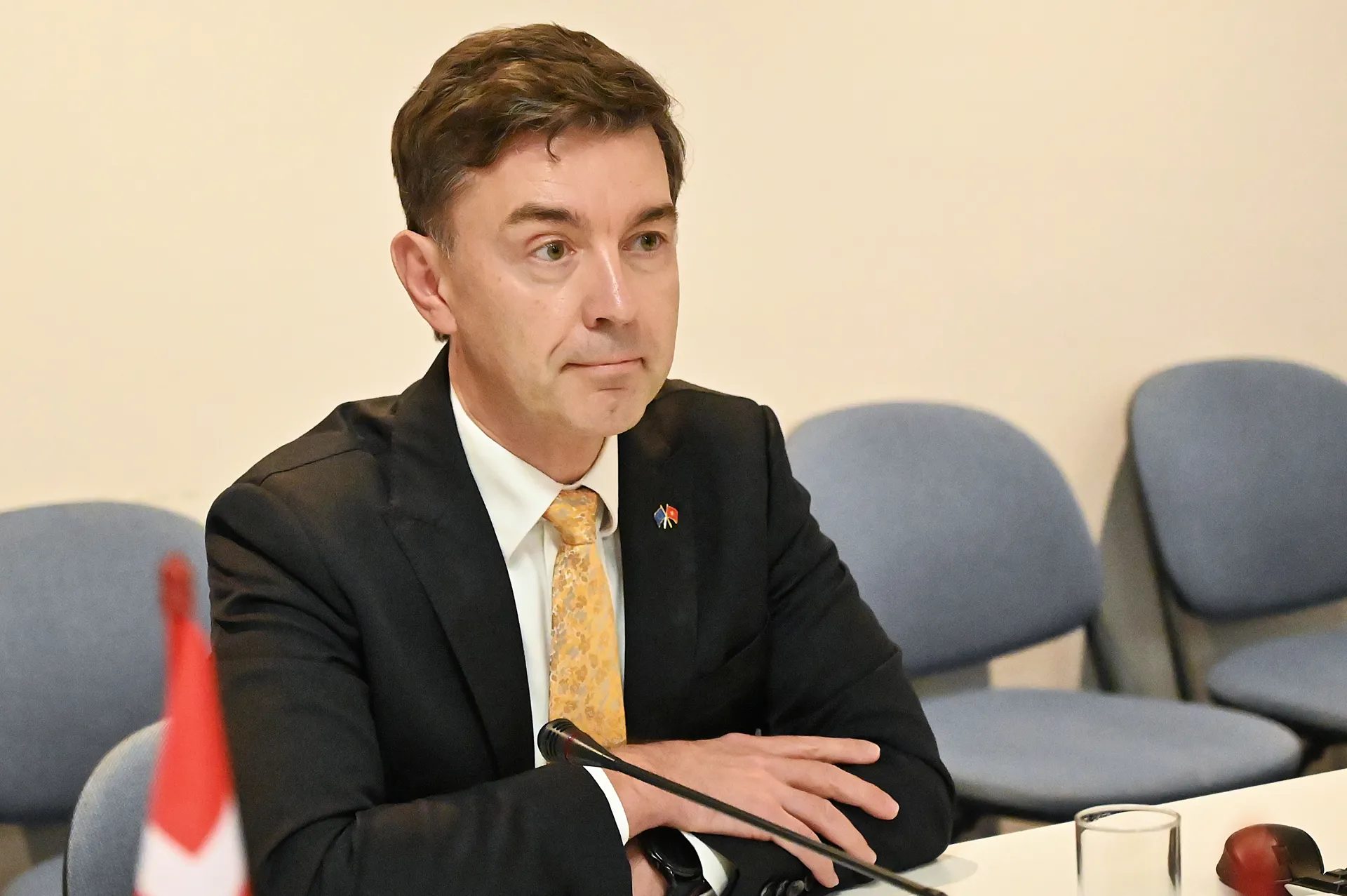
European Union Ambassador to Vietnam Julien Guerrier speaks at the press briefing on January 26. Photo: Kieu Chi/The Hanoi Times
The EU-Vietnam Free Trade Agreement has lifted bilateral trade by about 40% since taking effect in 2020, with both sides seeing room for further gains despite global trade headwinds.
On green transition, the EU has intensified engagement with Vietnamese agencies on renewable energy, energy security and sustainable growth. Guerrier said policy directions set at Vietnam’s 14th National Party Congress underline a strong national commitment.
The EU also aims to strengthen cooperation with Vietnam on peace and security, particularly maritime security, in support of regional and global stability, international law and multilateralism.
Cooperation has expanded both bilaterally and through ASEAN frameworks, including Vietnam’s participation in peacekeeping activities and several EU missions in Africa.
An upgraded Vietnam-EU relationship would broaden cooperation across sectors from trade and investment to science and technology, delivering practical benefits for both sides while supporting sustainable development and higher living standards, Guerrier said.