From Palermo to Hanoi: a new chapter in global cybercrime cooperation
Hanoi Convention, together with existing international human rights conventions, forms a complementary and coherent legal framework, said Vietnam Minister of Justice Nguyen Hai Ninh.
HANOI TIMES —Twenty-five years after the adoption of the UN Convention against transnational organized crime in Palermo, Italy, the world has now witnessed the birth of another landmark global instrument - the Hanoi Convention.
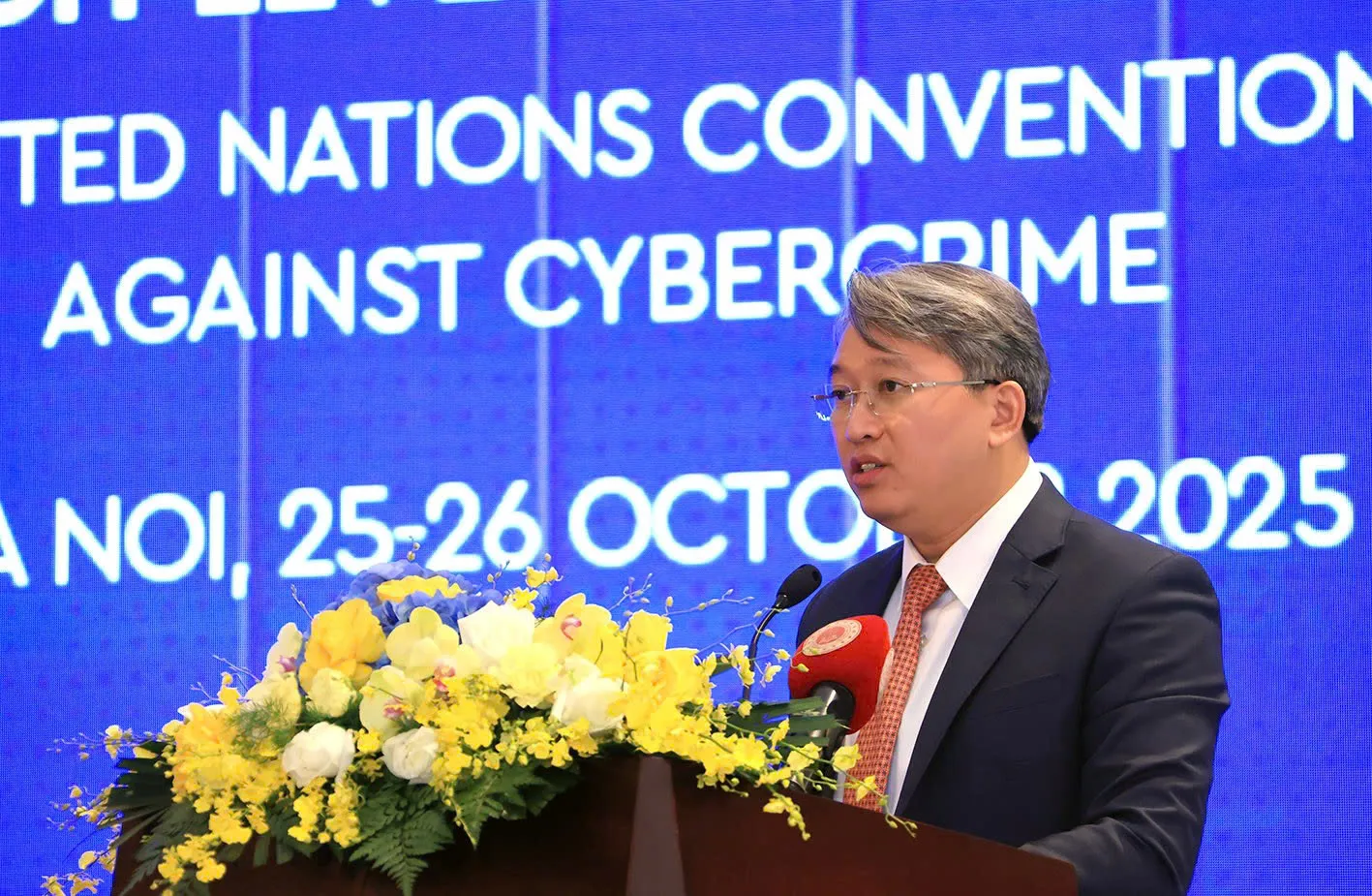
Minister of Justice Nguyen Hai Ninh speaks on the sidelines of the Hanoi Convention's signing ceremony on October 25. Photo: The Hanoi Times
Minister of Justice Nguyen Hai Ninh described this as a symbolic continuation of international cooperation in the digital era.
“The journey from the Palermo Convention to the Hanoi Convention is not only symbolic but also reflects the international community’s sustained and responsible efforts to promote multilateral cooperation in addressing the cross-border challenge of cybercrime,” Ninh said on the sidelines of the Hanoi Covention’s signing ceremony on October, 25.
He noted that the Hanoi Convention, together with existing international human rights conventions, forms a complementary and coherent legal framework.
“While human rights conventions define and protect the essence of individual rights, the Hanoi Convention provides the legal mechanisms to safeguard those rights against threats in the digital environment,” he added.
Digital transformation must uphold human rights
Minister Ninh said that Vietnam’s digital transformation is grounded in protecting human rights and citizens’ rights in cyberspace.
“Vietnam was among the first countries to enshrine these principles in a separate chapter of its 2013 Constitution, reflecting its commitment to a people-centered digital future”, he noted.
Building on this foundation, the country has continuously refined its legal system through specialized laws to align with technological progress and international standards.
These efforts have earned Vietnam recognition from the global community, culminating in its election to the UN Human Rights Council for the 2026-2028 term, Ninh noted.
The country is now preparing to draft a new artificial intelligence (AI) Law, ensuring that human rights remain protected amid rapid technological change.
Furthermore, Minister Ninh stressed the need to harmonize national and international legal frameworks, balancing global legal principles with each country’s unique legal system.

New tools for a new era
“The new context demands new tools to better protect citizens from the darker sides of the Internet,” said Yılmaz Tunç, Minister of Justice of Turkey, at the same event.
Sharing Turkey’s experience in applying technology to the justice system, Tunç explained that his government has placed citizens at the center of its digital transformation agenda.
Since 2011, Turkey has enacted an Internet Law and introduced several related legal instruments to adapt to technological change.
In 2017, it launched a national judicial informatics system, connecting judicial agencies through 186 data channels across 57 state bodies.
The system also includes an online legal portal for lawyers and citizens, with 25 million users, allowing people to track case files and execute judgments online, anytime and anywhere.
Minister Tunç stressed that protecting citizens in cyberspace must be a shared international effort, similar to how the world cooperates against other forms of transnational crime.
Meanwhile, Jessica Hunter, Australia’s Ambassador for Cyber Affairs and Critical Technology, said that Australia’s efforts to combat cybercrime focus on three key areas.
These include raising public awareness about online safety; providing practical tools and guidelines to help individuals identify and prevent violations; and establishing effective reporting and complaint mechanisms to ensure citizens can promptly report cyber incidents
Over the past decade, the Australian government has launched a wide range of initiatives through a dedicated Cyber Security Committee, which coordinates actions across agencies, develops public resources, and supports potential victims of cybercrime
“We must adopt a targeted approach toward vulnerable groups, such as children and victims of sexual exploitation, while ensuring that citizens have effective mechanisms to report online crimes,” she said.