Germany-funded project supports Vietnam’s green finance push
With a four-year budget of EUR15 million (US$18 million), the project aims to build an enabling policy and financial framework for green investment while mobilizing public and private capital and strengthening the capacity of financial institutions and businesses to support Vietnam’s green transition.
THE HANOI TIMES — Vietnam has launched a new joint project aimed at redirecting investment flows toward green and climate-aligned growth, reinforcing its commitment to achieving net-zero emissions by 2050 and accelerating the energy transition.
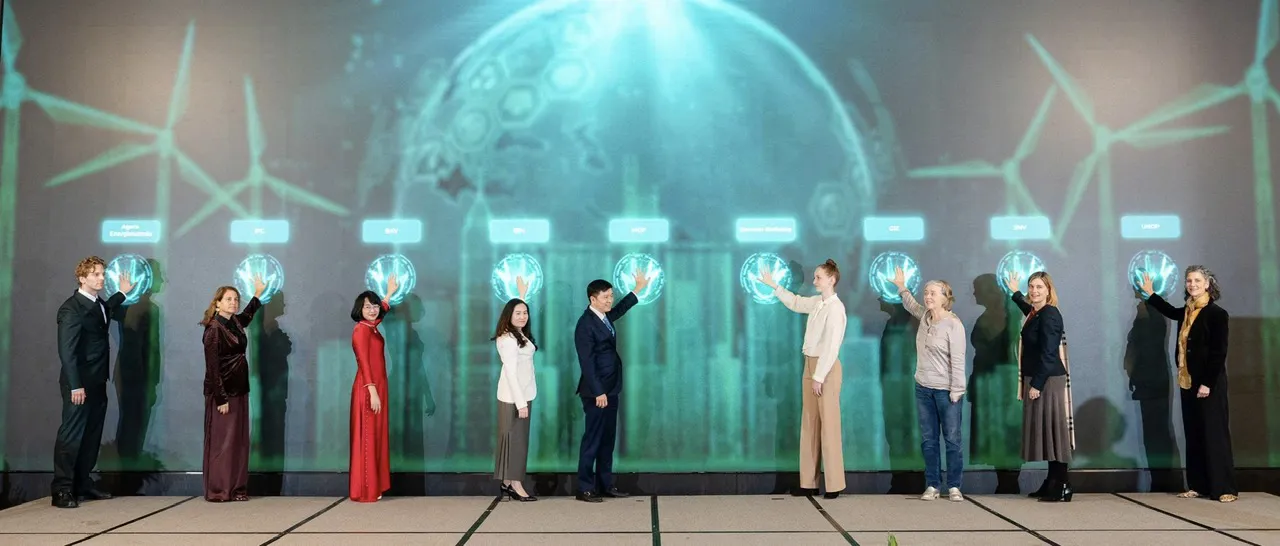
Representatives of the Ministry of Finance, the State Bank of Vietnam, the German Embassy in Hanoi, GIZ, UNDP and related partners at the launch of SHIFT project. Photo: Linh Pham/The Hanoitimes
The project, titled “Shifting Investment Flows Towards Green Transformation (SHIFT)”, brings together the Ministry of Finance (MOF), the State Bank of Vietnam and six international organizations in a coordinated effort to scale up sustainable finance and green investment.
Costing EUR15 million (US$18 million), the four-year SHIFT project is designed to create an enabling policy and financial environment for green investment, mobilize public and private capital and strengthen the capacity of financial institutions and businesses to support Vietnam’s green transformation.
The project aligns closely with key national frameworks, including the Vietnam Green Growth Strategy, the net-zero commitment for 2050 and the Just Energy Transition Partnership (JETP).
Tran Thi Quynh Nga, Deputy Director General of the MOF’s Department of Sectoral Finance and Economics, told The Hanoi Times that the SHIFT project directly supports Vietnam’s key development priorities, particularly the National Green Growth Strategy and the country’s commitment to achieving net-zero emissions by 2050.
At its core, the project prioritizes mobilizing capital, especially private investment, for green development activities, with a strong focus on the energy sector, an area with exceptionally high financing needs and a decisive role in driving the broader economic transition.
SHIFT focuses on diversifying financing sources and broadening the use of green instruments, including green credit, green bonds and carbon market-linked mechanisms, to expand investment options for businesses and financial institutions.
At the same time, it supports capacity building for both enterprises and financial institutions, enabling more confident participation in green projects and the gradual expansion of green financial products and services across the market, Nga emphasized.
The project is implemented by Agora Energiewende, the Banking Academy of Vietnam, GIZ, IFC, SNV and UNDP, with funding from Germany’s International Climate Initiative.
It is commissioned by the German Federal Ministry for the Environment, Climate Action, Nature Conservation and Nuclear Safety (BMUKN) and is one of Germany’s technical assistance priority projects under the JETP Resource Mobilization Plan.
Closing the financing gap
Speaking at the launch of the project on January 27, Chu Duc Lam, Director General of the Department of Sectoral Finance and Economics at the Ministry of Finance, said green finance is a decisive factor in Vietnam’s future growth model.
“Pursuing rapid yet sustainable growth, greener, smarter and more inclusive, Vietnam is committed to the dual transformation of digital and green development,” he said.
He stressed that the green transition requires large-scale investment backed by strong policy support.
“A successful green transition requires green investment and green finance at a sufficient scale to guide the market and create leverage for businesses and the economy. SHIFT serves as a policy catalyst to foster an enabling environment for green investment and the energy transition in Vietnam.”

A UNDP-funded mangrove forest in Vietnam’s central province of Quang Ngai serves both as a natural flood barrier and a source of local livelihoods. Photo: Linh Pham/The Hanoi Times
The project is managed by the Ministry of Finance and implemented in close coordination with its specialized departments, the State Bank of Vietnam, financial institutions and the private sector.
Pham Thi Thanh Tung, Deputy Director General of the Credit Department for Economic Sectors at the State Bank of Vietnam, said Vietnam faces significant financing needs as it transitions to a low-carbon economy.
“The situation requires the need to diversify capital mobilization channels, especially through stronger private-sector participation, deeper capital markets and more effective allocation of financial resources,” she said.
She added that enhancing the banking system’s capacity to deliver green finance remains a key priority. In this context, the launch of the SHIFT project is significant in supporting the banking system to address these challenges.
International support, national ownership
SHIFT places strong emphasis on helping financial institutions develop green products, apply green credit standards and manage climate-related financial risks.
Alexandra Westwood, Attache of Economic Affairs and Development Cooperation at the German Embassy in Vietnam, said Germany views SHIFT as a long-term investment in Vietnam’s sustainable development.
“Advancing green finance and clean energy is a complex process that requires sound policy frameworks, financial expertise and technical capacity. By combining the strengths of all partners, SHIFT will generate greater impact in supporting Vietnam’s national development and climate objectives.”
With four components, SHIFT aims to ensure that green finance instruments and green investment policies are effectively implemented, particularly in the energy sector.
The project is structured around four core components.
The first focuses on strengthening policy coordination between the Ministry of Finance, the State Bank and other stakeholders, while improving green public investment frameworks, green bond markets and carbon market development.
The second supports financing for the energy transition, including assessing investment needs under the revised Power Development Plan VIII (PDP8) and identifying appropriate financial instruments.
The third component aims to build the capacity of financial institutions, enabling banks to expand green portfolios, operationalize green taxonomy standards and improve climate risk management.
Meanwhile, the fourth targets the private sector, especially small and medium-sized enterprises, through pilot projects, technical assistance and a Green Innovation Grant Initiative to scale up green technologies.
Notably, SHIFT also aims to mobilize public and private capital through green credit, green bonds and carbon credit mechanisms, while improving the investment readiness of enterprises, including women-led businesses.
As Vietnam accelerates its green transition, SHIFT is designed to serve as a platform to turn climate commitments into investment flows.