Net-zero emissions by 2050: Vietnam’s action-driven commitment
THE HANOI TIMES — Vietnam has defined its target of achieving net-zero emissions by 2050 not as a diplomatic pledge but as an action-driven commitment and a political mission tied to fast, green and sustainable development amid escalating climate risks.
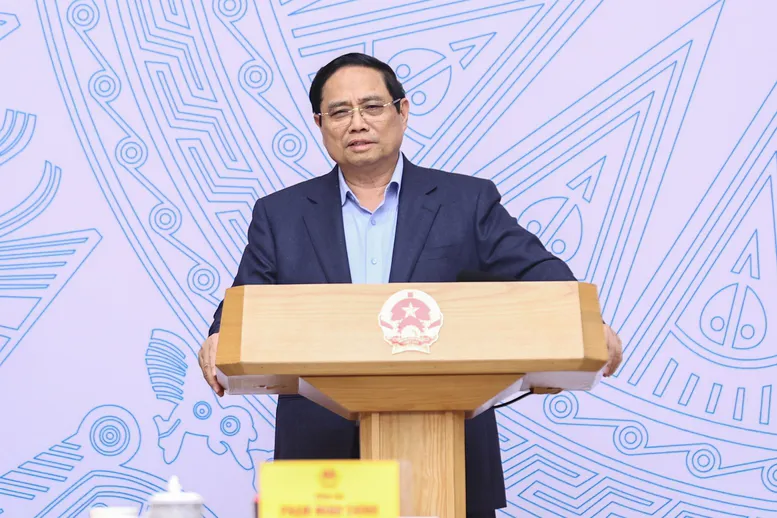
Vietnam's Prime Minister Pham Minh Chinh speaks at the meeting on January 14. Photo: Nhat Bac/VGP
The message was reaffirmed by Prime Minister Pham Minh Chinh at the 6th meeting of the National Steering Committee for implementing Vietnam’s COP26 commitments, held on January 14, as the country confronts both severe climate impacts and urgent demands for economic transformation.
Chinh stressed that climate change has become a global and borderless challenge, with faster, more complex and increasingly unpredictable impacts. Vietnam is among the countries most exposed, requiring adaptive and long-term responses.
In 2025 alone, Vietnam was hit by 21 storms and tropical depressions, leaving 420 people dead, 730 injured and causing economic losses estimated at VND100 trillion (US$3.8 billion). These figures underscore the urgency of climate action and the serious implementation of international commitments, including COP26.
In this regard, green growth, energy transition and emissions reduction, particularly in energy, agriculture and transport, have become irreversible trends and strategic priorities for Vietnam and many other countries.
Maintaining commitment amid global shifts
PM Chinh said that recent global developments have led some countries to adjust their climate strategies. However, Vietnam remains consistent in viewing climate action as a shared global movement and an objective requirement for national development.
He called for a comprehensive review of COP26 implementation, identifying achievements, shortcomings, causes and lessons learned to form the basis for defining the Steering Committee’s priorities in the next phase, in line with domestic conditions and international trends and especially the development goals set for the 14th National Party Congress (scheduled for January 19-25, 2026).
Reports at the meeting showed that since the fifth Steering Committee session in October 2024, ministries, sectors and localities have actively reviewed and improved policies and legal frameworks related to climate change and green transition.
The Ministry of Agriculture and Environment has submitted multiple decrees and draft regulations to establish a legal basis for carbon credit negotiations and exchanges with international partners.
The ministry is also preparing Vietnam’s updated Nationally Determined Contribution for 2026-2035, known as NDC 3.0, with flexible emissions reduction targets aligned with the country’s ambition for double-digit growth.
The ministry said the program to develop one million hectares of high-quality, low-emission rice has recorded positive results.
In transport and urban development, the Ministry of Construction has finalized and proposed breakthrough policies to remove institutional bottlenecks and attract private investment into railways, urban rail systems, green urban development and public transport.
Since 2022, the number of electric cars has increased more than 28-fold to about 270,000 units. In addition, electric buses have quadrupled to 1,187 nationwide, while nearly 600 buildings have been assessed and certified as green.
Meanwhile, the Ministry of Industry and Trade has actively implemented the Politburo’s Resolution 70 on national energy security, advancing solutions to diversify energy sources and expand renewable energy use.
The Ministry of Finance is coordinating with relevant agencies to finalize the legal framework for a domestic carbon market and to implement the national green growth strategy, with encouraging results.

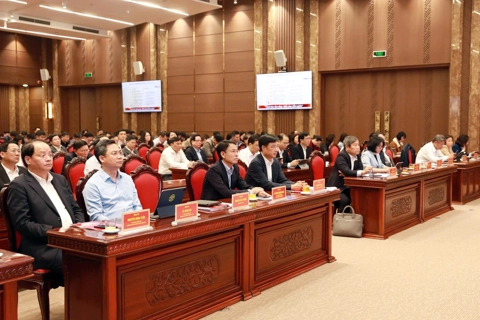
Government's officials at the meeting.
Multiple stakeholders join the effort
In many provinces and cities, greenhouse gas reduction and climate adaptation targets have been integrated into socio-economic development plans, which shown through the wider use of electric vehicles and electric public transport and growing adoption of energy-saving appliances in major urban centers.
Vietnam has established a legal framework for direct power purchase agreements, strengthened international cooperation under the Just Energy Transition Partnership (JETP) framework and the sia Zero Emission Community (AZEC) initiative and completed procedures to become a full member of the International Solar Alliance while participating in the International Renewable Energy Agency.
By the end of 2025, outstanding green credit exceeded VND750 trillion ($28.5 billion), up 10.3% from the end of 2024. Domestic banks and international financial institutions operating in Vietnam have launched green credit packages to support business model transformation.
Major enterprises are also accelerating investments in green and clean technologies. State-owned groups are taking the lead in sustainable energy development, with the Vietnam National Industry and Energy Group piloting offshore wind projects, carbon capture and storage solutions and deeper participation in global supply chains.
Additionally, the Vietnam Electricity (EVN) is focusing on expanding transmission infrastructure to unlock capacity for wind and solar power projects, while private corporations such as Vingroup, Vinamilk and TH True Milk are stepping up emissions reduction efforts and setting carbon neutrality targets.
Commitment as a mission, action as the measure
PM Chinh reaffirmed that contributing to global climate action is a core mission for Vietnam.
Green growth is both a development goal and a driving force for fast and sustainable growth, clearly reflected in the draft documents for the 14th National Party Congress.
He acknowledged remaining challenges, including slower-than-expected progress in JETP and AZEC implementation, delays in translating international commitments into domestic law in some areas and uneven coordination.
The prime minister highlighted lessons on flexible adaptation, combining domestic and external resources, strengthening institutions and ensuring decisive implementation based on clear responsibilities.
He outlined five key priorities: improving institutions, mobilizing green finance, accelerating technology transfer and innovation, building smart national governance models and developing human resources for green growth.
He called for piloting emissions quota allocation, operating a domestic carbon market, accelerating transport electrification and charging infrastructure development and continuing renewable energy expansion and a just energy transition.
At the same time, Vietnam will strengthen disaster forecasting, deepen international cooperation and encourage greater business participation in emissions reduction.
“Achieving net-zero emissions by 2050 is not a promise but an action commitment and a political mission of Vietnam. It is the shared responsibility of the entire political system, the business community and every citizen,” PM Chinh stated.
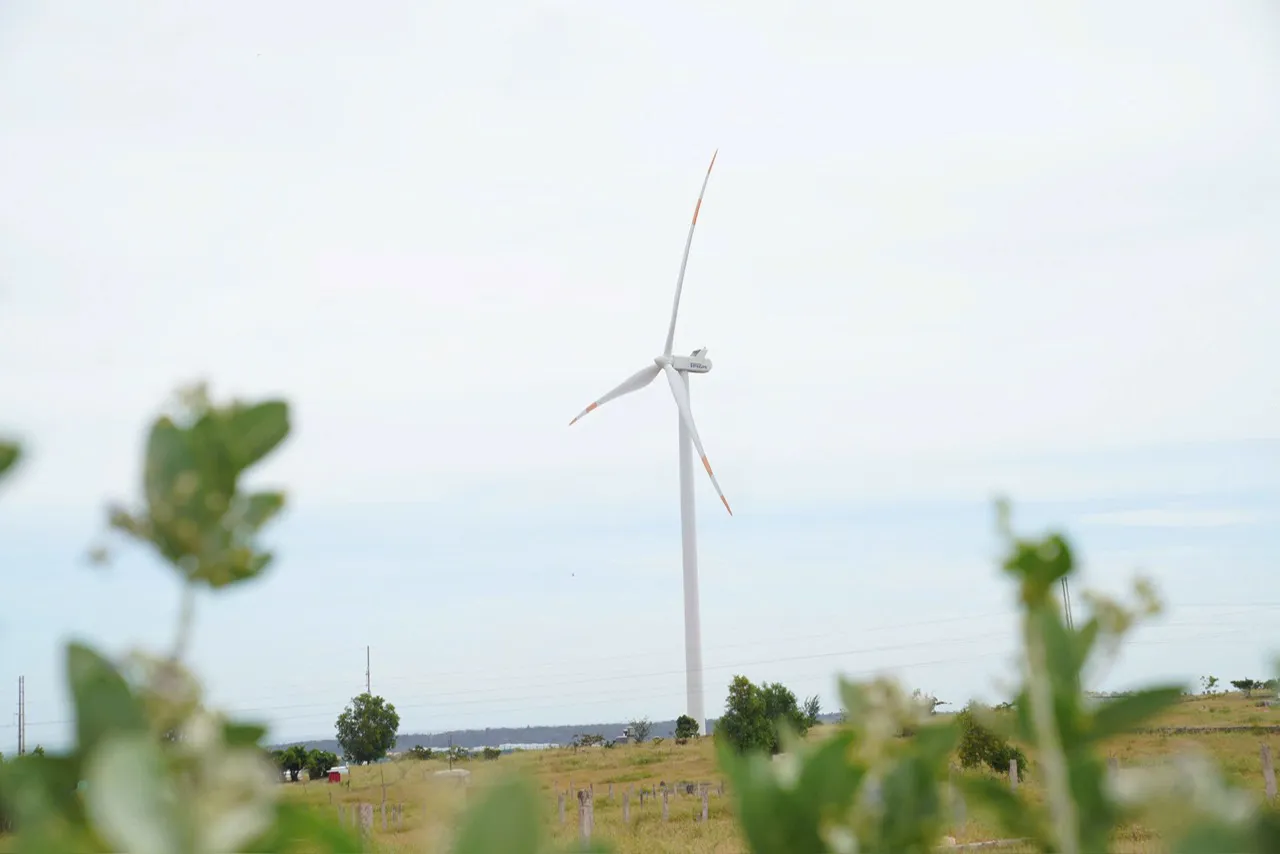
Thuan Binh Wind Farm in the central province of Lam Dong. Video: Linh Pham/The Hanoi Times
![[Net-zero strategy] People-centered approach: Vietnam’s weapon to realize COP26 commitment](https://cdn-media.hanoitimes.vn/2021/12/07/PM_CHINH.jpg?w=480&h=320&q=100)