Green economy: Solution for development and heritage preservation
Associate Professor Bui Hoai Son praised Hanoi as a prime example of leveraging culture and heritage for tourism and socio-economic development.
Urbanization has taken a heavy toll on the forests and the sea. Modern life sometimes crowds out space for monuments and recreation. How to develop the economy without eroding heritage is a dilemma.
Bui Hoai Son, a permanent member of the National Assembly's Committee on Culture and Education, told The Hanoi Times that the green economy is a key solution.
Balancing economy and culture
Economic development has had many negative impacts on cultural heritage. Why does this go on even though the government is aware of the importance of cultural protection for sustainable development?
There is always an inherent conflict between conservation and innovation, and there is not always or everywhere a solution that achieves both goals, although that is what we want and strive for. We still have to prioritize one of the two.
| Bui Hoai Son, a permanent member of the National Assembly Committee on Culture and Education. Photo: The Hanoi Times |
.jpg)
Today, sustainable development is more urgent than ever. Heritage, once lost or deformed, cannot be restored. Protecting heritage is seen as society's moral responsibility for the assets left by our ancestors. Moreover, if we know how to harness the value of heritage, these precious assets can become an important resource for national development, with a huge spiraling impact on all economic sectors.
How will international commitments help Vietnam protect its heritage in the process of developing a green economy?
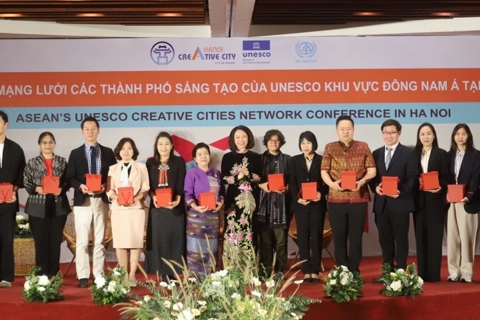
In my opinion, international commitments can help us learn and exchange experiences with creative cities and heritage sites in the world so that we can improve management efficiency and sustainable development, preserve and promote cultural values, and create opportunities for cooperation and investment from international organizations.
International commitments also help us raise awareness of the importance of heritage conservation and sustainable development and thus take action for these achievements.
| Sitting tug-of-war game in Tran Vu Temple Festival, Long Bien District, Hanoi. Photo: The Hanoi Times |
.jpg)
Culture goes hand in hand with economic development
Can you share some solutions for economic development in combination with heritage preservation?
It is important that we develop the economy based on preserving and promoting cultural heritage values. For this, we need many synchronized solutions.
First of all, we should have a correct and full awareness of the role of cultural heritage in the country's development. The protection of cultural heritage should be considered part of the protection of national cultural sovereignty. To invest in heritage is to invest in development. When we have good awareness, we will take appropriate measures.
The second is to complete the legal framework for heritage protection. The good news is that we are in the process of revising the Cultural Heritage Law. We need to supplement many other legal documents on taxation, land, public-private cooperation, and policies for craftsmen and cultural industries to create more favorable conditions for the preservation and promotion of heritage values.
Next, we need to use technology more, bringing heritage to various art forms such as film, music, and fashion to make them more attractive, especially to young people.
Finally, we should strengthen international cooperation and build brands for heritage sites at home and abroad.
| Chem Communal House, one of the oldest architectural structures in the capital, can be a destination for tourism. Photo: Ngo Minh/The Hanoi Times |

More specifically, how can culture become a resource for the green economy?
From the OCOP (one commune-one product) model, I think we can fully integrate the cultural identity of a locality or community into a business model, such as producing cultural products or services or using a unique culture-based approach to create product identity, which helps to create added value.
We can also leverage local natural and cultural resources to develop green products and services, such as using local knowledge of traditional herbal ingredients to produce organic products.
Tourism can be developed based on local culture, helping to preserve cultural and environmental values and creating opportunities for local people to participate in the tourism industry and generate income.
We can also use art and creativity to promote a green economy. Creating art and traditional handicrafts helps to improve income and create opportunities for artisans, as in the case of Vun Art in Hanoi, which uses leftover fabric to make souvenir products.
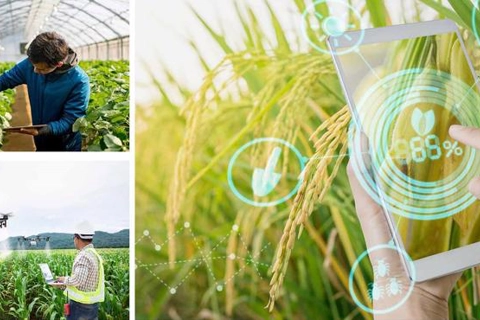
In addition, we can use modern technology, such as geographic information systems (GIS) and sensor technology for monitoring and management, to protect and preserve cultural and environmental values. Natural resources such as forests, land, and water help to preserve the cultural spaces of communities.
In addition, we can use digital technology to store, preserve and promote the value of cultural heritage, and we can use modern technology to raise awareness of environmental protection and cultural values.
Thank you for your time!