Hanoi adopts growth vision for 2025–2030
The Congress outlined key directions to transform the capital into a creative, green, smart, and globally connected metropolis, with concrete targets, institutional reforms and cultural revitalization set to guide its next stage of development.
THE HANOI TIMES — Hanoi has adopted a new Resolution for breakthrough growth in the 2025–2030 period, focusing on innovation, sustainable urban governance and human-centered development, following the guidance of Party General Secretary To Lam at the 18th Congress of the Hanoi Party Committee for the 2025–2030 tenure.
The Resolution was issued this week following the successful conclusion of the Congress held on October 15–17, which brought together 550 official delegates representing nearly 500,000 Party members across the city.
Viewpoints and goals for 2025–2030
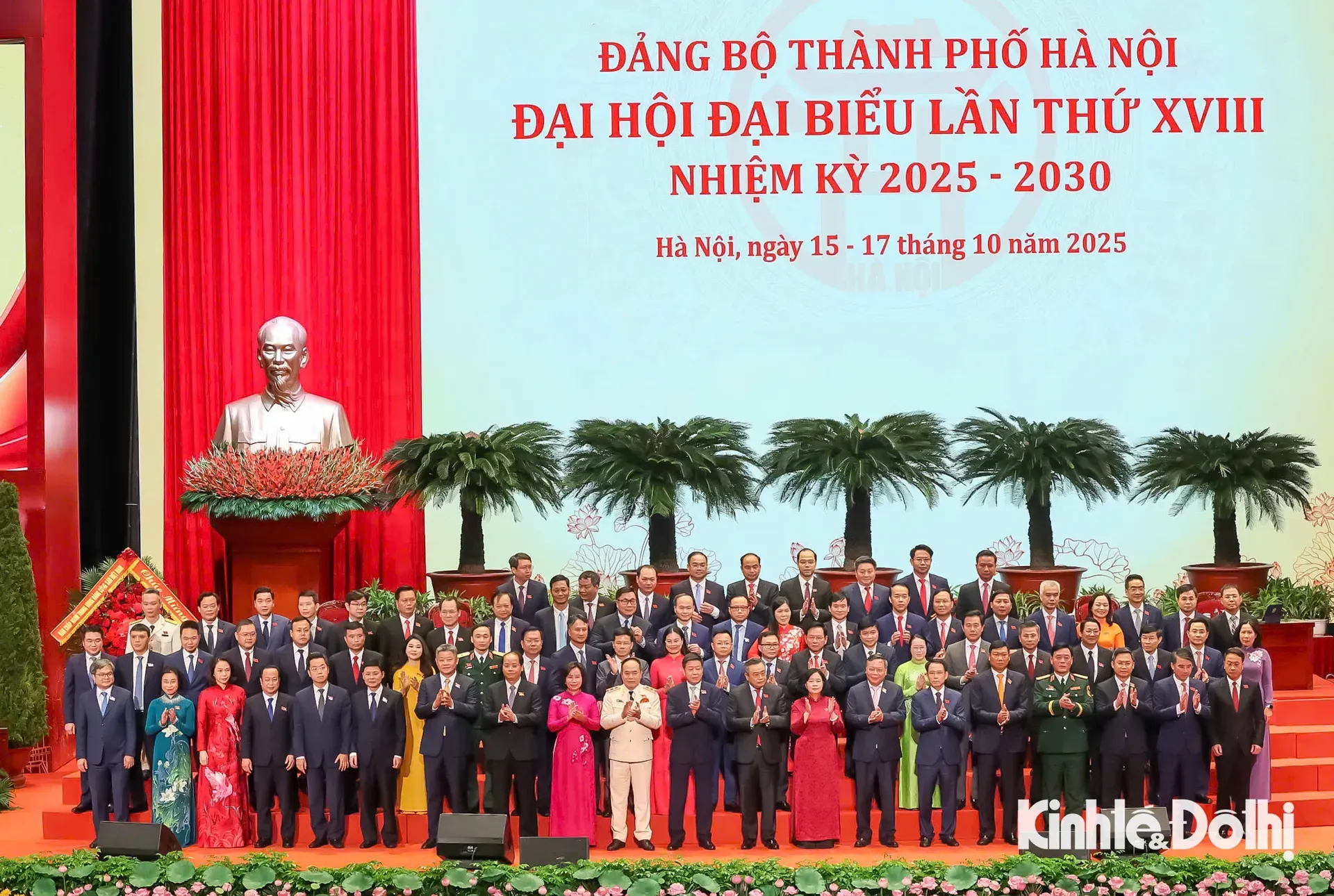
The 18th Executive Board of the Hanoi Party Committee for the 2025–2030 tenure made its debut at the Congress on October 17.
Hanoi will lead and set an example in implementing major policies of the Party and State, maximizing its advantages to become a socialist capital worthy of being the country’s political-administrative center and a major hub for economics, culture, education, science and international integration.
“The city will pursue rapid and sustainable growth through green and digital transformation, circular economy and smart urban planning to build a modern, green and livable capital,” the Resolution stated.
As the thousand-year-old Thang Long–Hanoi of cultural tradition, the city will take culture and human development as foundations for sustainability and innovation as the driving force for growth.
Economic and social progress will be harmonized with environmental protection and climate adaptation, while ensuring defense, security and international integration.
Meanwhile, the city will continue building a clean, strong and efficient Party organization and political system; enhance governance, decentralization, and accountability; and strengthen anti-corruption and administrative reform with citizens and businesses at the center. Development targets
By 2030, Hanoi aims to become a “Civilized – Cultured – Modern” capital, making it green, smart, globally connected and competitive, on par with the capitals of developed nations in the region.
By 2045, the city envisions itself as a globally connected city with a high standard of living and a per capita GRDP exceeding US$36,000.
Key breakthroughs
The Congress identified three breakthrough areas:
Institutional development: Finalize the implementation of the Capital Law and develop special mechanisms to unlock resources, promote innovation, digital transformation, and the cultural and healthcare industries.
Human resources: Attract and nurture talented leaders, scientists, and experts through transparent and incentive-based mechanisms, encouraging creativity and accountability.
Modern infrastructure: Develop integrated transport networks, digital infrastructure, and innovation ecosystems, promote transit-oriented development (TOD) and expand underground spaces to enhance sustainability and competitiveness in the digital era.
During the past term, Hanoi’s economy grew steadily, expanding by 6.57%, 1.1 times higher than the national average.
The city’s GRDP accounted for 12.6% of Vietnam’s total, while budget revenues consistently exceeded projections, making up about one-fourth of the national figure. The economic structure shifted positively toward services, while science, technology, innovation and digital transformation achieved notable progress, particularly through the implementation of the Government’s Project 06 and the Politburo’s Resolution No.57-NQ/TW (December 22, 2024).
Urban planning, infrastructure investment and environmental management have advanced in a coordinated and modern direction. Key projects in transport, culture, health and the environment have been completed or launched.
The city also demonstrated effective climate adaptation, timely disaster response, especially in the aftermath of Typhoon Yagi, and basic treatment of pollution in the To Lich River.
Hanoi completed the new rural development program two years ahead of schedule. Cultural, educational, and healthcare sectors continued to receive investment, with improvements in human resource quality and the promotion of Hanoi’s image as an elegant and civilized capital.
“Social welfare was ensured, and poverty was eliminated under the city’s standards. Political security and social order remained stable, while external relations expanded in depth and effectiveness, further enhancing the capital’s regional and international standing,” the Resolution noted.