Log in
Hanoi

Hanoi announces unprecedented infrastructure planning

These plans are of significance for Hanoi’s development, especially the planning for urban underground space, which is the first of its kind with high and unprecedented complexity.

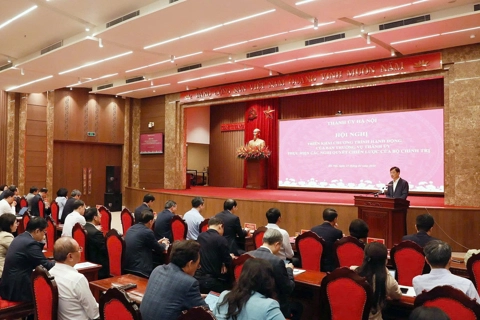
The Hanoi’s Department of Planning and Architecture in collaboration with the Department of Transport and other units on April 12 held a conference announcing two key infrastructure plannings.

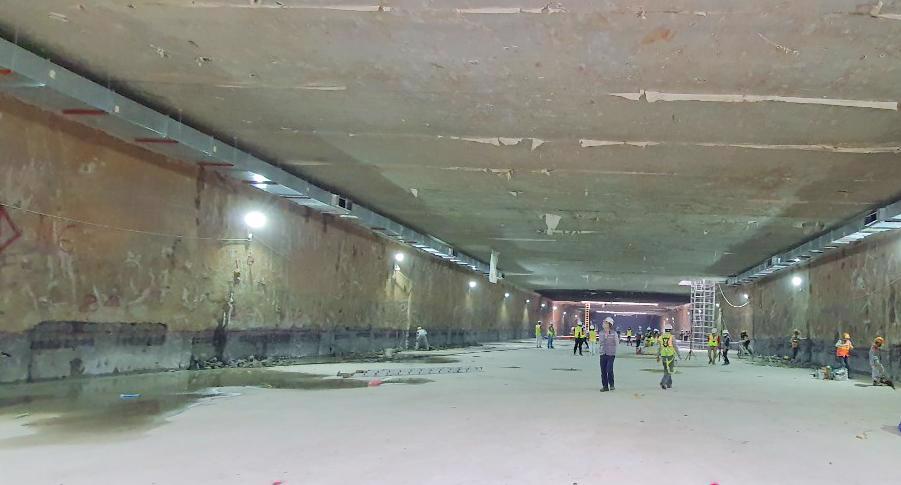
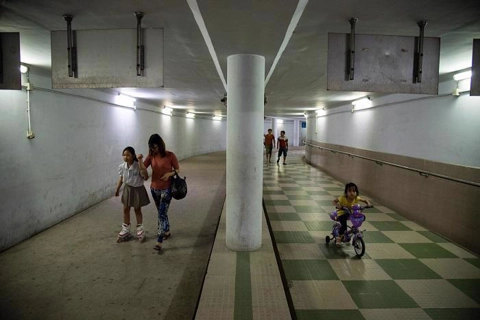
A space of underground station S9 of Nhon-Hanoi railway station metro line. Photo: The Hanoi Times

These include a master plan for the construction of urban underground space in the center of Hanoi until 2030, with a vision to 2050 (scale 1/10,000), and the planning for bus stations, parking lots, rest stops, and logistics facilities in Hanoi until 2030, with a vision to 2050.

According to Vice Director of the Hanoi’s Department of Planning and Architects Nguyen Duc Nghia, a key part of the city’s master plan of the urban underground space would be a network of an underground transport system.

“The city would focus on building six metro lines with a total length of 86.5 kilometers at a depth of 20 meters, along with 81 underground stations,” Nghia said.

In addition, Hanoi also plans for 78 underground parking lots for a combined area of 104 hectares, which are concentrated in the four core districts.

“Hanoi considers major transport hubs such as urban railway stations or national railway stations as the core in the development of public underground spaces,” he added.

Nghia noted there would be 39 underground public spaces in the downtown areas with 954 hectares, including services, trade, entertainment, and connected with urban railway stations.

He also revealed the city would propose the construction of an addition of 65 underground public spaces in the North and South of the Red River with 2,171 hectares.

Regarding the planning for bus stations, parking lots, rest stops, and logistics facilities in Hanoi until 2030, with a vision for 2050, Nghia said the plan would cover an area of 3,344 square kilometers and take into consideration an estimated population of up to 9.3 million by 2030, and 10.5-10.7 million by 2050.

Nghia said investments in infrastructure should be in line with the planning for socio-economic development and meet the transport demand of the locals in the coming time.

At the meeting, Vice Chairman of the Hanoi People’s Committee Duong Duc Tuan stressed the significance of these plans for Hanoi’s development, especially the planning for urban underground space, which is the first of its kind with high and unprecedented complexity.

“The realization of these plans would contribute to Hanoi’s sustainable development, serving as a legal basis in the planning process for infrastructure upgrade of both the surface and the underground space,” Tuan said.
Reactions:
Share:
Trending
Most Viewed
Related news
Hanoi announces 1/5,000 scale for Red, Duong rivers

Hanoi announces 1/5,000 scale for Red, Duong rivers

06 Apr, 10:29

The construction of new urban areas would contribute to Hanoi’s socio-economic development and improve the people’s living standards towards greater sustainability, said Hanoi’s Mayor Chu Ngoc Anh.

Hong Van Commune rises as Hanoi’s emerging model for community-based tourism

Hong Van Commune rises as Hanoi’s emerging model for community-based tourism

Blessed with natural beauty, strengthened by deep cultural heritage and supported by its residents, Hong Van Village is emerging as one of Hanoi’s most distinctive tourism destinations. From ecology and agriculture to handicrafts and festivals, this Red River village is shaping a dynamic vision of sustainable community tourism for the capital.

Hanoi unveils digital heritage journeys to connect tradition with modern urban life

Hanoi unveils digital heritage journeys to connect tradition with modern urban life

Hanoi has launched a new digital heritage program that brings centuries-old cultural assets into a modern, interactive format. By mapping key monuments and creating themed journeys, the city aims to help residents and visitors explore its deep-rooted identity through fresh, engaging experiences.

Hanoi launches two-wheel electric vehicles to expand green urban mobility

Hanoi launches two-wheel electric vehicles to expand green urban mobility

Hanoi has introduced two-wheel electric vehicles for the first time in its transport network, offering residents a new green mobility option and marking a key step in the city’s smart-transport development.

Thai AirAsia launches new Hanoi–Luang Prabang route to boost regional travel

Thai AirAsia launches new Hanoi–Luang Prabang route to boost regional travel

Thai AirAsia has opened a new direct Hanoi–Luang Prabang route using Fifth Freedom traffic rights, creating a faster and more convenient link between two major heritage destinations in Vietnam and Laos.

Hanoi orders strong air-pollution measures and warns schools to adjust schedules

Hanoi orders strong air-pollution measures and warns schools to adjust schedules

Hanoi has issued new directives requiring schools to restrict outdoor activities and consider suspending classes when air quality drops to hazardous levels, while launching a sweeping crackdown on pollution sources across the city.

Hanoi – Vientiane ties set pace for bilateral cooperation

Hanoi – Vientiane ties set pace for bilateral cooperation

The two sides have inked two city-level agreements and eight agreements covering areas such as Party building, economic and investment cooperation, agriculture, health, education and people-to-people ties.

Hanoi completes tunneling for four underground stations of 2nd metro line

Hanoi completes tunneling for four underground stations of 2nd metro line

The completion marks a major step forward for the four-kilometer underground section of the metro line.

Rooftop solar push to boost Hanoi's green ambition

Rooftop solar push to boost Hanoi's green ambition

Rooftop solar in industrial zones has the foundations to become a new driver of Hanoi’s energy transition.