Hanoi-Beijing cooperation – example of bilateral relations
Both sides would explore ways to cooperate in new areas such as culture, media, and tourism.
Enhanced cooperation between Hanoi and Beijing would yield significant benefits to both regions and further advance the comprehensive strategic partnership between Vietnam and China.
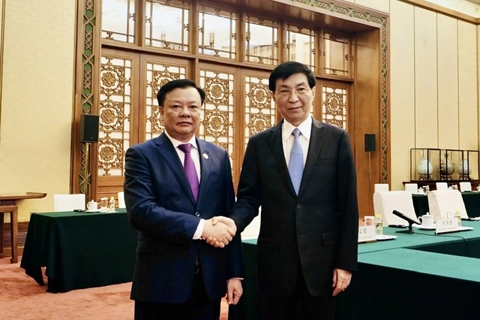
| Vice Secretary of the Hanoi Party Committee Nguyen Van Phong (L) and Vice Secretary of the Beijing Party Committee Liu Wei (r). Source: VNA |
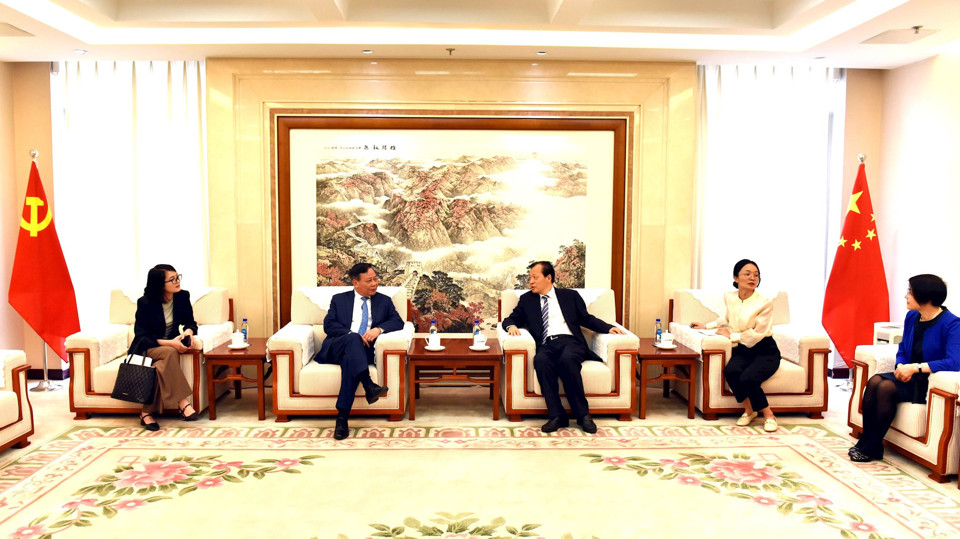
Vice Secretary of the Hanoi Party Committee Nguyen Van Phong shared the view during a meeting with Vice Secretary of the Beijing Party Committee Liu Wei on May 16, during a visit to the Chinese capital.
At talks, Phong expressed his delight to visit Beijing on the occasion of the 30th anniversary of the establishment of the official friendship relationship between the two capitals.
“Having diplomatic relations with nearly 100 major cities worldwide, Hanoi always values the development of friendly relations and cooperation with Chinese localities, especially Beijing. This contributes to deepening and elevating the comprehensive strategic partnership between Vietnam and China and building a community of shared future between Vietnam and China,” he noted.
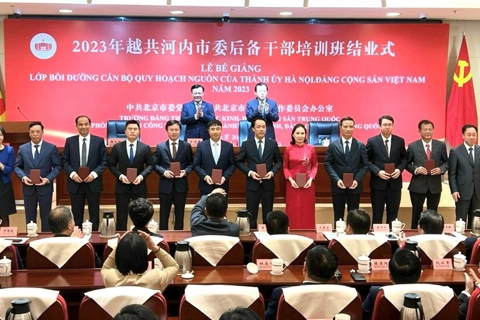
Phong thanked Beijing for its continued support in organizing training courses for officials of the Hanoi Party Committee under the Memorandum of Understanding on cooperation between the Hanoi side and the Beijing Party Committee School.
Briefing on Hanoi’s socio-economic progress, Phong informed that the city’s GRDP growth rate in 2023 reached 6.27%, higher than the national average of 5.05%; Hanoi's GRDP size was estimated at $54.2 billion (an increase of $2.8 billion compared to 2022).
FDI attraction reached nearly $3 billion, up 64%, while tourist arrivals to Hanoi stood at 24 million, surpassing the set target of 22 million.
According to Phong, Hanoi highly values the cooperative relationship with Beijing, which has not only political-diplomatic significance but also deep practical implications, manifested in many similarities in conditions, development orientations, and mutual support in construction and development.
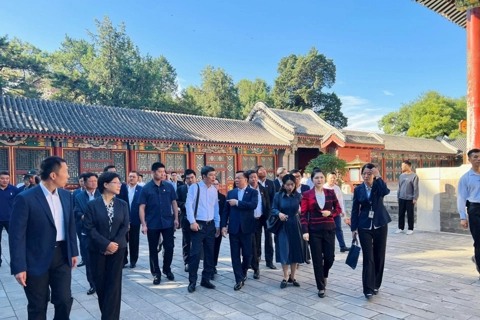
During the working trip, the delegation from Hanoi will exchange experiences on heritage conservation, leveraging cultural values, developing cultural industries, and local media management, all of which are areas of focus and concern for both Hanoi and Beijing, he said.
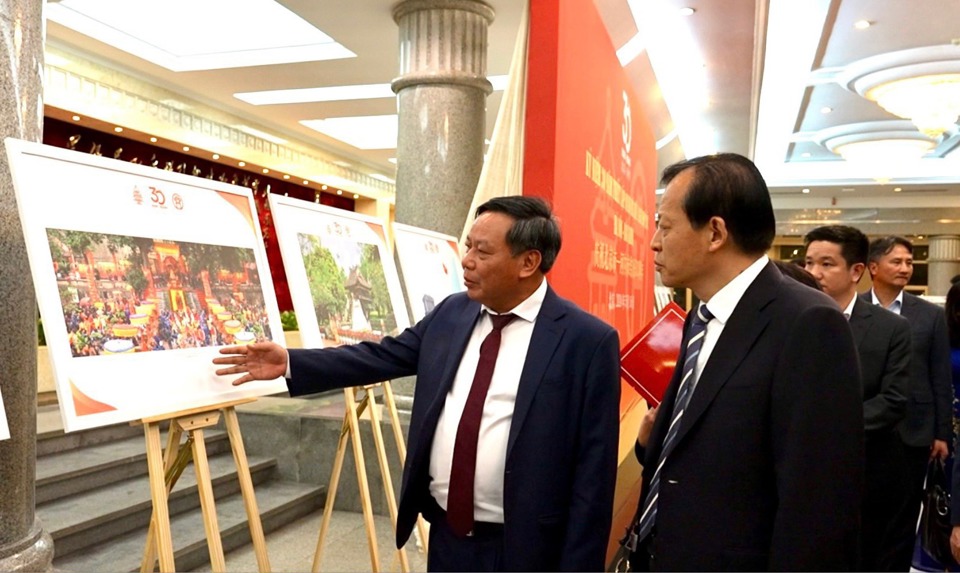
| The two leaders attend the opening ceremony of an exhibition in Hanoi on the occasion of the 30th anniversary of Hanoi-Beijing relations. |
Five priorities for cooperation
On the basis of this, Phong suggested some specific directions for cooperation between the two cities in the coming time:
First, to continue maintaining exchanges and mutual contacts between the two sides, including at the leadership and grassroots levels.
Second, to expand cultural cooperation. Both Hanoi and Beijing are places with extensive and diverse cultural heritage systems. Jointly exploring this cultural heritage system and its inherent values to create new impetus for economic development in general and cultural industries.
In the short term, Hanoi calls on Beijing to support conservation and restoration of heritage sites, especially UNESCO-recognized Thang Long Imperial Citadel in the heart of Hanoi, with a focus on effectively restoring Kinh Thien Palace.
Third, strengthen cooperation in training and improving the quality of human resources. In addition to training and improving the quality of officials at all levels according to the signed agreement, it is proposed that the Beijing municipal leadership support cooperation between the Beijing Party Committee School and the Le Hong Phong School for the training of officials.
Fourth, to raise awareness among all people, especially young people, of the significance of the comprehensive strategic cooperative relationship between Vietnam and China as well as the friendly cooperation relationship between Hanoi and Beijing.
Finally, to promote economic cooperation and investment. Hanoi creates favorable conditions for Beijing's companies with capital and technological strengths to invest in and expand their business in Hanoi, especially in new areas such as digital transformation, green growth, renewable energy, circular economy, environmental protection, and others.
For his part, Deputy Secretary of the Beijing Party Committee Liu Wei expressed his belief that Beijing and Hanoi have many opportunities and conditions to strengthen friendly cooperation for the mutual benefit of both capitals and countries.
Expressing strong agreement with the cooperation proposals put forward by Deputy Secretary of the Hanoi Party Committee Nguyen Van Phong, Liu suggested that both cities focus on strengthening party-to-party channels, sharing experiences in city governance, maintaining high-level and professional contacts, and strengthening economic cooperation and digital transformation. He also underlined the importance of continuing effective cooperation mechanisms such as personnel training, youth exchanges, and deepening collaboration in new areas such as culture, media, and tourism.