Hanoi Convention: Leverage for Vietnam to become a center of cyber security
Vietnam will host the signing of the United Nations Convention against Cybercrime, known as the Hanoi Convention, marking a major step in global efforts to build a safer digital world.
THE HANOI TIMES — In the digital age, cybercrime threatens the security, political stability, economy and social life of every country, becoming a global danger.
Vietnam has always regarded the fight against cybercrime as a key priority in its national security policy and has actively worked with the international community to address this issue.
Journey to promote the Hanoi Convention
In December 2024, the United Nations General Assembly adopted the Convention against Cybercrime. The signing ceremony will take place in Hanoi on October 25–26.
The convention provides a legal framework for global cooperation against cybercrime, helping countries, especially developing and vulnerable ones, strengthen their capacity to respond to cyber threats.
Deputy Minister of Foreign Affairs Dang Hoang Giang said that the signing ceremony of the Hanoi Convention marks Hanoi the starting point for a global commitment to a transparent, safe and human-centered digital future.
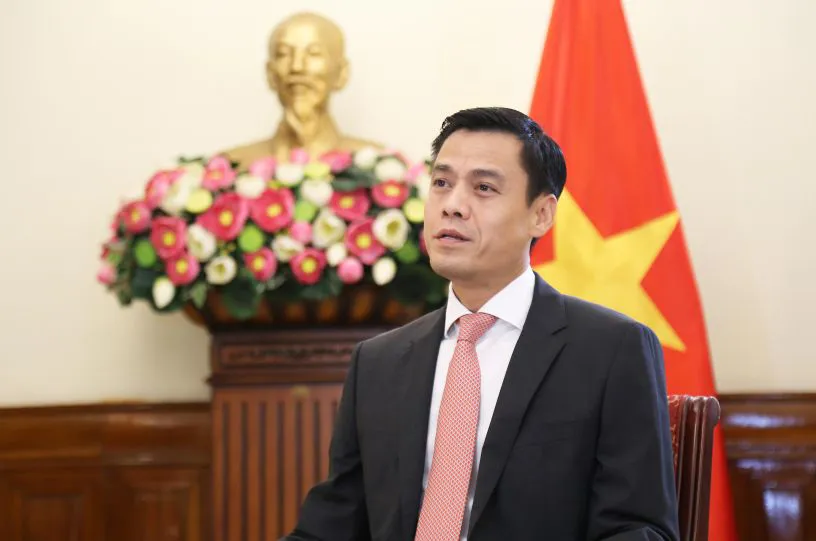
Deputy Minister of Foreign Affairs Dang Hoang Giang. Photo: MOFA
He said that the United Nations began drafting the Convention against Cybercrime in 2019, making it the first comprehensive UN document in this field. Vietnam has supported this initiative from the start.
According to Giang, cybercrime is growing more complex in Vietnam and around the world, creating new security risks and affecting socio-economic development. The signing ceremony has therefore received strong international support.
However, the process also faces difficulties such as global political tensions, lack of cooperation among countries and differences in legal systems.
In 2022-2024, Vietnam’s Inter-Sectoral Working Group, led by the ministries of Public Security and Foreign Affairs, took part in all eight negotiation rounds of the convention.
The UN General Assembly officially approved the Convention on Cybercrime in December 2024.
Vietnam remains committed to actively and proactively participating in building international legal frameworks that serve national interests, the deputy minister said.
“We have contributed to the convention to ensure respect for sovereignty, independence, non-interference in internal affairs and compliance with international law,” said Giang.
Vietnam also helped coordinate negotiations on several key provisions, gaining strong international support. As a result, the Hanoi Convention’s regulations reflect Vietnam’s national interests and legal principles.
Put the Hanoi Convention into practice
To prepare for this major international event, the government has tasked the Ministry of Public Security with hosting the signing ceremony.

Preparations are based on Vietnam’s experience in organizing global conferences and comply with UN requirements.
According to Deputy Minister Giang, about 200 delegations from countries, businesses, international organizations and research institutes have registered for the event.
The program will also include opening and closing sessions, one plenary discussion, one signing session, four high-level discussions and four roundtable sessions, and a technology exhibition co-organized by the Vietnamese government and the UN Secretariat.
President Luong Cuong and UN Secretary-General Antonio Guterres are expected to deliver keynote speeches at the opening session.
Deputy Minister Giang said that the UN’s decision to hold the signing ceremony in Hanoi shows recognition of Vietnam’s contribution to global cybersecurity cooperation.
“This is the first time a global multilateral convention in such a vital field is linked with a place name in Vietnam,” he said.
The title “Hanoi Convention” in the official text highlights Vietnam’s important role in developing the document.
Hosting the ceremony allows Hanoi to affirm its global standing and promote the government’s cybersecurity initiatives, especially as the UN celebrates its 80th anniversary on October 24.
Deputy Minister of Public Security Pham The Tung, Head of the Steering Committee for the event, said that the signing of the Hanoi Convention is a political and legal milestone of global importance.
He added that the event gives Vietnam a valuable opportunity to attract international investment in cybersecurity – a field seen as vital to national digital transformation.
“With the prestige of hosting the convention and our market potential, Vietnam can become a leading regional center for cybersecurity research, development and investment,” said Tung. “The Hanoi Convention will serve as an important lever to achieve this goal.”
To implement the convention effectively, Major General Le Xuan Minh, Director of the Department of Cyber Security and High-Tech Crime Prevention and Control, said that authorities are reviewing domestic laws to align with the new international framework.
He hoped the Hanoi Convention will create a global legal foundation for countries to cooperate in preventing cybercrime, sharing intelligence, coordinating investigations, handling criminal assets and extraditing offenders.
“We aim to build a cyberspace that serves peace and shared development for all nations,” Minh said.
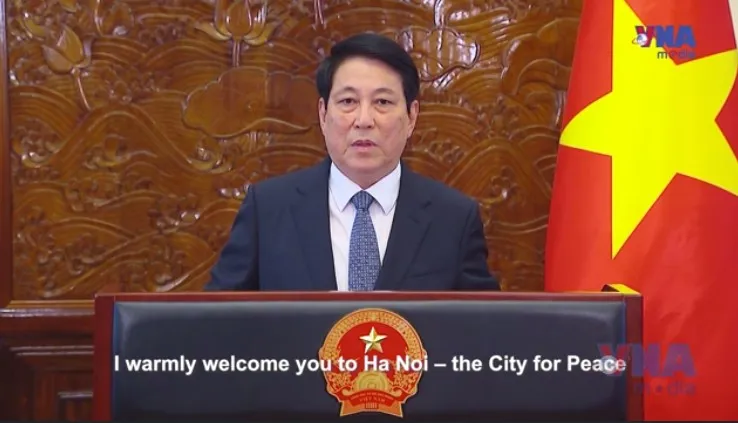
President Luong Cuong sends the world a message of Hanoi Convention. Photo: VNA