Hanoi to host UN’s first global cybercrime convention
This marks the first time Hanoi has been chosen to host the signing of a global multilateral convention, highlighting Vietnam’s expanding role in international diplomacy.
HANOI TIMES — More than 200 international representatives are set to attend the signing of the United Nations’ first global convention on cybercrime in Hanoi later this month, marking a historic moment for both Vietnam and the UN.
Scheduled for October 25–26, the United Nations Convention Against Cybercrime Signing Ceremony and High-Level Conference, which is also called the Hanoi Convention, is the first time a UN multilateral treaty has been tied to a Vietnamese city, the Ministry of Foreign Affairs announced.

International press briefing on Hanoi Convention signing ceremony on October 8. Photo: Lien Ha
“This is a significant milestone in Vietnam’s multilateral diplomacy and coincides with the 47th anniversary of Vietnam–UN relations,” Deputy Minister of Foreign Affairs Dang Hoang Giang told reporters at an international press briefing on October 8.
The two-day event will feature a plenary session, four high-level discussions, four roundtable dialogues, a gala dinner, and a technology exhibition co-organized by the Vietnamese Government and the UN Secretariat.
President Luong Cuong and UN Secretary-General António Guterres are expected to deliver keynote speeches at the opening ceremony.
“Vietnam’s selection to host the event shows international recognition of the country’s growing prestige and credibility in the Asia-Pacific region and the world,”said Giang.
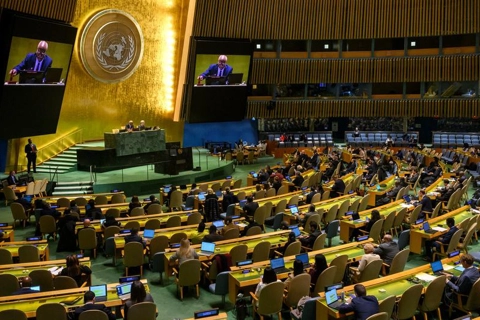
Adopted by the UN General Assembly in December 2024 after eight negotiation rounds in New York and Vienna, the UN Convention Against Cybercrime is the first universal treaty addressing online criminal activities.
It was initiated in 2019 with participation from UN member states, 150 intergovernmental and non-governmental organizations, and major technology firms.
“It is essential to ensure cybersecurity for effective digital transformation,” said Giang.
The convention, he said, will serve as a legal framework for international cooperation in investigating and prosecuting cybercrimes while fostering dialogue among nations with diverse legal systems.
According to Major General Le Xuan Minh, Head of the Department of Cybersecurity and High-Tech Crime Prevention under the Ministry of Public Security, Vietnam handled more than 100,000 cybercrime cases in the past year, with attacks becoming “increasingly organized and transnational.”
“Criminal groups are targeting key sectors of the economy,” Minh warned, noting that cyber fraud and cross-border cooperation among offenders are “growing more sophisticated.”
Once signed and ratified, the Hanoi Convention is expected to create a new legal foundation for countries to share intelligence, coordinate investigations and strengthen global cybersecurity.
Hosting the convention, Minh added, reflects Vietnam’s rising profile in global governance, particularly in the fields of digital transformation and cybersecurity.