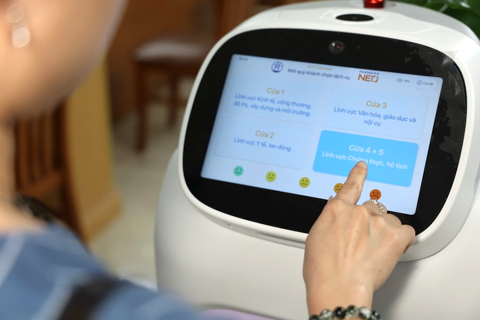
Hanoi cuts paperwork through digital data integration
Vietnam advances national data integration, Hanoi is pioneering efforts to end the need for redundant paperwork in administrative procedures through seamless digital transformation.
THE HANOI TIMES — For years, Vietnamese citizens were used to the familiar inconvenience of carrying stacks of photocopied documents from one agency to another. That routine is now changing.
In Hanoi, where digital government efforts are advancing rapidly, the growing interconnectivity of data systems has helped eliminate the need to submit the same paperwork repeatedly.

Administrative reform is entering a new phase in Vietnam, where data integration among government agencies, from central to local levels, is streamlining public services. As a result, citizens are experiencing fewer delays and reduced bureaucracy when completing procedures like registering land use rights, renewing ID cards, or claiming social benefits.
Hanoi, a pioneer in digital transformation, has become a testing ground for modern public service delivery in Vietnam.
This shift is not without its challenges. Despite achievements, the journey toward a fully digital government still requires stronger institutional coordination and decisive leadership at every level of the system.
National data integration gains momentum, but gaps remain
According to the Ministry of Science and Technology, the National Data Center’s Data Integration and Sharing Platform processed 630 million transactions by June 2025, achieving 73 percent of the annual target.
On average, over 3.6 million data transactions are handled daily across the public system. The proportion of fully online administrative records reached 39.51 percent nationwide, with 51.19 percent at the ministerial level and 15.21 percent at the provincial level.
To reduce paper-based procedures, the ministry has authorized 25 enterprises to provide public digital signature certification services, with over 20 million certificates issued. As of mid-2025, more than 35 percent of the adult population owns a digital or electronic signature.
Government ministries have also intensified efforts to restructure administrative processes. Deputy Minister of Science and Technology Pham Duc Long affirmed that agencies will no longer ask for documents already stored in national databases, such as civil status, residency, land records, or insurance.
“By January 1, 2026, the goal is to fully digitize and centralize online public services nationwide,” said Long.
However, digitalization still faces hurdles. An assessment released in July 2024 found that 62 percent of government platforms were rated at level C, 24 percent at level D, and 14 percent at level E, with none achieving level A or B. The current national average for fully online records stands at just under 40 percent, far short of the 80 percent target for the end of 2025.
Another pressing issue is the gap between the pace of digital transformation and the legal framework’s ability to adapt. In some regions, citizens are still being asked for duplicate documents due to inconsistent data, outdated workflows, or officials who are unaware of new regulations.
Hanoi sets the pace but acknowledges persistent barriers
As the country’s political and administrative center, Hanoi has taken a leading role in the national push for data integration and digital governance. At a conference on the mid-2025 review and action plan for the remainder of 2025 by the Central Steering Committee for the Development of Science, Technology, Innovation and Digital Transformation, Chairman of Hanoi People’s Committee Tran Sy Thanh said that seamless data flow is the key to a responsive and citizen-centered government.
Since the issuance of the Politburo’s Resolution 57 on national digital transformation, Hanoi has proactively implemented a detailed action plan. Of the 58 tasks assigned by the government under Resolution 71, the capital has completed 19 and is steadily advancing the rest.
Thanh said Hanoi has recorded major breakthroughs. For the first time, it successfully integrated four Party administrative procedures into the National Public Service Portal, directly linked with the national population database.
“The city’s administrative platform connects with major systems including VNeID [Vietnam’s official national digital identity platform developed by the Ministry of Public Security], civil databases, and specialized sector platforms,” said Thanh.
Its multi-tiered, centralized data management model is anchored by the Hanoi Public Administration Service Center, which connects to all 126 communes and wards. Every commune now processes official documents with digital signatures, enabling the seamless flow of digital communications across the Party, government, and local fronts.
The city’s Local Government Service Platform (LGSP) handles 60,000 to 70,000 data connections daily and is linked with 28 national data sets and eight specialized systems.
A 24/7 support network and hotline 1022 fielded over 6,000 calls in just 10 days, with a 98.7 percent resolution rate. Hanoi also completed 126 ward-level websites, activated nearly 13,000 user accounts, and updated data for nearly 10,000 official email addresses.

A Tay Ho Ward official assists a resident with completing administrative procedures online. Photo: kinhtedothi.vn
Despite this progress, Hanoi acknowledges ongoing challenges, particularly in fully synchronizing data systems, improving cybersecurity, and ensuring high-quality online services. Redundant document requests still occur in some procedures due to gaps in system integration or outdated workflows.
Drawing from its experience, Chairman Thanh said Hanoi has focused on unified leadership, comprehensive data restructuring, open infrastructure, local-level technical support, and a citizen-centered approach.
“Hanoi has also proposed that the national steering committee prioritize policy coordination, institutional reform, and standardized technical guidance so that cities like Hanoi can continue to lead Vietnam’s digital future,” said Thanh.
As Vietnam advances toward a modern and transparent public administration, Thanh noted, seamless data integration remains essential to cutting bureaucratic red tape and improving service delivery nationwide.