Hanoi expands flower regions towards sustainable growth
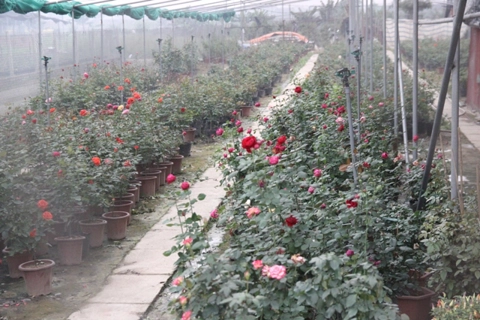
Flowers are grown by Hanoi people in concentrated specialized agricultural areas after land consolidation and conversion of inefficient rice land to increase economic value.
Hanoi aims to expand the area under flower cultivation to about 8,000 hectares of numerous flowers in the direction of sustainable growth, focusing on protecting the ecological environment, according to the plan to restructure the agricultural sector by 2025.
Nguyen Van Chi, Deputy Head of the Hanoi Coordination Office of the New Rural Area Construction Program, told The Hanoi Times that the city currently cultivates more than 3,000 hectares of various flowers, mainly in suburban localities.
"With new advances in varieties, fertilization methods, mineral nutrition systems, automatic irrigation, light and temperature regulation, the city's average flower production value reaches about VND1.5-2.2 billion (US$58,890-$86,372)/ha/year," Chi said.
Colorful flowers in Hanoi's Me Linh District. Photo: Pham Hung/The Hanoi Times |
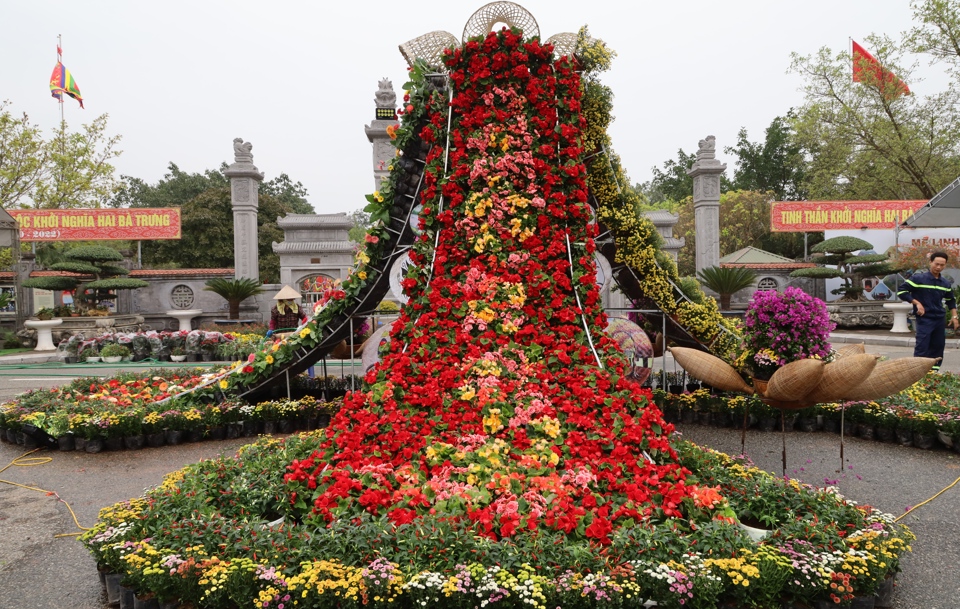
He cited Me Linh District as a typical example. Located about 30 kilometers north of downtown Hanoi, Me Linh is one of the capital city’s largest flower regions. The district's flower gardens supply the market with millions of flowers, including roses, chrysanthemums, lilies, gerberas, ornamental plants, and others.
"In addition to Me Linh District, Dan Phuong, Phuc Tho, Thach That, and other districts are major flower growing areas in Hanoi. Flowers are grown by people in concentrated specialized agricultural areas after land consolidation and conversion of inefficient rice land to increase economic value," Chi said.
He added that in addition to the four key districts mentioned above, there are scattered flower-growing areas in the districts of Bac Tu Liem, Soc Son, Gia Lam, Thuong Tin, and Son Tay Town.
In addition, a number of high-tech flower cultivation models covering tens of hectares have appeared in Dan Phuong, Me Linh, Thach That, and Hoai Duc districts.
High-tech flower farming brings income to locals
Flower growers in Hanoi are earning higher incomes thanks to the use of advanced technology in their cultivation activities to increase the number of flowers.
As one of Vietnam's ten orchid farms in Dai Thinh Commune, Me Linh F-Farm supplies the market with hundreds of thousands of orchid seedlings and high-quality flowers every year.
Orchid cultivation model using high technology at Me Linh F-Farm. Photo: Pham Hung/The Hanoi Times |
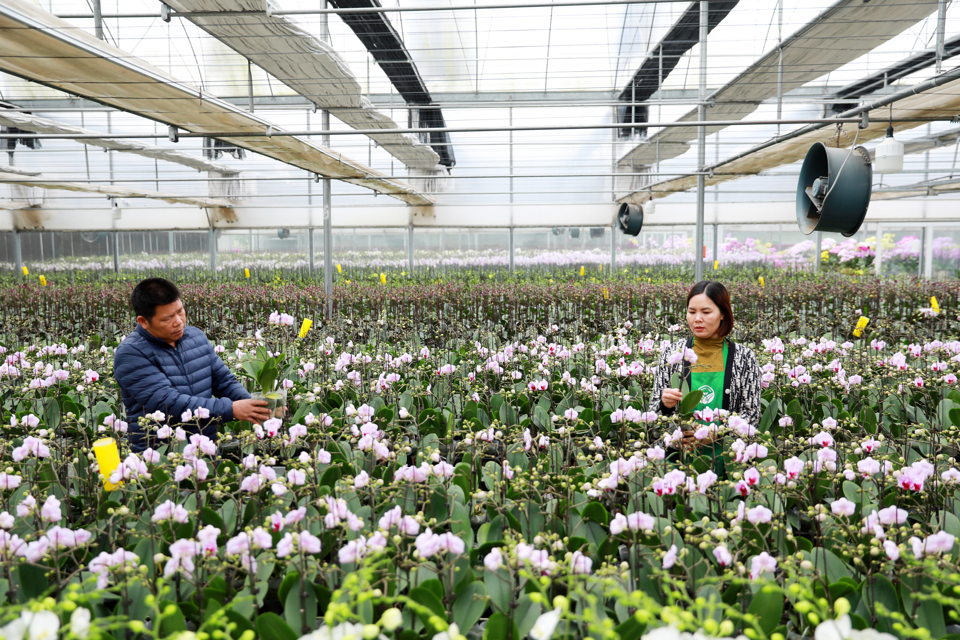
Farm owner Nguyen Tien Dung told The Hanoi Times that his business provides regular employment for more than 20 workers, and the use of high technology has helped the farm ensure product supply in line with orders, regardless of the season.
"We have developed a professional production method and cooperated with many farms in Da Lat, Sa Pa, and Moc Chau in its production and business. It earns from $800,000 to $1 million in revenue every year," Dung said.
According to Hoang Anh Tuan, Chairman of the District People's Committee, "Me Linh District has the largest flower growing area in the North, covering about 1,200 hectares. The application of technology in orchid cultivation has brought billions of Vietnamese dong to local residents every year, contributing to improving their livelihoods and promoting local economic development."
He stressed that in the coming period, the local government will have a policy to attract investment in the development of high-tech agriculture to improve the income of the local people.
A violet garden blooms in the village of Tay Tuu. Photo: Lam Nguyen/The Hanoi Times |
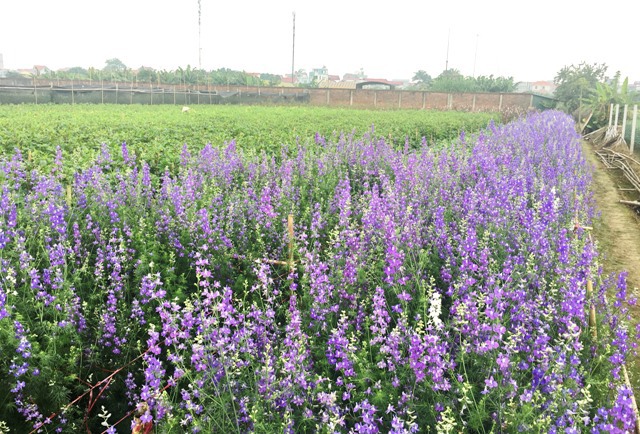
Residents of Tay Tuu village in Hanoi's Bac Tu Liem District grow a wide variety of potted plants, hanging baskets, and flower carpets, including dianthus, impatiens, celosia, pansies, and nasturtiums.
Nguyen Trong Ha from Tay Tuu Ward said his family has produced 10,000 hanging pots of dianthus, impatiens and celosia since the beginning of this year. With favorable weather conditions and meticulous care in greenhouses and netting houses, the flowers look beautiful.
"So far, flower growers have sold about 60% of the production for the first half of the year and expect to earn about VND500 million (US$20,534). To meet the increasing demand for flowers, we have been busy tending and pruning the flowers to make them bloom beautifully," Ha told The Hanoi Times.
Flower regions to bloom as ecotourism hotspots
The Hanoi Department of Agriculture and Rural Development is encouraging farmers to focus on new quality seeds and promoting the trade of flowers and ornamental plants in conjunction with rural and adventure tourism.
A grower in Tay Tuu Village prepares flowers for the wet market. Photo: Trong Tung/The Hanoi Times |
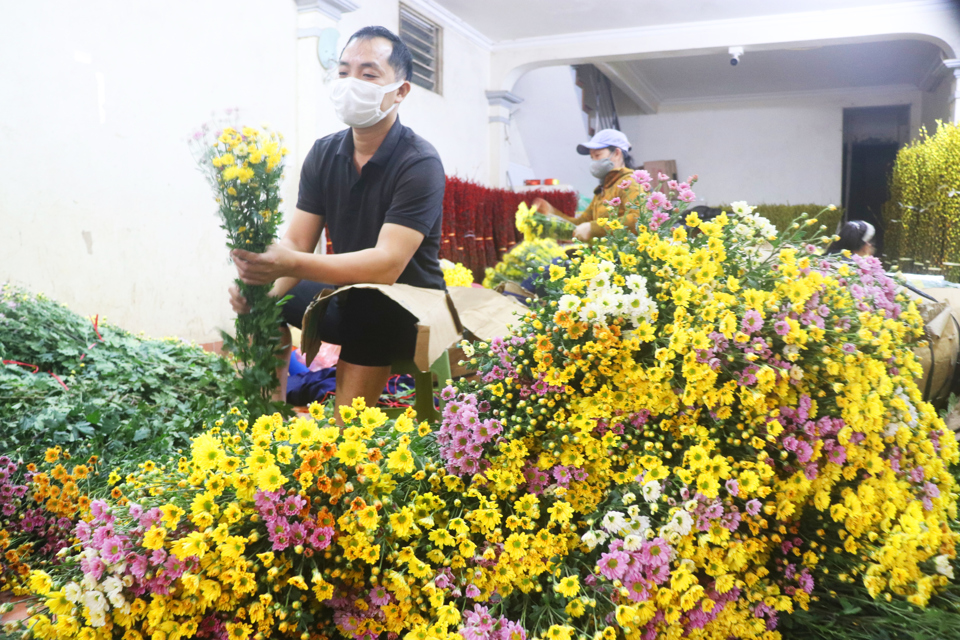
Deputy Director of the Department Ta Van Tuong said the city will expand the area for flower and ornamental plant cultivation to 8,000 hectares by 2025, focusing on Me Linh, Dan Phuong, Phuc Tho, and Gia Lam districts. Among them, there will be the flower and ornamental plant regions using high technology, with an area of 20-50 hectares per region.
"These regions will mainly grow orchids, chrysanthemums, and roses, as well as some imported flower varieties with high economic value for the domestic market and export," Tuong said.
In addition, he said, the Hanoi Department of Agriculture and Rural Development has assessed regional agricultural production and selected appropriate sites for the development of greenhouses, exhibition areas, and tourist gardens.
As part of its 2030 development plan, Hanoi plans to gradually convert underutilized rice-growing areas into flower-growing areas. Tuong told The Hanoi Times that the plan is to use riverbank land to generate income and successfully promote the development of flower farming, with an eye toward farms linked to experiential tourism.