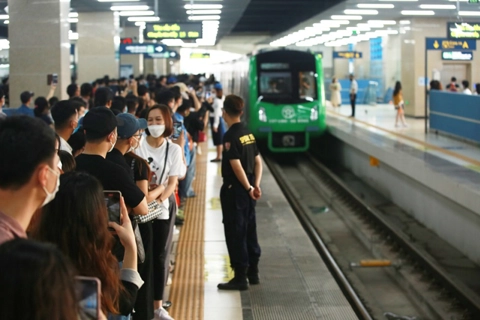
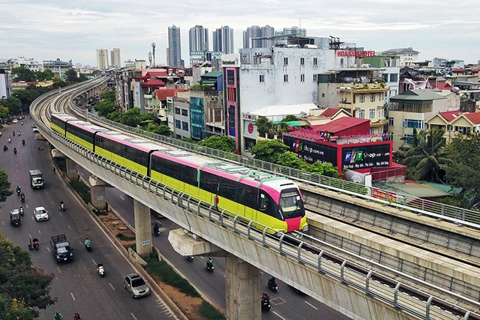
Hanoi explores TOC as next step in urban planning
As for Hanoi grapples with hurdles in implementing transit oriented development, planners are embracing traffic oriented communities to foster more vibrant, people centered urban growth.
THE HANOI TIMES — As Hanoi works to transform its transport infrastructure and urban core, planners and architects are pushing for a shift from transit oriented development (TOD) to a more inclusive and human centered approach known as traffic oriented communities (TOC).
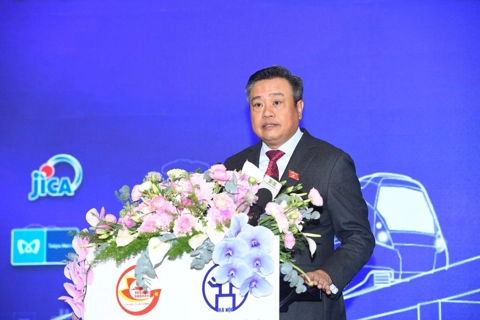
“TOC is not about replacing TOD, but expanding it,” said Nguyen Van Hai, Chairman of the Hanoi Association of Architects. “It’s a way to create vibrant communities, not just build around transport stations. We need places with identity, function, and social connection.”
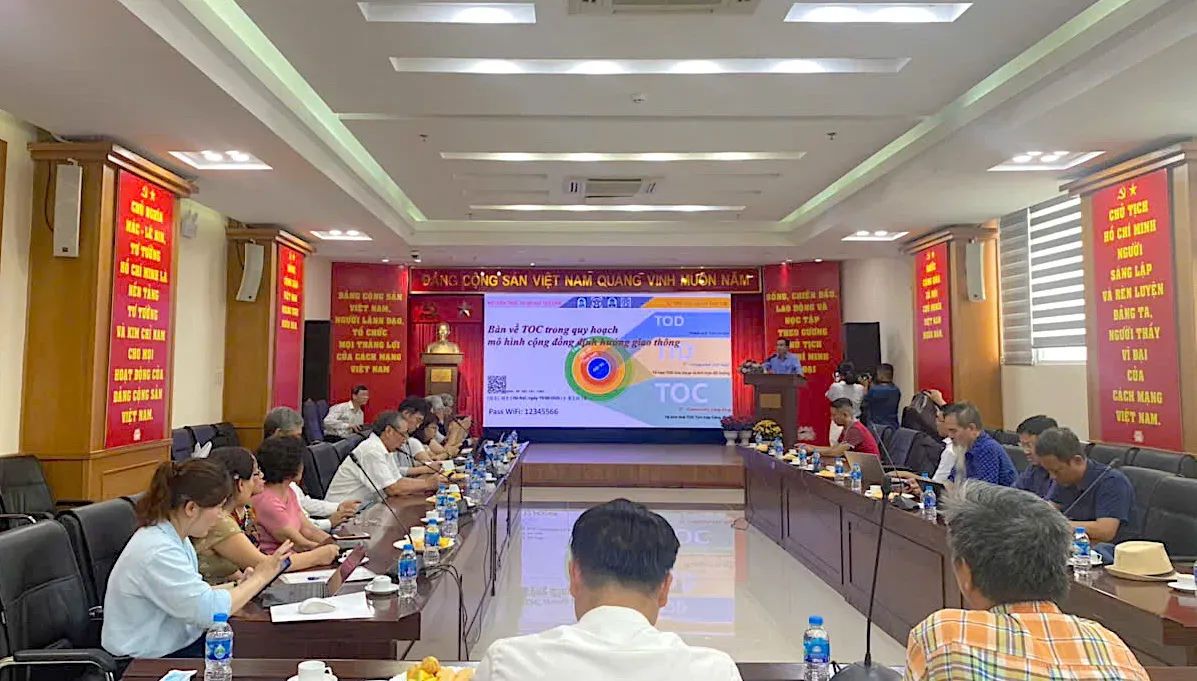
The TOC model, recently discussed at a roundtable hosted by the association, is gaining attention as a response to the difficulties Hanoi has faced in implementing TOD. While TOD has been promoted as a strategic tool to modernize the city and improve access to public transport, progress has been slow.
“TOD has already been institutionalized through the 2024 Capital Law, the draft Railway Law, and other national planning documents,” said Nguyen Tai Thu of the Hanoi Department of Construction. “But many core elements are still undefined.”
According to Thu, key issues include whether the radius of access around metro stations should be 500 or 800 meters, how to designate TOD corridors, and what standards should apply to mixed use development. Financial mechanisms for mobilizing private resources remain underdeveloped, and there is still no official guideline for implementation.
Other experts pointed to overlapping regulations and the scale of investment required as further challenges. “These are large scale projects with legal complexity and high costs,” said urban transport specialist Nguyen Thanh Son. “We need a more flexible and long term legal framework to shorten the project cycle.”
Against this backdrop, the TOC model offers a fresh perspective. It shifts the focus from infrastructure to people, highlighting the role of public transport not just as a system of movement, but as a catalyst for social life.
“TOC values the interaction between people, space, and architecture,” Hai explained. “It is not only about the hard infrastructure. Soft policy tools are equally important to activate communities and bring spaces to life.”
This approach is particularly relevant to Hanoi, where many districts have long histories and established populations. Unlike newly planned cities, Hanoi cannot be restructured from scratch, and must find ways to integrate old and new.
Architect Tran Huy Anh pointed to international examples that reflect this shift. In Paris, the Grand Paris redevelopment project, backed by nearly $30 billion in investment, has expanded metro lines through low income neighborhoods, increasing access to transit by eight times and job opportunities by eleven times.
“More importantly, this project attracted long term investors,” Anh said. “Demand for project bonds was ten times higher than supply. Investors want to place capital in cities that are healthy, stable, and socially balanced.”
Bangkok has also seen success by transitioning from TOD to TOC, attracting strong investment through development that prioritizes livability, equity, and community infrastructure.
In Hanoi, the redevelopment of old apartment blocks has shown how limited the current TOD approach can be. Many projects remain stalled due to disputes over compensation ratios, especially for residents on the ground floor, or disagreements on vertical expansion.
“We’re stuck in debates about the compensation coefficient, or K factor, adding floors, or moving tenants,” said Anh. “But we need to zoom out. Look at the whole neighborhood. Connect different scales and functions through TOD, and then align the purpose with TOC to bring everyone into the process.”
He argued that the city should move away from a profit first model toward one based on shared social value, linking natural, cultural, and economic advantages to create stronger alignment between residents, investors, and public authorities.
But doing so will require significant changes in governance and technology. “Many of our planning systems are still running on 1990s and early 2000s logic,” Anh said. “Other cities have already entered the era of digital urban management.”
If Hanoi wants to capture the land value generated by infrastructure upgrades and reinvest it into public services, it will need to adopt more transparent, data driven methods. Pilot projects like apartment redevelopment could be the starting point for this transformation.
For urban planner Vu Tuyet Mai from the Hanoi Institute of Planning and Construction, the key lies in building trust through well designed public private partnerships.
“When people contribute land, they want to know what they’ll receive in return,” Mai said. “Developers need clear rules, and the state must define the social benefit. This is where PPP has to be carefully thought out.”
She emphasized that transport oriented communities cannot be imposed. “The public must be part of the process,” she said. “We need shared ownership of outcomes, not just construction projects.”
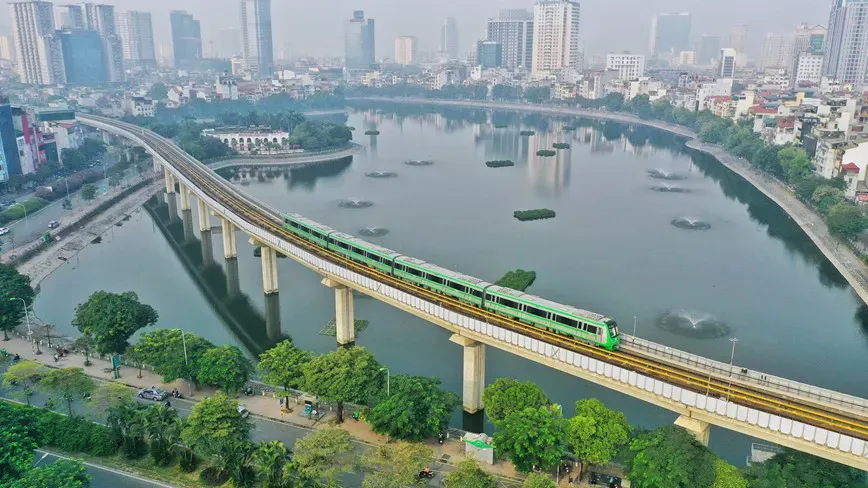
The TOC model may offer a new framework to connect infrastructure with people and places. Photo: kinhtedothi.vn
Participants at the roundtable agreed that Hanoi should produce practical guidelines for TOD and TOC tailored to its local context. International models are useful, but success will depend on domestic adaptation and institutional capacity.
“We need to invest in research units or commission targeted studies to support this shift,” said MaiHai. “And we must collaborate internationally to stay aligned with global best practices.”
As Hanoi prepares for its next phase of development from metro construction to large scale urban renewal, the TOC model may offer a new framework to connect infrastructure with people and places.
Instead of treating transport as a technical issue or a way to boost land prices, TOC reimagines mobility as the foundation of community life. In doing so, it could provide Hanoi with a more holistic and resilient path forward.
|
Transit-oriented development (TOD) is a planning and design strategy that consists in promoting urban development that is compact, mixed-use, pedestrian- and bicycle-friendly, and closely integrated with mass transit by clustering jobs, housing, services, and amenities around public transport stations. TOC is a broader, more human-centered evolution of TOD. It focuses not just on the transport node, but on building vibrant, inclusive, place-based communities where transport supports social life, identity, and urban resilience. |