Property
Hanoi, HCMC are top picks for hotel investment in Vietnam
Foreign investors are actively seeking investment opportunities with higher returns in Vietnam via operating hotel assets with in-place cash flow.
Hanoi and Ho Chi Minh City, the two largest metropolises in Vietnam, are expected to remain as the top two destinations for hotel investment in the country, according to JLL Vietnam.
They are followed by Danang and Nha Trang, the two famous coastal destinations. It is recognized that hotel in economic hubs brings higher and more stable cash flow than coastal resorts and hotels, the US-headquartered real estate service firm said in a recent report.
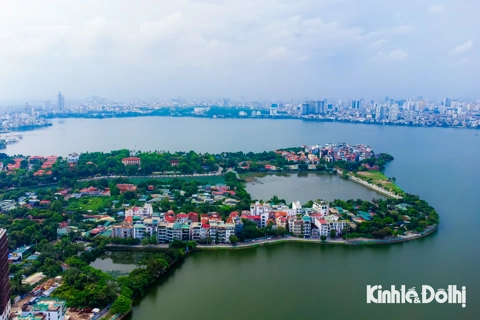
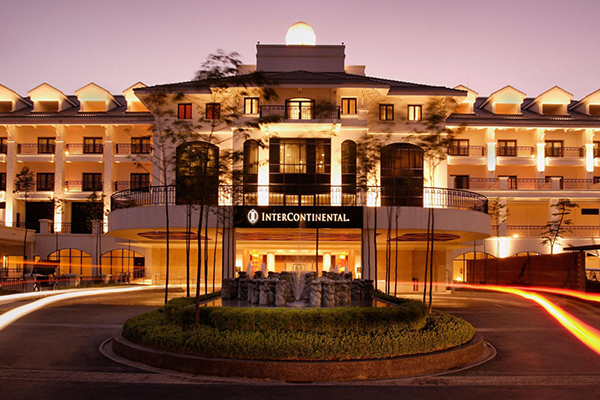
| A view of Intercontinental Hotel Hanoi. Photo: IHG |
Domestic investors’ demand for hotel investments in Vietnam has been growing in recent years, said Trang Vo, Vice President, JLL Hotels & Hospitality Asia Pacific.
With the advantages of geographic and economic understanding as well as the domestic political situation, domestic investors are willing to pursue deals of great transaction value, bringing fierce competition with foreign investors, Trang added.
According to JLL’s observations, foreign and domestics investors have different investment tastes. While foreign investors are actively seeking investment opportunities with higher returns in Vietnam via operating hotel assets with in-place cash flow, the majority of domestic investors are interested in developing hotels and resorts from vacant land banks.
“In Vietnam, realistically, selling price is higher than the budget of almost all foreign investors, especially from those still able to achieve cheap corporate debt from 2% – 4% in economies such as Japan, Korea, Hong Kong and Singapore,” Trang commented.
“In current market situation, the yield recorded in successful transactions could be compressed to 7-8% depending on the asset types and investment strategy. It is noted that the 8% is lower than the loan in Vietnam though and hence why most local groups focused on development where returns may be higher.”
In Vietnam, the hotel transaction market has shown signs of excitement in 2019. Among the outstanding successful transactions in the market this year, Ho Tram Grand Strip resort has been sold to Warburg Pincus investment fund.
Berjaya Group successfully transferred a 75% stake of TPC Nghi Tam Company, which owns Intercontinental Hotel, for more than US$53.4 million to a domestic hotel investor, Hanoi Hotel Tourism Development Co., Ltd. In addition, JLL has also successfully consulted a 5-star hotel transaction in Nha Trang city, Khanh Hoa province recently.
JLL’s report shows that hotel transaction volumes in Asia Pacific are expected to increase by 25% to 30% year-on-year to more than US$11 billion in 2019.
“Despite a cautious economic climate and wider political headwinds, hotels in the Asia Pacific present an attractive yield profile amid booming tourism demand, in the context of falling interest rates and bond yields,” says Adam Bury, Executive Vice President, JLL Hotels & Hospitality Asia Pacific.
“Much demand this year has been buoyed by private equity firms, developers and domestic clients. This leads us to believe that 2019 will be the third most highly-transacted year in the past decade. To date, only 2017 and 2015 have surpassed the US$11 billion threshold.”